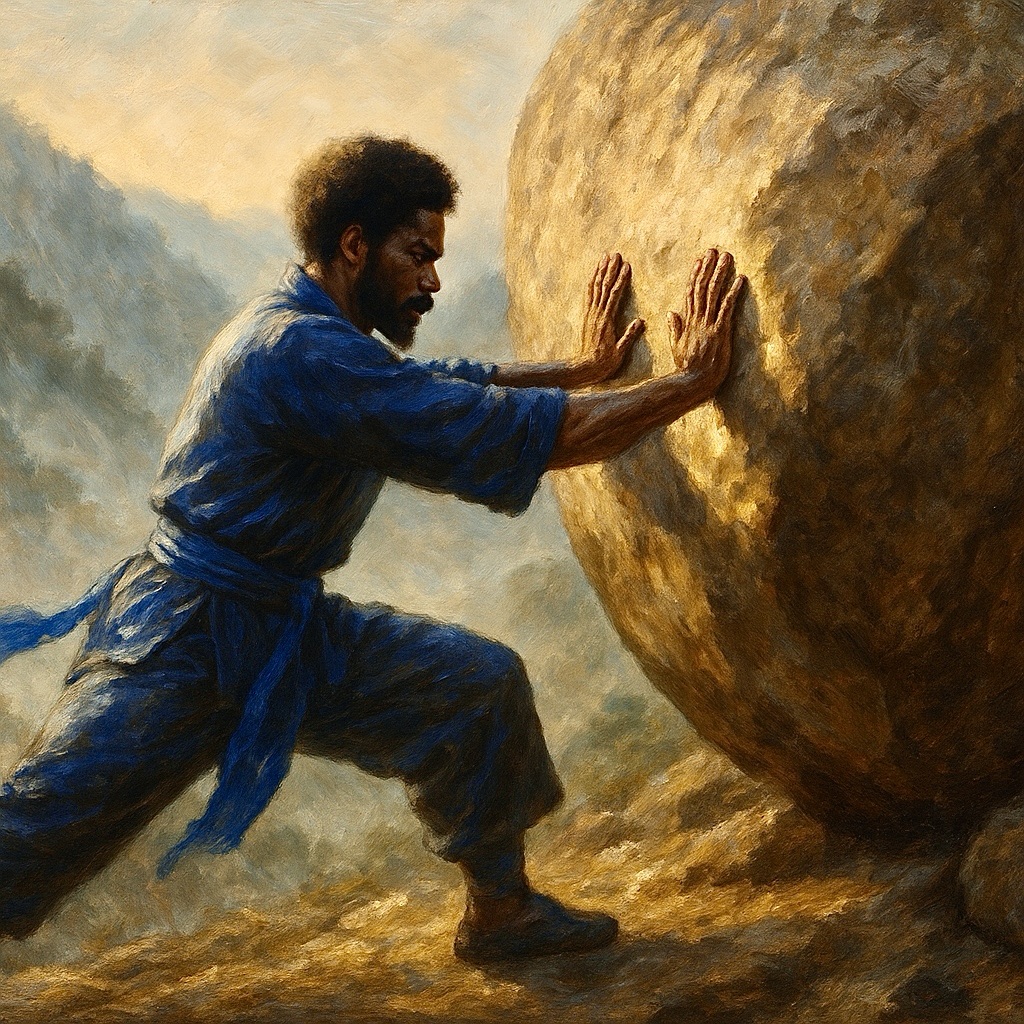
Certain teachings drift toward us with the weight of lived truth, carrying the quiet authority of an elder who guides without raising his voice. Passage 29 of the Tao Te Ching belongs to that lineage. The words do not rush, they do not argue, they do not insist; they simply unfold with the clarity of morning light moving across stone. They remind us that effort without alignment often creates more chaos than calm, and that control without clarity often disrupts the very harmony we hope to protect.
I often return to this passage when my life begins to feel heavy—when responsibilities stretch thin, when emotions tighten, when relationships drift into friction, when ambitions swell into anxiety, or when I attempt to manage outcomes that never belonged to me. The passage steadies my breath and encourages a deeper question: What arises when we stop gripping the world and start aligning with it?
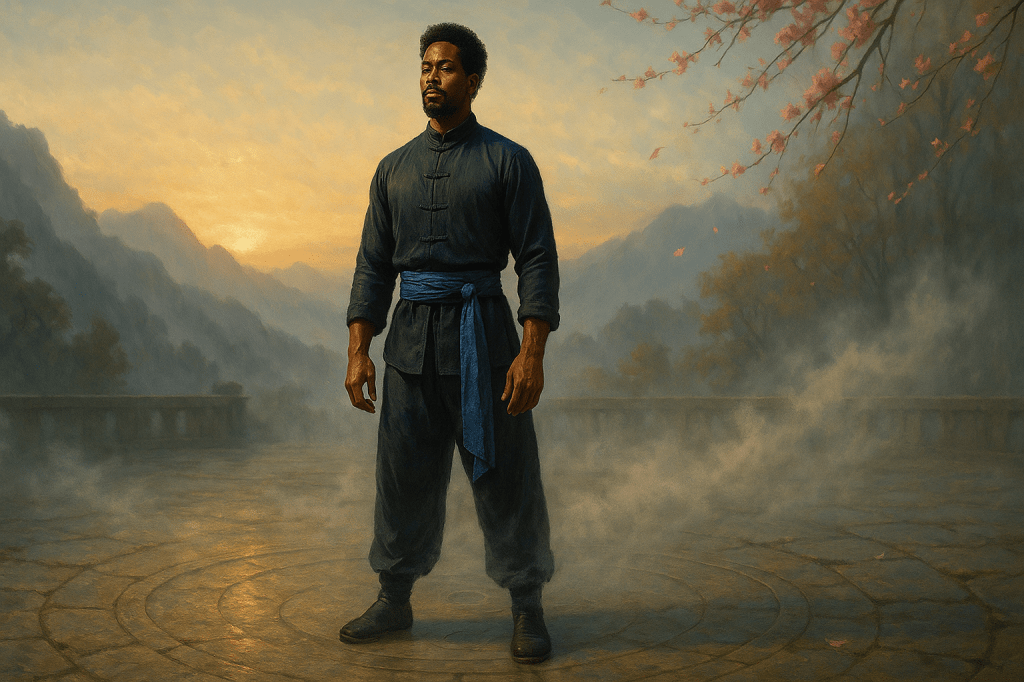
I remember the years when I tried to perfect my martial form through force. During that time, my shoulders tightened, my breath collapsed, and my timing fell apart under the pressure of perfectionism. I attempted to sculpt every movement with sheer will, and in doing so, I drowned the natural intelligence of my body. But one quiet afternoon, without any audience present, I allowed my breath to widen. I allowed my stance to settle. I allowed the form to reveal itself rather than chasing it. My structure aligned. My flow returned. My movement felt like water finding its path.
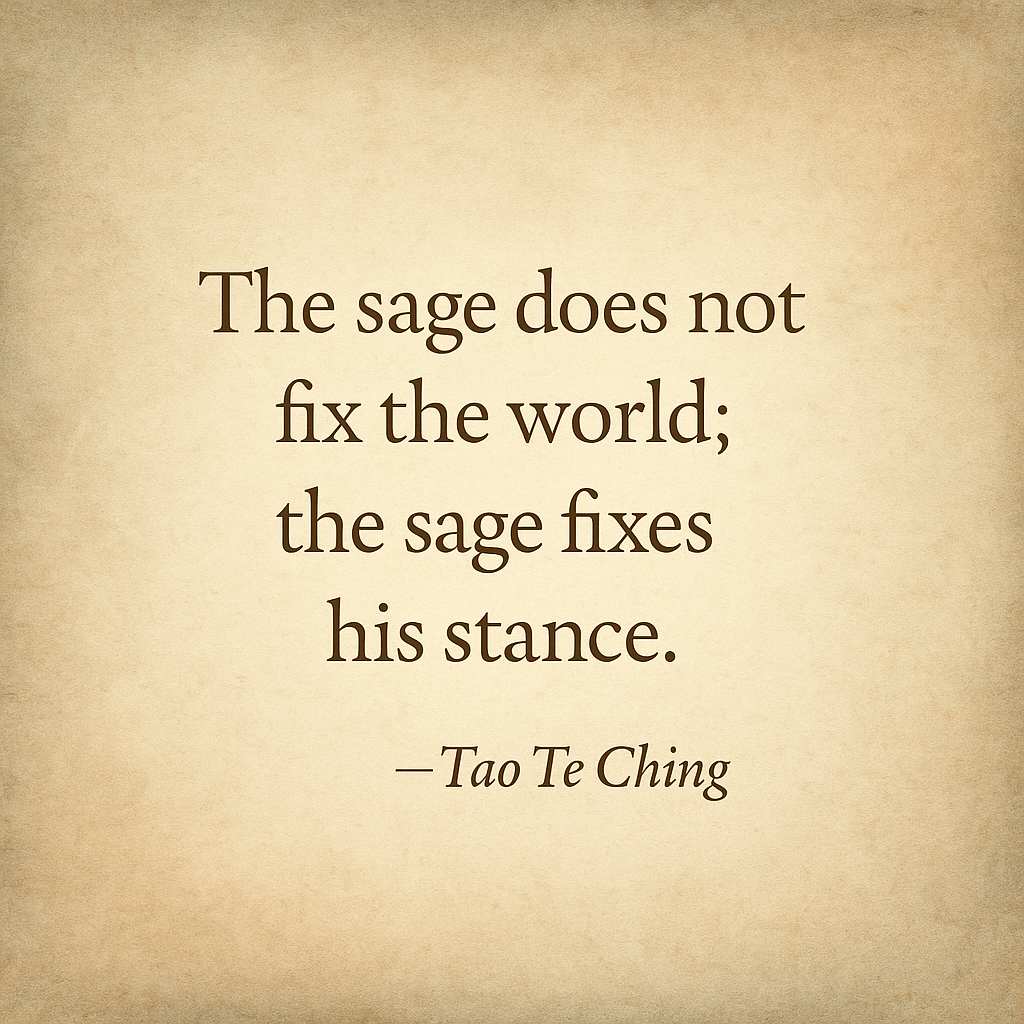
Passage 29 teaches the same lesson in a different language. Growth emerges more clearly when we stop smothering it. Influence deepens when we stop forcing people to match our ideal. Clarity arises when we release our impulse to manipulate every detail of the day. The sage in this passage does not withdraw from the world; the sage redirects the energy that once fed frantic intervention into calm presence and strategic action.
The line “No longer worries about self-improvement; thus improves daily” carries a quiet genius. Fear-based striving often blocks the very transformation we want to invite. Worry drains the energy that growth requires. Anxiety narrows our awareness and obscures openings that patience would reveal. When we practice without judgment—when we enter the moment with curiosity rather than tension—improvement follows naturally.
What arises when we stop gripping the world and start aligning with it?
This principle extends to relationships. Attempts to control others often spring from fear: fear of losing them, fear of disappointment, fear of vulnerability, or fear of outcomes that disrupt our expectations. But control rarely produces trust. Control contracts the space where someone could show their real self. When we release that grip, relationships gain air. People breathe again. Authenticity reenters the room. Love and trust grow only in environments where freedom feels present, not threatened.
Passage 29 also advises us to stop “tampering with things.” This statement requires humility. Many of our struggles come from our refusal to let events unfold without our constant interference. Some problems resolve when we stop interrupting their natural movement. Some opportunities emerge when we stop pushing against timing. Some transitions clarify when we stop forcing premature conclusions. Observing without tampering grants us a wider view of the patterns around us.
A serene leader does not avoid action; they choose action wisely.
Then the passage offers a crucial distinction: never confuse serenity with passivity. Calmness does not signal withdrawal; calmness signals mastery of timing, clarity of intention, and freedom from panic. A serene leader does not avoid action; they choose action wisely. They intervene at the moment where effort creates impact, not friction. They move from understanding rather than urgency. Serenity sharpens judgment because serenity clears the noise.
This teaching carries particular resonance in my current season of life. I find myself evaluating commitments, adjusting my training, refining my creative voice, and navigating relationships that request honesty more than intervention. Passage 29 reminds me to discern where my presence still holds value and where my effort no longer returns anything meaningful. It encourages me to release certain roles without guilt and embrace others without hesitation. It teaches me that wisdom sometimes requires stillness, sometimes requires movement, but always requires clarity.
The essence of the passage lives in this simple truth:
- Release what refuses your influence.
- Engage what responds to your clarity.
- Discern the difference with an untroubled heart.
This approach does not simplify life; it lightens the unnecessary parts. It frees us from carrying weights that belong to someone else. It returns our attention to what actually needs our hands. It turns our gaze toward the possibilities waiting beneath our anxiety.
CALL TO PRAXIS
As you move through the next few days, try one or two of these actions:
1. Choose one tension to release.
- Identify a place in your life where force continues to fail you.
- Stop pushing there.
- Step back and observe the pattern without judgment.
2. Choose one responsibility to meet with calm precision.
- Engage something within your control—something small, clear, and meaningful.
- Move with steady breath and intentional presence.
3. Practice one moment of non-interference daily.
- Let the next conversation, task, or relationship unfold without your subtle attempts to manage the outcome.
4. Notice how much energy returns when you loosen your grip.
- Let your body show you what alignment can accomplish.
- Let your breath reveal the next opening.
- Let life speak without interruption.
This passage has always carried a message for people who push too hard and care too deeply. It offers a way of moving through the world that preserves strength while restoring peace. It teaches that mastery begins where struggle ends, and that the world often settles into coherence the moment we stop shaking it.
Stay inspired and inspirational.
— Sifu Khonsura Wilson

 Musings on Martial Arts, Taoist Philosophy & All Things Wellness Related.