Two friends walked a few steps ahead of me, voices low and loose, the kind of talk that carries no performance—only truth—and I caught the phrase that kept returning like a tide-line: ebb and flow, the way life surges, then recedes, then surges again, the way unpleasant surprises arrive periodically—an ache, a delay, a hard conversation, a sudden expense—then move on, leaving you to decide whether you learn or you tighten, whether you adapt or you argue.
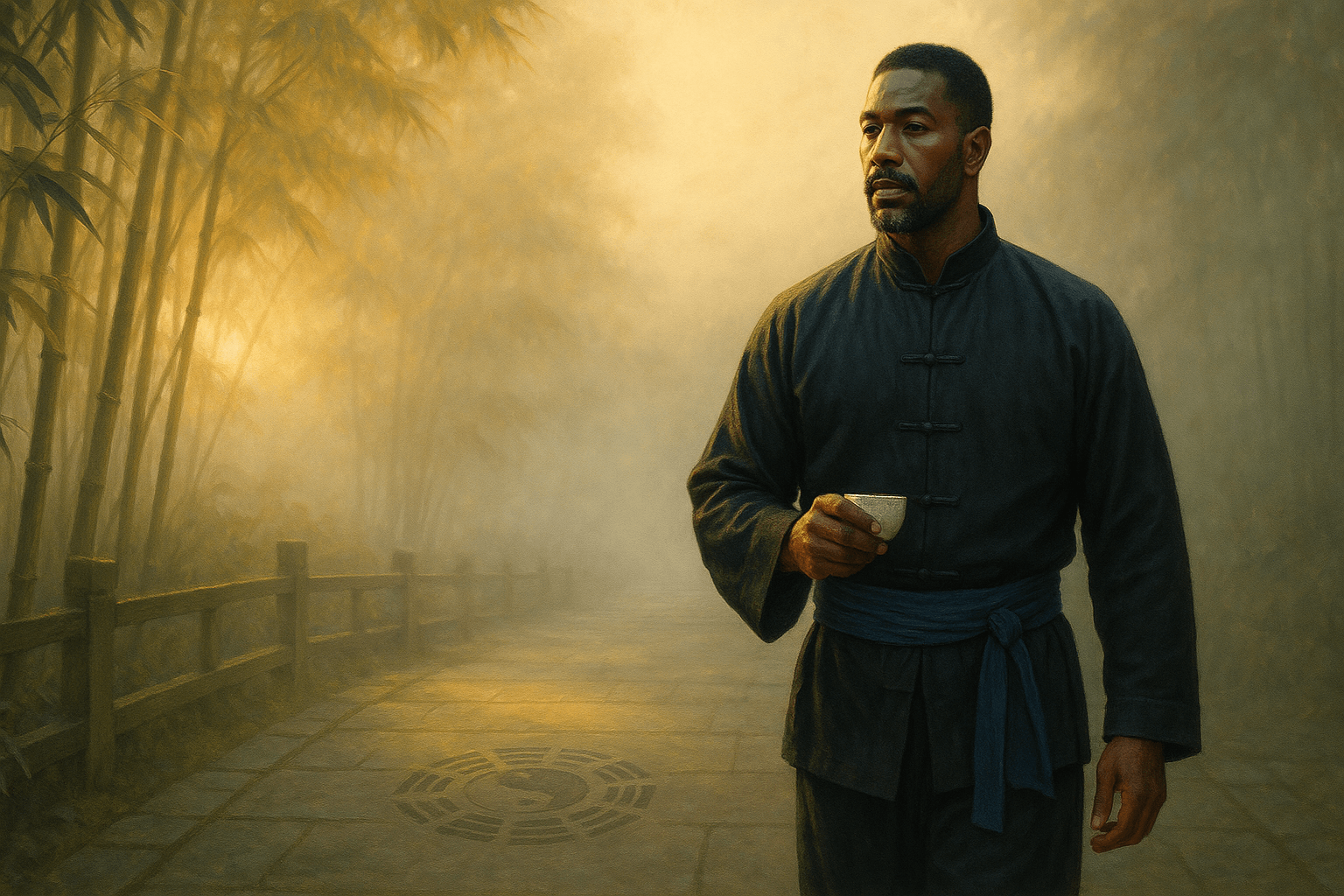
I kept moving, tea-warmth in my palm, morning air on my face, and I felt my own reflex rise anyway, that stubborn urge toward control, toward clean plans and quiet days and smooth sequences, as if the universe owed me unbroken rhythm, as if reality should text first before it interrupts, and I almost laughed at myself, because I know the pattern: the ego loves certainty the way a toddler loves a permanent marker—grip hard, scribble everywhere, then act surprised when the walls look wild.
That overheard conversation carried me right back into the old Taoist teaching, not the polite version, not the poster version, but the lived version that shows up when the day drops something awkward in your lap. In the Tao Te Ching (Chapter 21), the text leans into mystery with a steady face, talking about the Way as “elusive and evasive,” “shadowy and dim,” yet still carrying “a core of vitality.” I hear that and I don’t hear despair; I hear instruction, because the line doesn’t promise certainty, it promises contact—move with incomplete visibility, choose with imperfect information, walk anyway, because sincerity can still guide you through fog.
Then William Martin’s The Sage’s Tao Te Ching (Passage 33) comes through with that upside-down grin that makes the ego squint: “We have embraced those things which others shun,” and “Embracing uncertainty, we find awe,” and “Embracing limitations, we find a path of effective action.” Not romance about suffering. Not denial about difficulty. Just a clean pivot in posture: stop treating the knock like an invasion and start treating it like instruction.
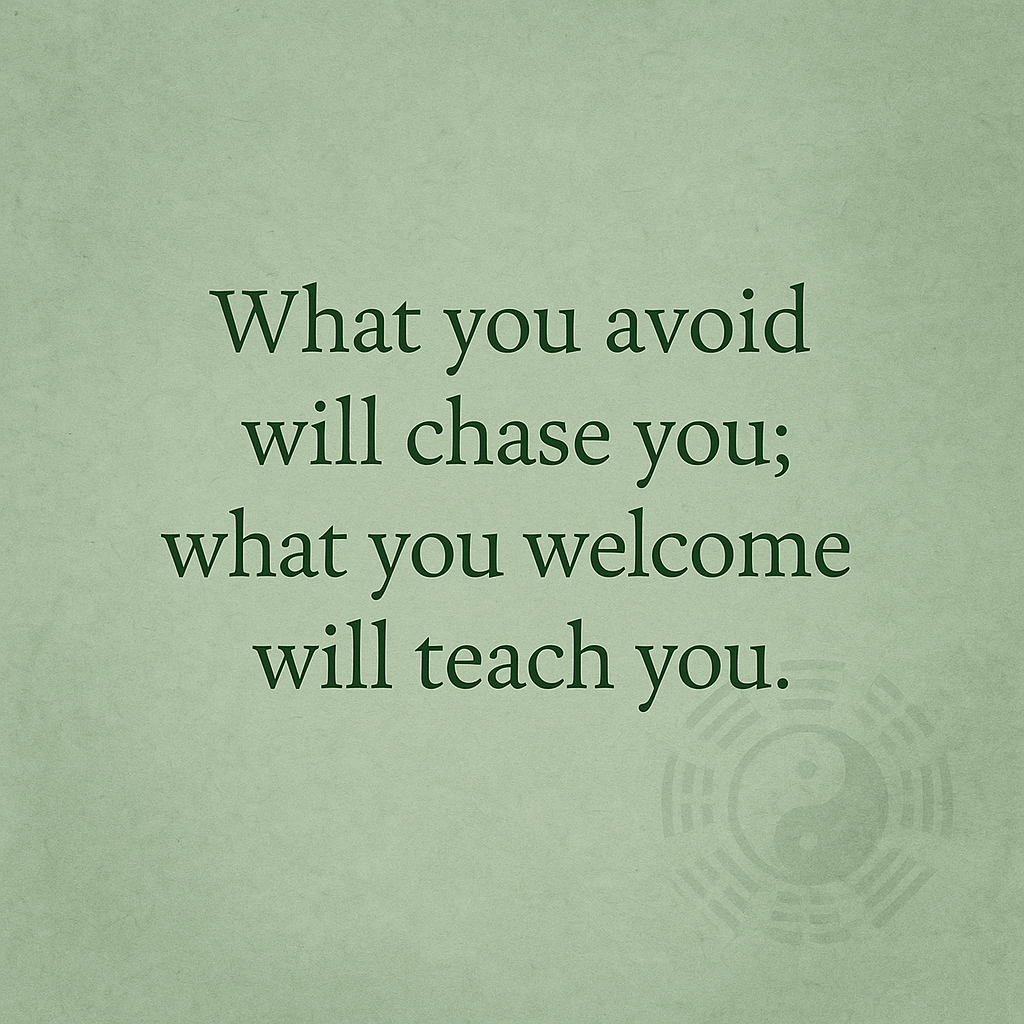
Because avoidance never counts as neutral. Avoidance runs like debt—you don’t skip the bill, you schedule interest. You don’t dodge the conversation, you grow a whole garden of rehearsal and rumination, watering it daily with imagination, then wondering why your shoulders stay high and your sleep comes late. You don’t ignore the ache, you let your body raise its voice until it can finally get your attention. What you avoid will chase you, not out of malice, but out of mathematics.
So I started carrying a small method, simple enough to use under stress, sturdy enough to use on ordinary days, because ordinary days hold the real test. When something unpleasant shows up—an awkward talk, a schedule fracture, a tech failure, a social sting, a sudden limit in the body—I treat it like a sparring partner that just stepped on the mat, gloves on, eyes honest, and I stop asking, “Why me?” and I start asking, “What does this reveal?” because revelation often arrives faster than reassurance, and the thing you fear can become a teacher the moment you stop running and turn toward it.
I call the method Welcome the Knock, and I run it in three clean beats: name the visitor without poetry—uncertainty, limitation, fear, loss, delay—then bow to the boundary—I accept what I cannot control right now—then take one effective action that fits the boundary, a smaller step, a cleaner plan, a simpler rep, a calmer conversation. That sequence doesn’t shrink your life; it steadies your feet, and steady feet can move through weather.
“I welcome the visitor, I honor the boundary, and I take the next effective step.”
Martial arts already taught me the same lesson—my body learned it first, my mind just tried to catch up—because footwork never lies. In sparring, you read distance and choose lines, inside and outside, long and medium and short, and the moment you respect the limit you stop flailing and reaching and hoping your way into position, therefore your movement gains clarity, your breath gains calm, your intention gains precision. Limits don’t ruin the art; limits reveal the art.
So today, if something “unattractive” knocks—an obligation, an ache, a delay, a doubt—try the move. Turn toward it. Let it speak. Let it teach. And if you feel like sharing, drop a line in the comments: what knocked lately, and what lesson did it try to deliver? Your reflection might hand somebody else the calm they needed.
Stay inspired and inspirational.
— Sifu Khonsura Wilson

 Musings on Martial Arts, Taoist Philosophy & All Things Wellness Related.