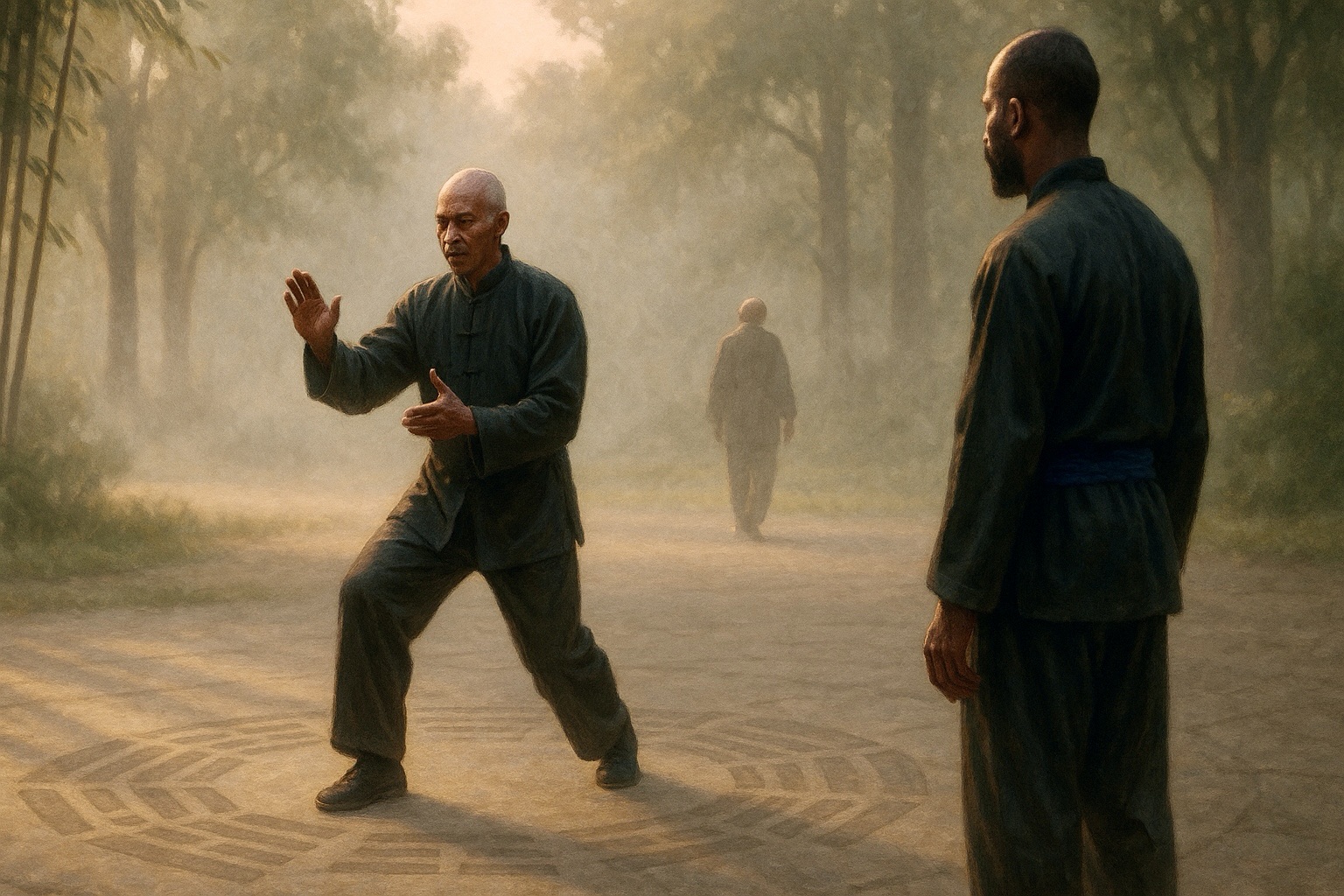
I walked into practice that morning the way I often do, arriving without ceremony and without calculation, stepping onto the training space with warm bones from the walk in, loose hands hanging at my sides, breath already deepening on its own, expecting repetition and return, the familiar rhythm of moving through form until the noise of the day loosens its hold and the body remembers what it already knows.
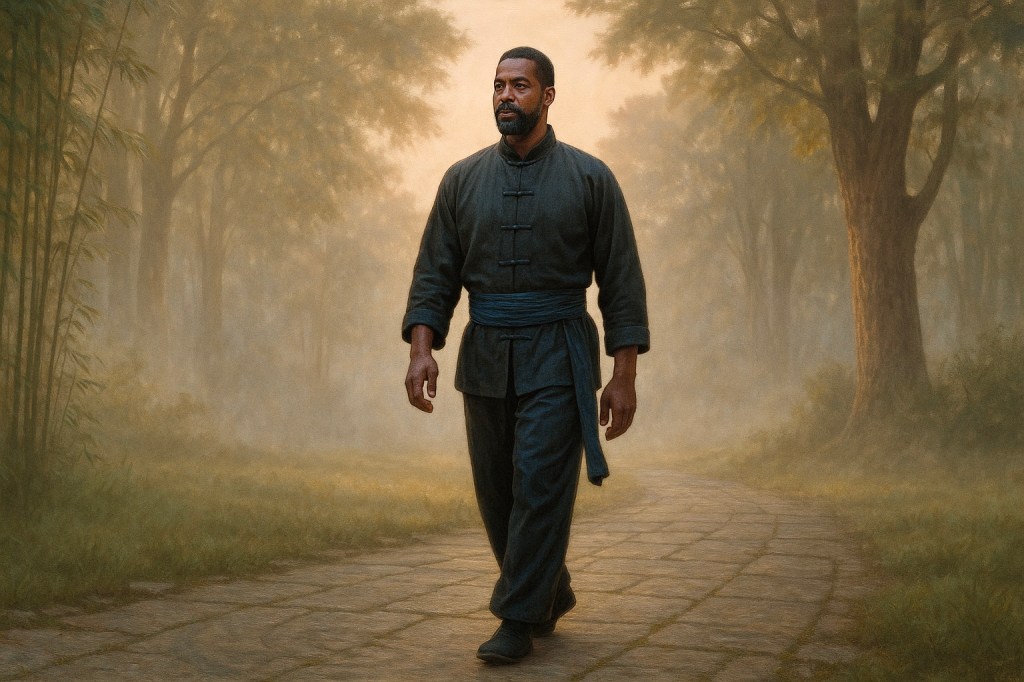
The first rounds carried a surprising smoothness, a softness that stayed steady without supervision, my shoulders remaining relaxed without reminders, my breath settling low before I reached for it, weight shifting from foot to foot cleanly and quietly, hands floating into position while the spine lengthened and the hips leveled, allowing the sequence to continue with a calm continuity that felt less like effort and more like agreement. That ease suggested a simple story at first, the familiar one that says progress reveals itself through comfort, that practice rewards repetition by making the work feel lighter.
I kept moving, circling through the form again and again, noticing the ease and letting it linger, assuming the lesson would arrive through my body alone, through timing and transition, through balance finally cooperating instead of resisting, trusting that whatever insight waited there belonged to me and my movement. That assumption held just long enough to feel convincing, which made its quiet undoing more instructive when attention drifted elsewhere.
Practice rewards repetition by making the work feel lighter.
As my focus shifted away from my own body and settled on my teacher, the atmosphere of the practice changed without announcement, the room feeling fuller and heavier in a way that asked for observation rather than self-assessment. Watching him move through the same material, I noticed a difference that resisted quick judgment, his stances holding their shape and his structure staying honest, while the transitions between movements arrived in sections rather than in one unbroken stream, pauses appearing where flow once carried him forward without interruption, not as errors and not as lapses, but as signs of attention dividing, of breath and body sharing space with obligations leaning in from the edges of his life.
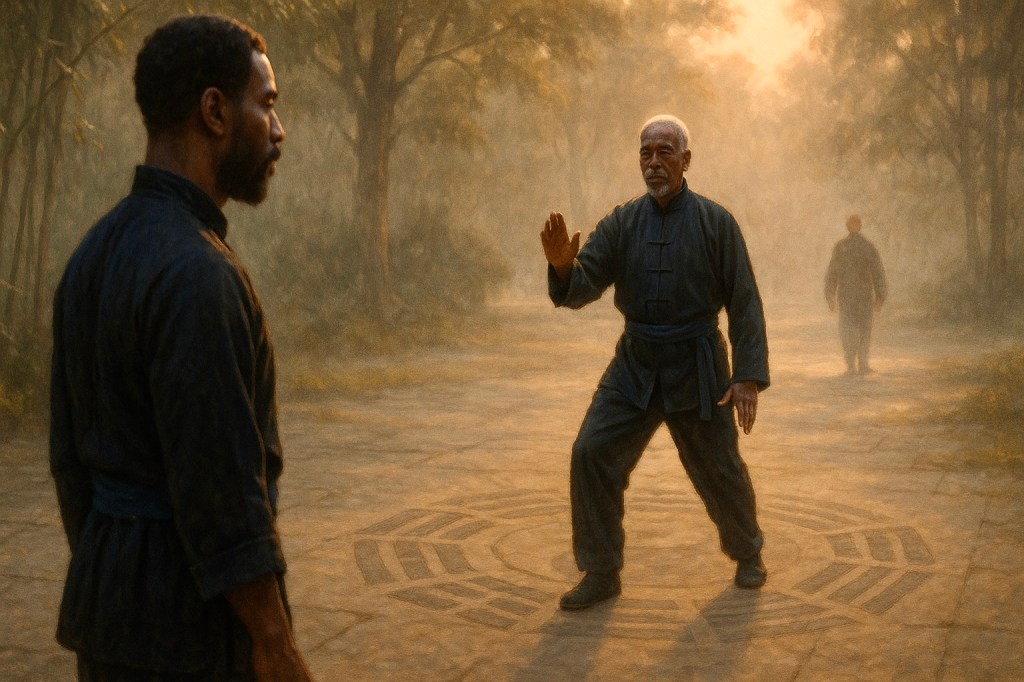
Each posture completed its task, landing firmly and settling where it should, the segments arriving with clarity while the larger rhythm hesitated, revealing a practice carrying more than form and holding more than technique. That hesitation did not read as decline, yet it unsettled the earlier story I had told myself about ease, because what I saw in him carried weight that my own smoothness did not yet explain.
“What looked like difference in skill revealed itself, with patience, as a difference in circumstance.”
Standing there and breathing, watching him work, I felt my own ease sliding into the background, replaced by a recognition forming slowly and steadily, gathering weight as observation took the lead and self-evaluation loosened its grip. No pride rose to claim the moment, no competitive thought rushed in to rank it, and even discomfort stayed quiet, replaced instead by a sober attentiveness that arrives when something important presents itself without asking me to name it.
My mind still attempted to hurry meaning into the moment, offering familiar explanations about advancement or improvement or outgrowing, each explanation promising clarity while flattening what I actually witnessed, turning a living process into hierarchy and compressing complexity into a ladder with numbered rungs. Watching him continue to move interrupted that impulse, because the facts of the practice refused the story my intellect wanted to tell.
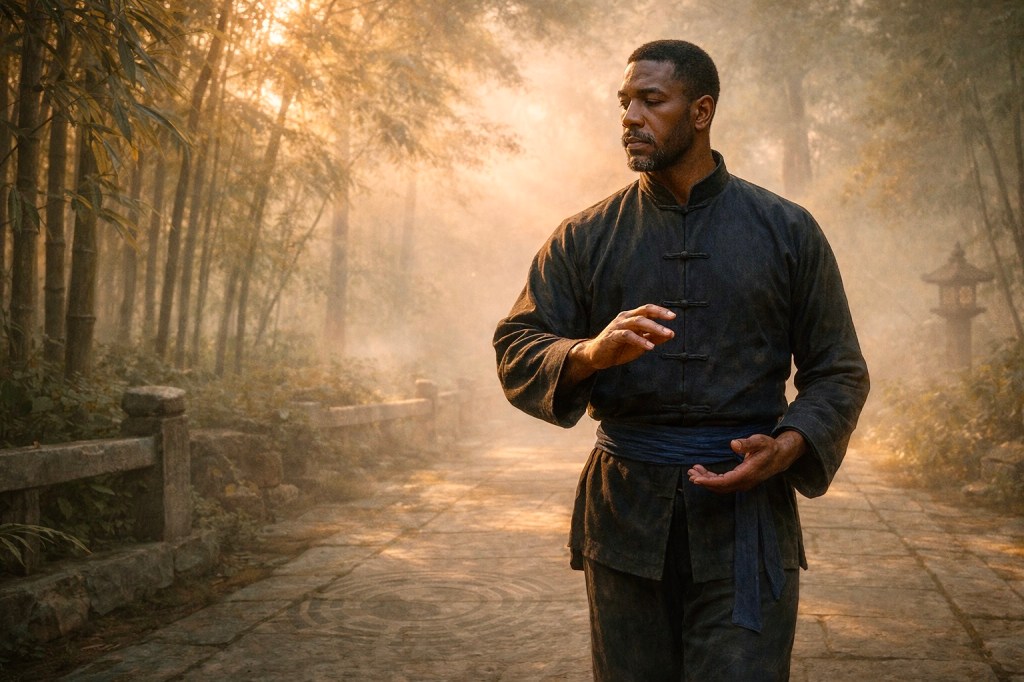
I train daily, returning to the same transitions again and again, repeating shifts of weight and turns of the waist, staying with stiffness until softness appears, staying with imbalance until balance finds its footing, refining not through force or flourish but through patience, breathing, listening. That surplus of time and attention shows itself in my movement as ease, as cooperation, as flow, and recognizing that surplus immediately reframed what I saw in my teacher.
He carries decades of teaching, mentoring, organizing, and holding space so others can train at all, that expenditure showing itself not as decline but as redistribution, the art continuing through him while life asks him to carry more than form. Holding those two realities together altered the meaning of the moment, because difference stopped resembling hierarchy and began revealing sequence instead, the practice moving through seasons, circulating through bodies, traveling through time.
Once I saw the moment that way, the earlier ease in my own movement lost its innocence. What had felt like a personal reward now pointed outward, away from my body and toward the larger life of the practice, asking a different question than the one I had arrived with.
From that vantage point, the lesson of the morning clarified without rushing itself forward. It did not arrive through my own smoothness, but through watching my teacher and recognizing what maturity in practice quietly demands, a recognition that did not conclude training so much as alter its terms. Ease no longer signaled arrival; it narrowed responsibility.
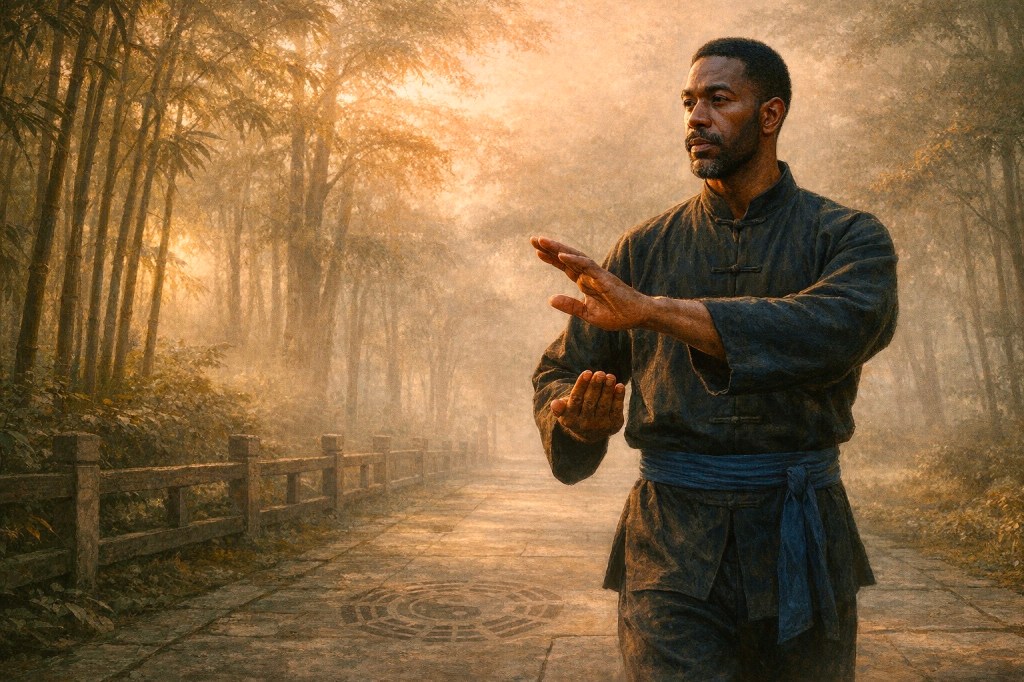
When effort fades from movement, excuses fade with it, and when repetition stops taxing the body, the practice begins testing something else, shifting its attention from endurance and ambition toward care and continuity, toward stewardship and sincerity. Seeing this meant I could no longer practice as though refinement remained a private matter, because comfort removed the cover that effort once provided.
That realization restricted something in me. Once I saw the practice living through me rather than forming me, I could no longer move as a student alone, could no longer hide inside repetition without asking what now traveled forward through my hands, my habits, and my choices about how and why I train. Understanding closed off an earlier posture and replaced it with obligation.
“Some practices survive not because they get performed, but because they get carried.”
Many martial traditions arrive at a moment like this, a moment that comes quietly and avoids announcement, when the teacher no longer needs daily demonstration for the art to continue because the practice already lives elsewhere, carried forward by those who still have the time, curiosity, and physical readiness to tend it. That moment often passes as an ordinary class, arriving while someone adjusts a stance, pauses between transitions, watches closely, and finally understands something technique alone never promised to teach.
Inheritance does not arrive as triumph, but as weight, settling into the hands and habits of whoever keeps showing up, keeps refining, keeps returning, the discipline no longer asking for applause and beginning to ask for accuracy, the practice no longer asking for proof and beginning to ask for preservation. Responsibility replaces permission, not dramatically, but decisively.
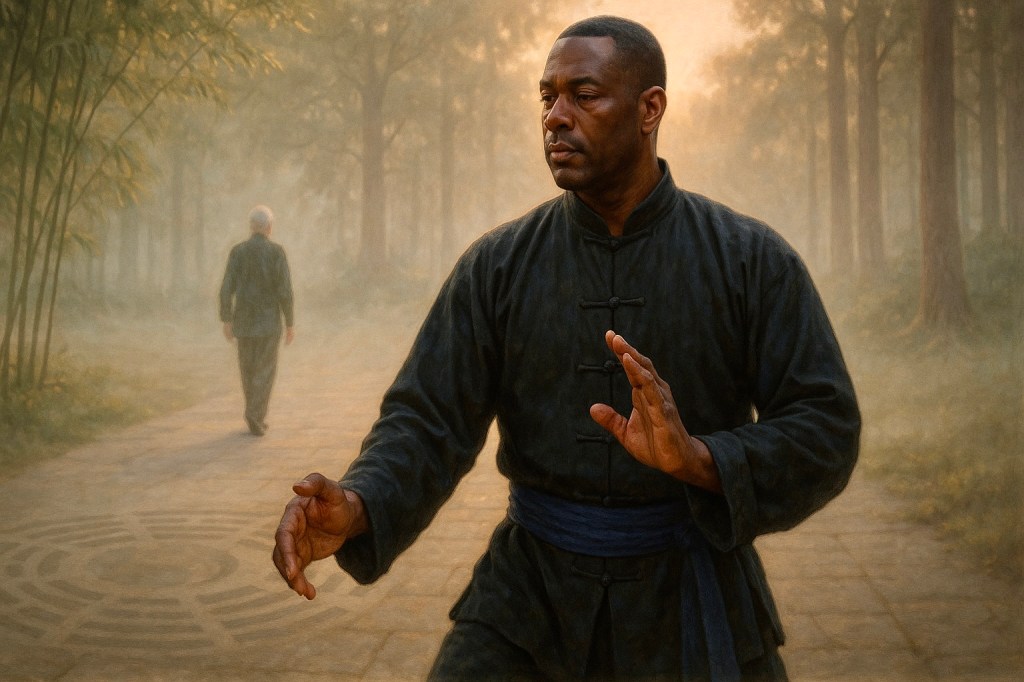
Since that morning, a question follows me through training, not loudly and not theatrically, but steadily and insistently, asking what this practice requests now, at this stage of life, when sustaining it no longer demands struggle, only care. That question keeps the work honest by refusing nostalgia and refusing display.
I do not carry a finished answer, and I trust that unfinished state, because the work now points toward practicing quietly, correcting myself before correcting others, carrying the form forward with patience rather than proclamation, letting responsibility take root without shaping it into a story about achievement. The lesson holds firm and demanding, reminding me that practice matures from effort into care, that transmission completes itself through continuity rather than announcement, and that what we carry forward matters more than what we display.
As you move through your own disciplines, martial or otherwise, notice where movement begins cooperating instead of resisting, and ask what that ease now asks from you in return, not more exertion, but deeper care.
Stay inspired and inspirational.
— Sifu Khonsura Wilson

 Musings on Martial Arts, Taoist Philosophy & All Things Wellness Related.