I didn’t come to stretching through science, charts, or protocols neatly stacked in someone else’s certainty. I came to it through stiffness, through those mornings when the body speaks before the mind has finished waking, through that familiar pause after training when you rise from the floor and something in the hips or lower back hesitates—not injured, not broken, just unwilling to move on command. Stretching entered my life the way most lessons do: as a response, not a choice, a way of negotiating with sensation when effort alone stopped working.
For a long time, I stretched because that’s what responsible practitioners were supposed to do. Teachers said so. Training manuals implied it. Soreness followed effort so reliably that stretching felt like the proper closing ritual, the bow at the end of work. It carried a quiet moral weight too, as if stretching proved I wasn’t exploiting the body, that I knew how to care for what I demanded from it. And to be fair, stretching did something. It slowed the breath, softened sensation, drew attention inward after the outward push of training. It created a pause where the system could settle, where striving loosened its grip. But it didn’t do what I thought it was doing.
There were mornings when I felt physically shorter than the day before. Same bones, same joints, same body stepping into the light, yet the range felt reduced, the hips less cooperative, the spine guarded. My instinct used to be frustration. I trained yesterday—why do I feel worse today? That frustration usually led to more stretching, longer holds, deeper pulls, leaning into sensation as if discomfort itself held the answer.
Over time, though, a pattern emerged that refused to bend to that logic. On the days following heavy work—deep stances, long holds, sessions that asked a lot from the legs and core—the range hadn’t disappeared. It had withdrawn. The body wasn’t resisting flexibility; it was conserving integrity. What felt like tightness wasn’t failure. It was timing.
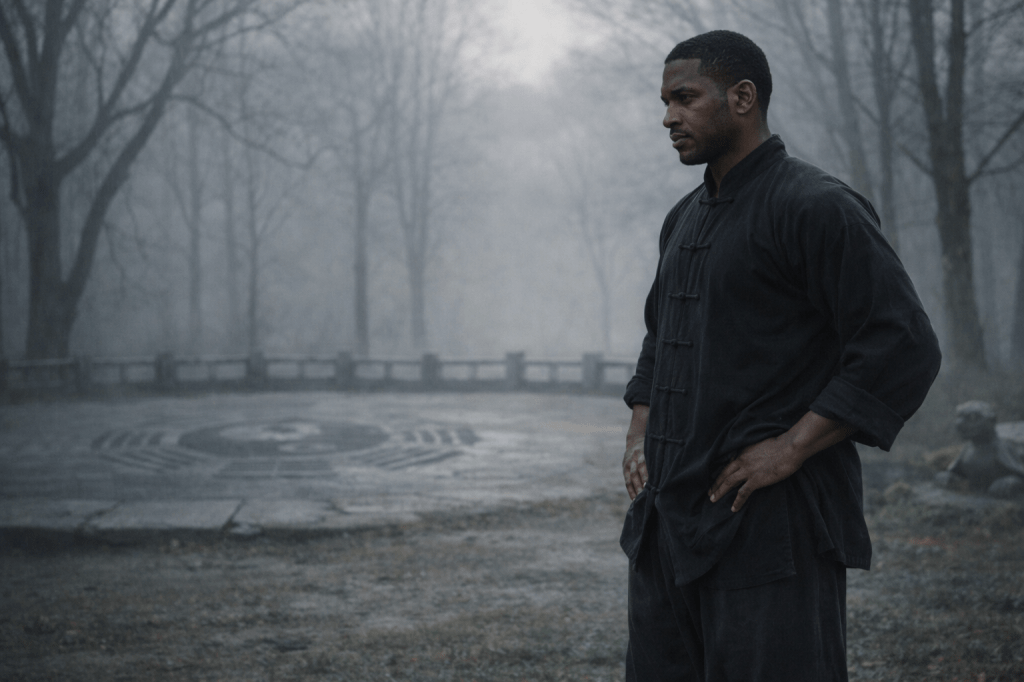
“That which is forced invites resistance; that which is allowed returns on its own.”
Tao Te Ching
Standing there on those mornings, I began to feel the truth of that—not as philosophy, but as physiology. Once that settled in, something softened in me. Stiffness stopped reading like a flaw and started reading like information. The body wasn’t saying no; it was saying not yet.
Around that same season of noticing, science caught up with what experience had been whispering. Stretching doesn’t meaningfully reduce post-exercise soreness. The soreness most people mean—Delayed Onset Muscle Soreness, the ache that shows up a day or two after unfamiliar or intense effort—barely changes with stretching at all. Once that’s understood, it becomes easier to stop blaming yourself when DOMS appears. It isn’t punishment. It’s adaptation doing its work.
And the old story about flushing out lactic acid turns out to be misplaced blame. Lactate isn’t waste; it’s fuel, and the body clears it on its own if you simply let circulation do its work. That realization didn’t disappoint me. It relieved me. It meant recovery didn’t need to be earned through discomfort. Muscles adapt on their own schedule. Healing unfolds when conditions allow it, not when we argue with it. Stretching wasn’t cleaning anything up. It was doing something quieter. It was signaling the system that the demand phase had ended, that effort could give way to restoration.
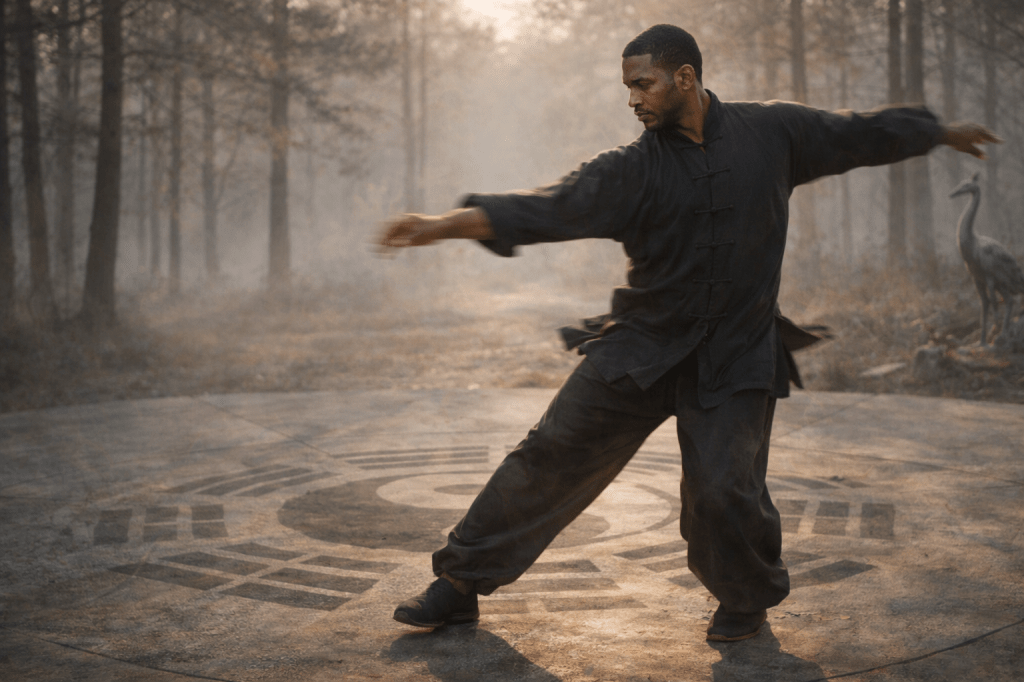
“Knowing when to stop preserves what sustains you.”
Tao Te Ching
There’s a particular dullness that follows long static stretching before explosive effort. Anyone who has sprinted, jumped, struck, or lifted after extended holds knows the feeling even if they’ve never named it. The movement still happens, but without urgency. Power arrives muted, as if filtered through hesitation. It isn’t weakness or injury. It’s the system settling too soon. A stretched muscle listens before it speaks, and that listening becomes a liability when the moment calls for decisiveness.
So my warm-ups changed, not dramatically but deliberately. I stopped folding and holding before training and started moving through range instead—circles, pulses, transitions that warmed tissue without quieting readiness. Dynamic movement didn’t make me looser in the abstract. It made me available.

“The soft overcomes the hard when it arrives at the right moment.”
Tao Te Ching
The deeper shift came when I paid attention to how range actually arrived. Not through pulling harder, but through lowering more carefully. Not through surrendering weight, but through controlling it. Lengthening muscle under load—eccentric work—did what stretching alone never quite managed. It made extended positions feel trustworthy. A hamstring didn’t just allow length; it supported it. A hip didn’t just open; it stayed open under responsibility.
Flexibility gained without strength feels temporary, like borrowed space that disappears under pressure. Flexibility built through strength feels inhabited. The nervous system relaxes when it knows the structure can hold.
“What is rooted deeply is not easily shaken.”
I Ching
The body doesn’t fear length; it fears helplessness at length. What finally tied it together was the realization that much of what we call tightness lives in sensation before it lives in tissue. Early flexibility gains come less from structural change and more from shifts in perception. Stretching teaches the nervous system that a position isn’t dangerous, that the edge can move without consequence. Over time, connective tissue adapts too, but the first door that opens is tolerance. You don’t take range from the body. You’re granted access.
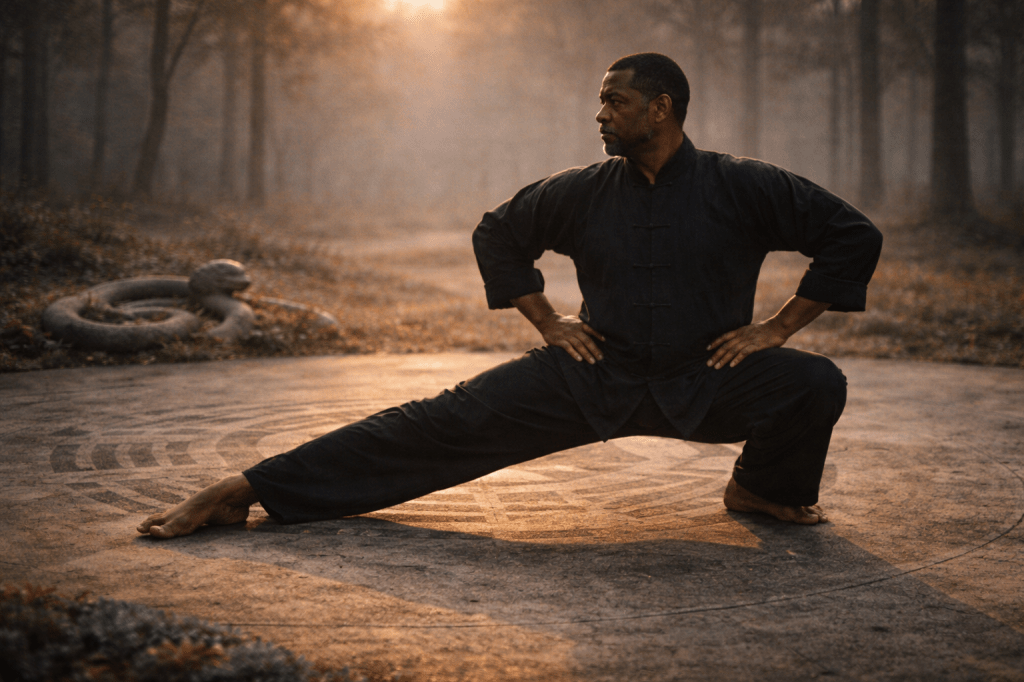
“Return is not retreat; return restores what was lost.”
I Ching
Stretching, then, stopped being something I did to my body. It became something I did with it. On rest days, stretching listens. After training, it soothes. During recovery weeks, it reminds the joints they still belong to me even when load recedes. It no longer pretends to build strength, erase DOMS, or override fatigue. It simply does what it does best: it quiets, it informs, it restores a sense of safety.
Where I stand now feels simpler and more honest. I stretch to calm the system, not to chase progress. I build range through strength, not persuasion. I read stiffness as information, not insult.

“Those who force do not endure; those who yield remain.”
Tao Te Ching
The body adapts faithfully, but it remembers how you approached it. Force teaches defense. Patience teaches cooperation. That lesson didn’t arrive through doctrine or debate. It arrived through years of showing up, listening late, and finally yielding at the right moment. Once I did, stretching stopped asking for belief—and started offering guidance instead.
Sifu Khonsura Wilson
Stay inspired & inspirational.

 Musings on Martial Arts, Taoist Philosophy & All Things Wellness Related.