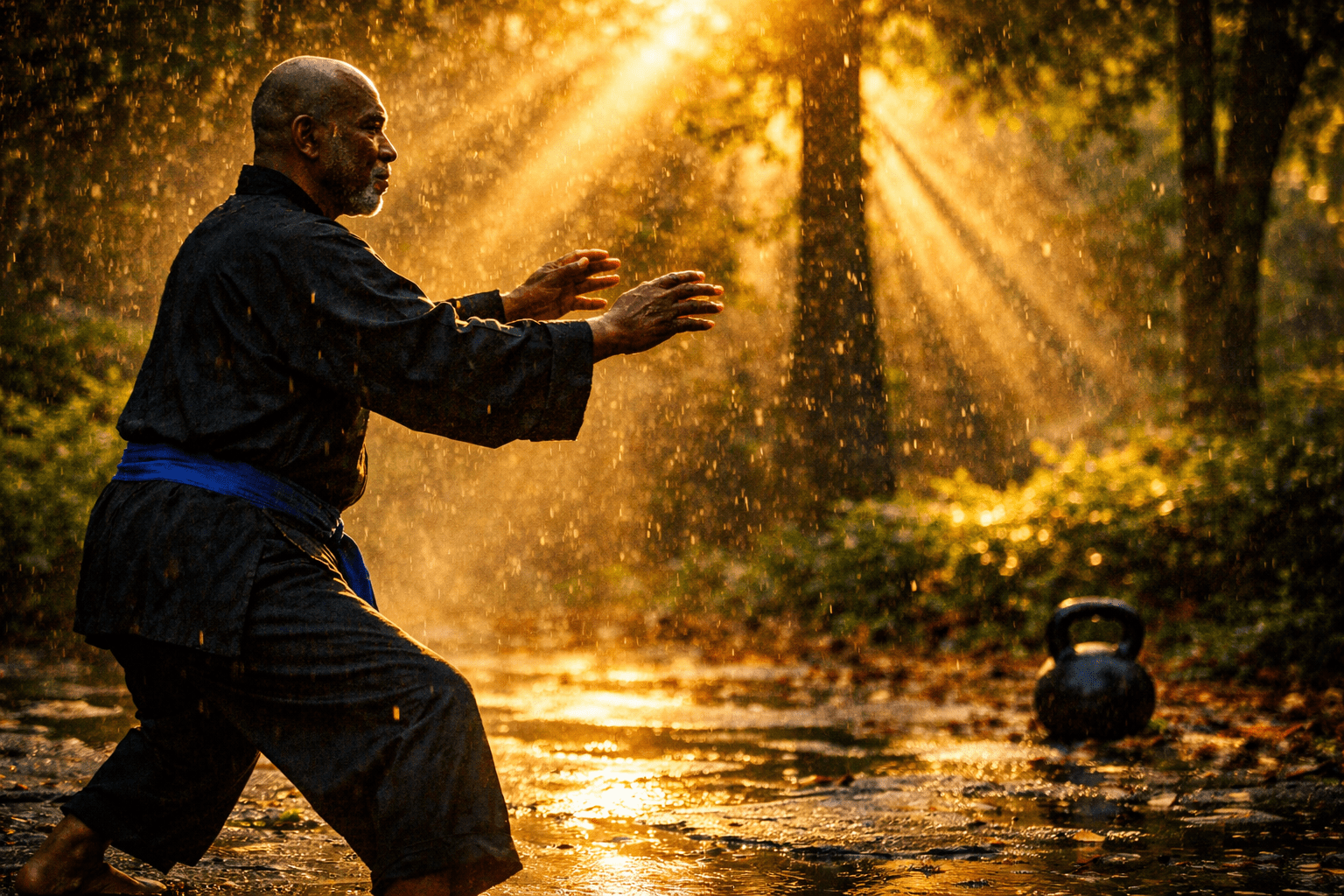
⚔️ Rain on the glass. Feet on the path. A question in the ribs.
“I’ve learned that making a living is not the same thing as making a life.”
Maya Angelou
I like to think in motion, because motion refuses the illusion of perfect control, and a long walk turns big ideas into honest measurements—breath, cadence, tension, ease, the small negotiations between desire and limit—so I let the morning set the tempo before I let the mind write the message. Rain stitched itself across the window with soft percussion, and I stood there long enough for the room to narrow and the mind to widen, imagining the walk I would take later—wet sidewalks, hood up, shoulders dropping, attention returning to the simplest instruments: feet, lungs, time. I didn’t want a clean motivational slogan today; I wanted proportion, a standard that could survive a busy week, a heavy schedule, a proud mind, and a body that keeps quiet records.
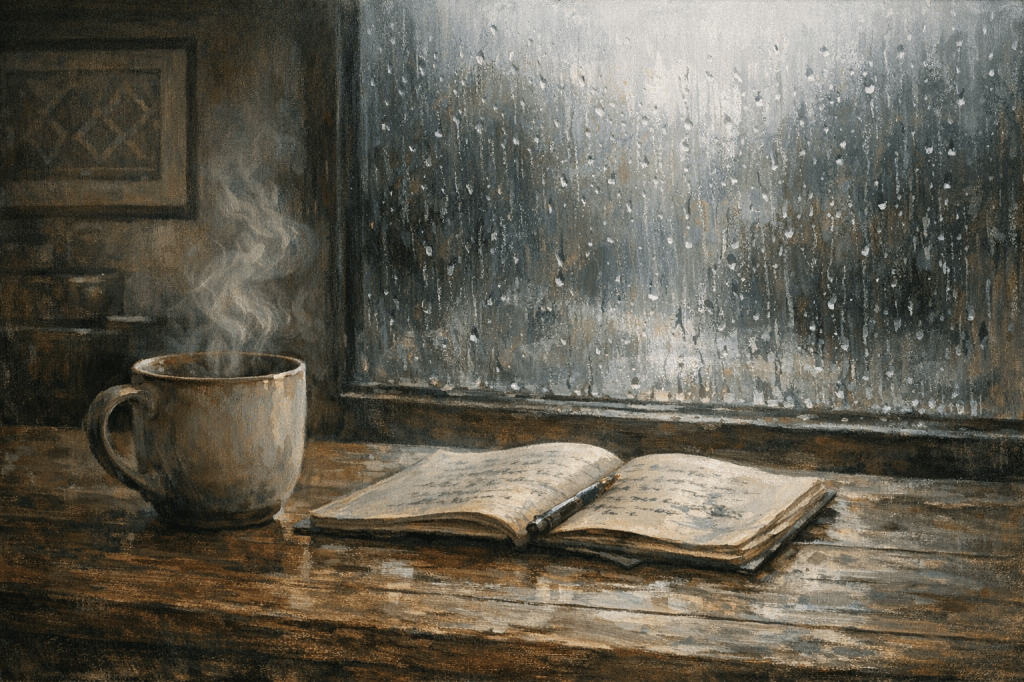
I noticed a small thing first, the kind of thing a fieldnote catches because it refuses drama: my jaw tightened while the rain kept time, and my shoulders crept up as if the calendar itself had hands, as if the day planned to lift me by the collar. I watched that tension, then I watched the mind try to justify it, and I recognized the old pattern—overextension dressed as responsibility, excess disguised as excellence, strain dressed up in a respectable suit and introduced as “discipline.” I didn’t argue with the feeling. I just recorded it, then I listened for the older voices that always show up when I actually listen.
Rain tapped the window this morning with patient insistence, making the room feel smaller while making thought feel louder, and I held two old warnings that arrived from different traditions yet carried the same marrow. One came from the Tao Te Ching, chapter 44, a sequence of questions that presses the reader toward proportion: “As for your name and your body, which is dearer? As for your body and your wealth, which is more to be prized? As for gain and loss, which is more painful?” The other arrived as a crisp I Ching reminder I’ve carried like a pocket-stone: overextension invites decay. Together they formed one sober instruction—neither against ambition nor against desire—yet fully against excess, against the quiet habit of pushing past measure until what once felt like growth begins to feel like erosion. These traditions don’t condemn effort; they warn against the kind of effort that refuses timing, ignores limits, then acts surprised when the body, the mind, or the spirit begins to dry out.
Decay rarely enters like a dramatic collapse. It doesn’t always arrive as injury, burnout, or public disgrace; it often arrives as subtler changes, as increments that seem too small to count until they gather into a pattern you can’t ignore, a pattern you can feel in the ribs before you can explain it in words. Overextension shows up when the schedule stretches beyond breath and breath shortens in response; when training expands beyond recovery and joints begin to whisper; when the mind keeps chasing proof and sleep thins; when the appetite for more—more work, more status, more security, more control—fills the day so completely that the nervous system never fully unclenches. Nothing explodes, yet something dries. Taoist texts notice these small costs precisely because these small costs compound, and the I Ching’s warning about overextension describes the same mechanism: expansion without proportion doesn’t produce endless upward movement; it produces reversal, correction, contraction, and decay.
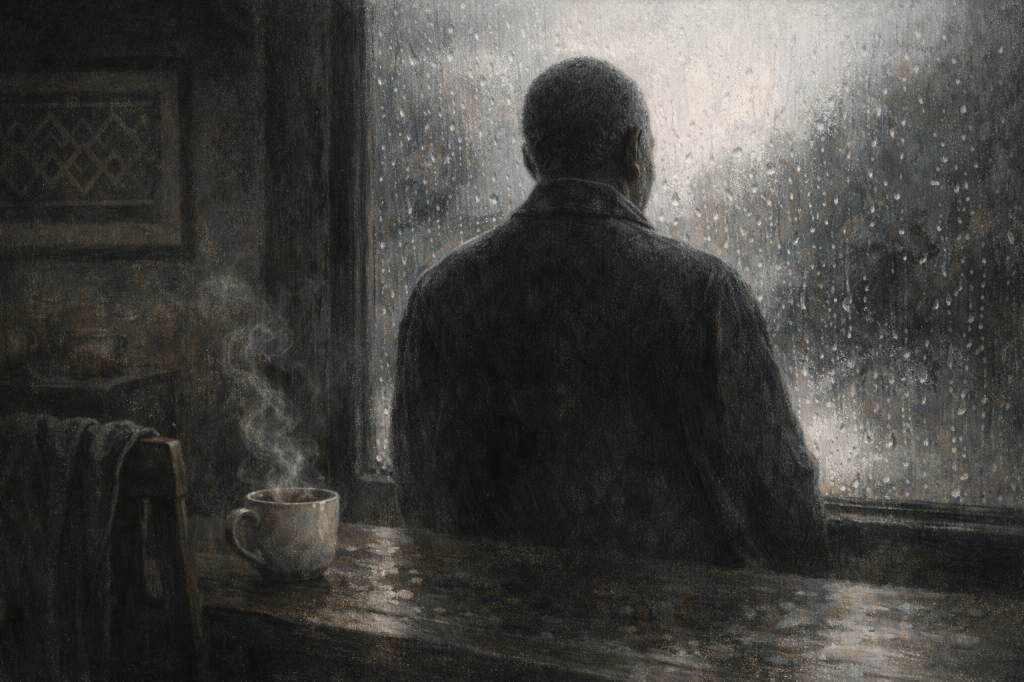
And I notice how this drying works, how it doesn’t ask permission, how it doesn’t announce itself with sirens, how it just keeps subtracting in small, stealthy sips—one thin night of sleep, one irritated morning, one more cup of coffee, one more skipped stretch, one more day lived in the shoulders—until the body starts speaking in a language the mind can’t keep interrupting. The fieldnote part of me trusts that language. It doesn’t romanticize it. It records it, then it follows the pattern back to the source.
The first Taoist question, “name or body, which is dearer?” doesn’t scold; it clarifies hierarchy. A name carries reputation, legacy, the desire to matter, the hope that others speak of you with respect, and in a world that rewards visible output and public recognition, a name can feel like a form of safety, like a shield you can hold up when the world grows sharp. Yet a name cannot breathe for you, cannot walk for you, cannot sleep for you, cannot stretch the hips that hold the day’s tension, cannot regulate the nervous system after a week of pressure. The body, by contrast, holds every conversation you will ever have, every lesson you will ever teach, every practice you will ever refine, every moment of love you will ever offer. When life forces a trade—when you must choose between appearing invulnerable and remaining healthy, between praise and rest—the Tao quietly recommends choosing the body first, not because reputation lacks value, but because reputation cannot outrank the instrument through which life happens.
I write that and I can feel the resistance that tries to rise in me, the little protest that says, yes, but the name pays bills, the name opens doors, the name protects against disrespect, the name keeps the work moving. I don’t deny any of that. I just notice the deeper ledger that the body keeps, because the body doesn’t accept promotions as payment, and the body doesn’t trade sleep for status without sending an invoice later. So the question doesn’t ask me to stop caring about legacy; it asks me to stop sacrificing the vessel that carries the legacy.
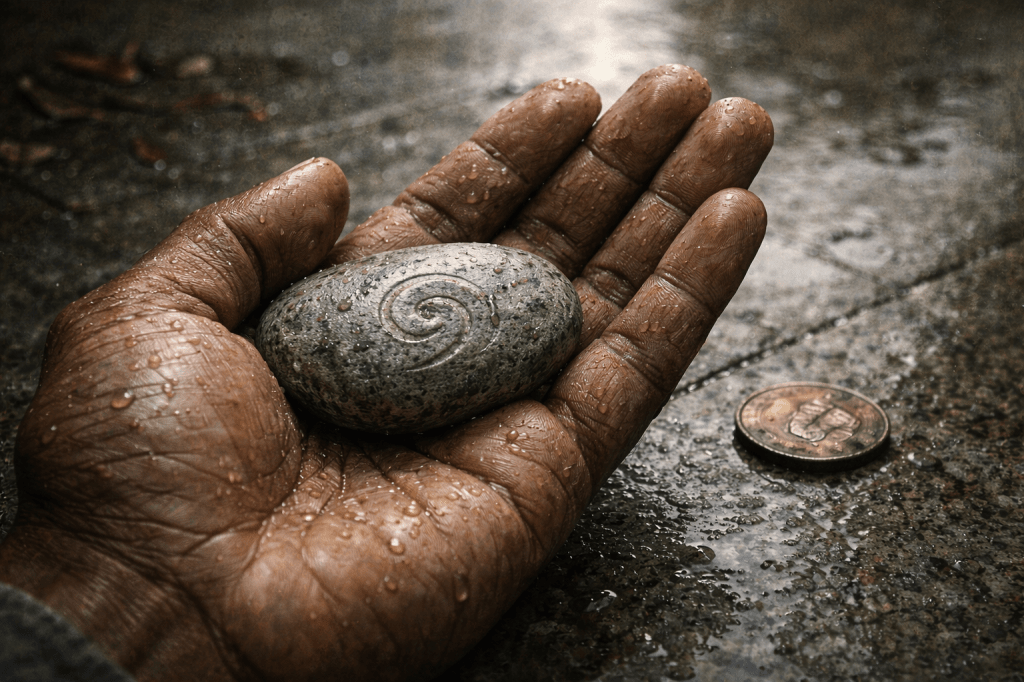
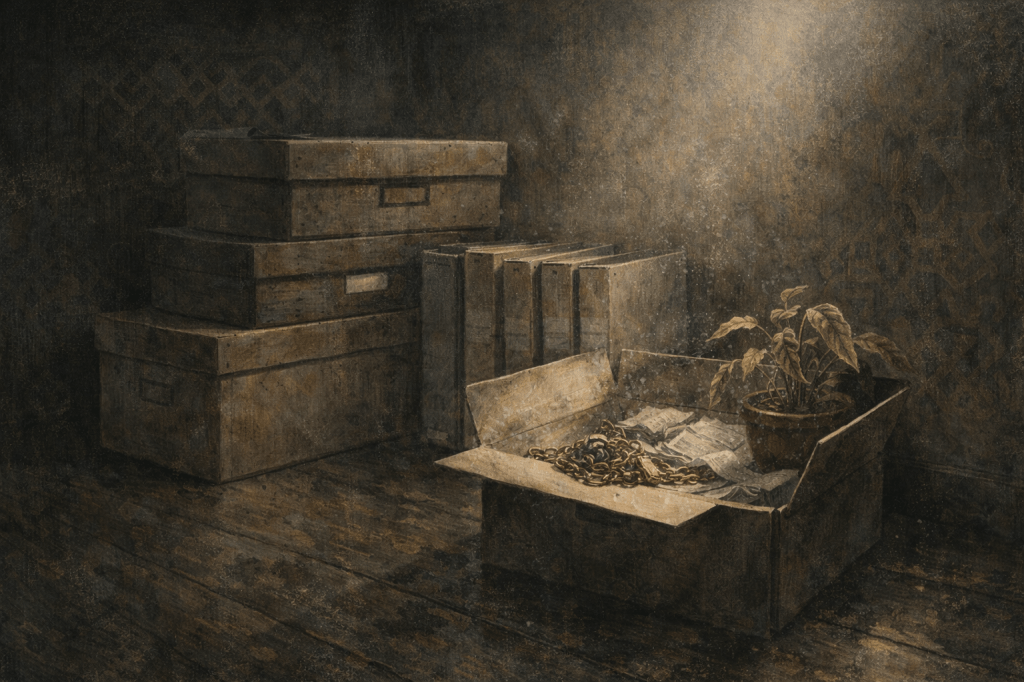
The next question, “body or wealth, which is more to be prized?” extends the same logic into another arena where overextension often hides under the costume of prudence. Wealth can buy tools, reduce inconvenience, open options, grant time, and no honest person needs to pretend that money carries no meaning. Yet money cannot purchase back a nervous system exhausted by chronic strain; money cannot restore joints worn down by pride-driven intensity; money cannot reverse the subtle stiffening that accumulates when rest becomes rare. The Tao’s critique doesn’t demand deprivation; it demands proportion. Excessive accumulation—“the storing of too much goods”—comes with weight: maintenance, attention, complexity, worry, distraction, and that weight drains vitality in slow, silent sips. A person can possess more and live less, not because possessions offend some spiritual law, but because excess burdens the mind and steals time. Overextension often begins here, not in extravagance, but in the quiet habit of adding and adding, storing and storing, until the storing stores the one who stores.
That last line—until the storing stores the one who stores—keeps showing up in life as a plain, unglamorous fact. I see it when a person maintains a life they can’t live inside. I see it when organization becomes obsession. I see it when the tools intended to serve the work become the work, then the work intended to serve the life becomes the cage. The tone doesn’t judge that pattern. It just names it, because naming it reduces its magic.
The third question, “gain or loss, which is more painful?” points toward the emotional engine that drives overextension when the calendar already groans. Gain excites, yet loss haunts, and fear of loss encourages people to push past measure in order to feel safe. The fear whispers that one more achievement, one more purchase, one more commitment, one more late night will secure the future, and the whisper often sounds reasonable because it speaks in the language of responsibility. Yet fear of loss can cost more than loss itself when it hardens into a lifestyle, converting each day into a defensive posture, a small war against imagined scarcity. Overextension becomes a form of insurance, but the premiums get paid in sleep, peace, attention, health, and relationship. Here the I Ching lands with blunt clarity: overextension invites decay. Expansion without timing invites correction; growth without proportion invites contraction; life refuses permanent acceleration.
And that refusal matters, because a person can argue with life for a long time, can bargain, can brace, can push, can perform competence, can stack commitments like bricks, and still life will eventually answer with physics, with fatigue, with friction, with the body’s quiet veto. The fieldnote voice trusts consequences more than promises. It watches the outcome and learns from the outcome. It notices the pattern: constant acceleration doesn’t produce constant ascent; it produces strain, then snapback.
When the Tao warns that “an excessive love for anything will cost you dear in the end,” it doesn’t condemn love; it condemns attachment that hardens into clutching. Excessive love of productivity becomes burnout; excessive love of recognition becomes anxiety; excessive love of youth becomes injury; excessive love of control becomes isolation; excessive love of security becomes hoarding. The phrase “cost you dear” matters, because the cost often arrives in currencies we don’t account for until we spend them—breath, mobility, patience, tenderness, time—then wonder why the account runs low. A person can grow rich in objects and poor in presence. A person can grow admired in public and depleted in private. The Tao doesn’t forbid desire; it disciplines desire so desire stops eating the very life it claims to improve.
I keep returning to that phrase—cost you dear—because it doesn’t threaten hell, it doesn’t wag a finger, it doesn’t preach. It just tells the truth about trade. Every life runs on trade. Every schedule runs on trade. Every “yes” requires a “no” somewhere, even when you don’t say the “no” out loud. And overextension often means you keep paying, paying, paying, then acting surprised when the body hands you the receipt.
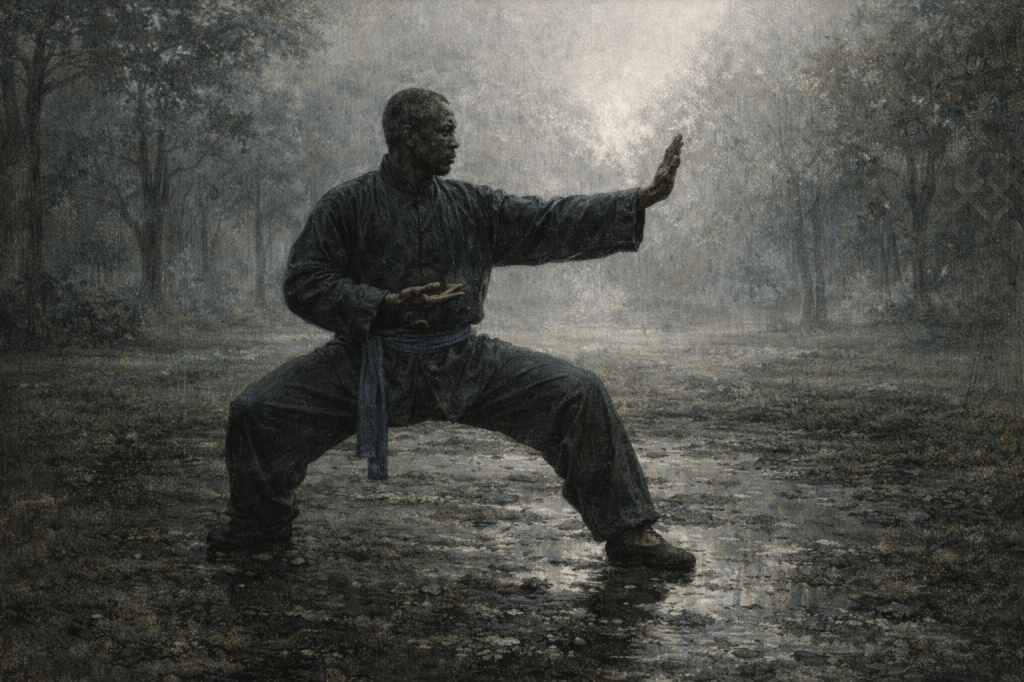
This leads to the central prescription: “To know when you have enough is to be immune from disgrace. To know when to stop is to be preserved from peril. Only thus can you endure long.” Enough rarely arrives as a number on a screen or a target on a list; enough often arrives as a felt sense—nervous system settling, mind quieting at night, body moving without constant complaint, spirit releasing resentment toward its own ambition. Stopping, in this view, doesn’t signal weakness; it signals skill, the practiced capacity to preserve what matters. In martial language, stopping at the right time resembles keeping the guard while releasing unnecessary tension; it resembles refusing the overcommitted strike that exposes the ribs; it resembles choosing structure over strain. Overextension in the dojo reveals itself immediately: a stance stretched too far loses root, a punch thrown past range exposes the line, a breath forced beyond rhythm tightens the whole frame. Life works the same way, just slower and less obvious. The person who cannot stop will eventually get stopped by injury, exhaustion, or bitterness; the person who learns when to stop preserves endurance.
I trust that dojo analogy because it refuses abstraction. A body can’t fake range. A body can’t fake root. A body can’t fake breath. You can posture in conversation; you can posture on a résumé; you can posture online; you can’t posture through a misaligned knee under load, and you can’t posture through a nervous system that never settles. So the Tao’s “stop” starts sounding less like moral advice and more like craft—timing, measure, restraint, rhythm, the kind of intelligence you can feel in the feet.
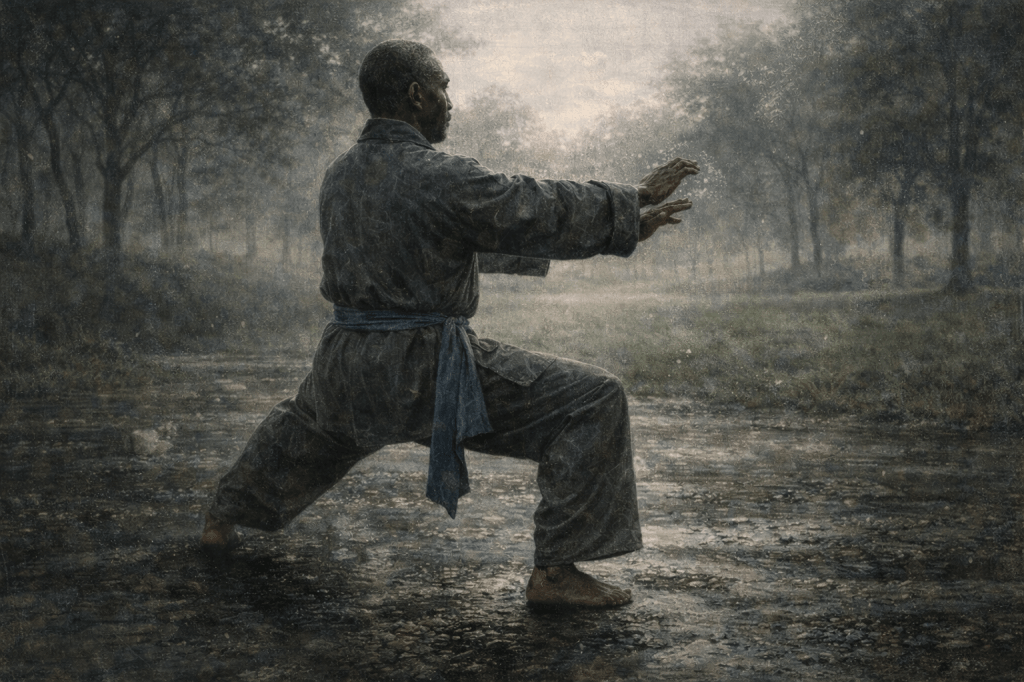
The passage’s line about letting the “flexibility and grace of yoga, tai chi” replace the “power of lifting at the gym” reads best, to my mind, as an invitation to rebalance rather than a command to abandon strength. Strength matters, and grace keeps strength usable. Power matters, and softness keeps power responsive. A martial artist doesn’t need to choose between structure and flow; a martial artist needs both, because structure without flow turns into armor that restricts the wearer, and flow without structure turns into drift. Tai Chi doesn’t remove power; it trains power to arrive without strain. Yoga doesn’t erase resilience; it teaches resilience to live inside length, space, and breath. When we train with attention instead of ego, with alignment instead of aggression, with breath instead of bracing, we practice the very non-resistance the passage recommends. We stop fighting the body we carry today. We stop arguing with time. We cooperate with reality while still cultivating capability.
And I notice how this cooperation changes the feel of effort. Effort can feel like clean work, like skillful strain that ends in recovery, like sweat that doesn’t steal sleep, like practice that leaves the mind clearer rather than harsher. Or effort can feel like friction, like forcing, like proving, like clenching through the day then collapsing at night, like living in the shoulders while calling it dedication. The fieldnote tone keeps returning to sensation because sensation tells the truth faster than ideology.
Consistency remains the challenge, and your admission—that you need reminders—carries humility, and humility keeps the Tao close. The issue doesn’t involve sainthood; the issue involves practice, awareness sharp enough to notice overextension early, before decay deepens. Overextension often disguises itself as virtue: hard work, dedication, preparedness, discipline. Yet virtue without proportion turns brittle, and brittleness cracks. Decay whispers first, not as catastrophe, but as subtle irritation, stiffness, restless sleep, shallow breath, thin patience. The sage adjusts early, not after collapse.
The phrase “overextension invites decay” therefore functions as more than a warning; it functions as a daily diagnostic. Where does extension still serve life, and where does extension quietly erode life? The answer often appears in the nervous system. When expansion feels grounded, it builds; when expansion feels frantic, it erodes. Endurance requires rhythm, not constant intensity. The Tao does not chase spectacle; it cultivates steadiness. Steadiness preserves joints, preserves clarity, preserves relationship, preserves joy. And joy in this older sense doesn’t require constant happiness; joy shows up as a system that can unclench and return, a life that can move with proportion, a practice that can endure.
As rain continued its soft percussion against the window, I felt the familiar tug to push a little further—to add, to refine, to extend—yet the passage lingered like a steady hand on the shoulder. Not yet. Not too much. Just enough. Perhaps that discipline—quiet, unglamorous, deliberate—holds more power than any surge of intensity ever could, because it protects the one thing every other ambition depends on: the capacity to endure long.
And when I finally picture myself outside—water beading on the sleeves, shoes darkening at the edges, breath rising and fading—I can feel how the whole lesson fits a walk better than it fits a lecture, because a walk teaches proportion without argument. A person can’t sprint forever without paying. A person can’t hold the breath forever without shaking. A person can’t keep adding miles, tasks, promises, proofs, without some part of the self filing a quiet complaint. So I keep the older instruction close, not as a scold, not as a ban on ambition, but as a rhythm check—name versus body, body versus wealth, gain versus loss—because the day will ask for everything, and a wise life answers with measure, then keeps walking.
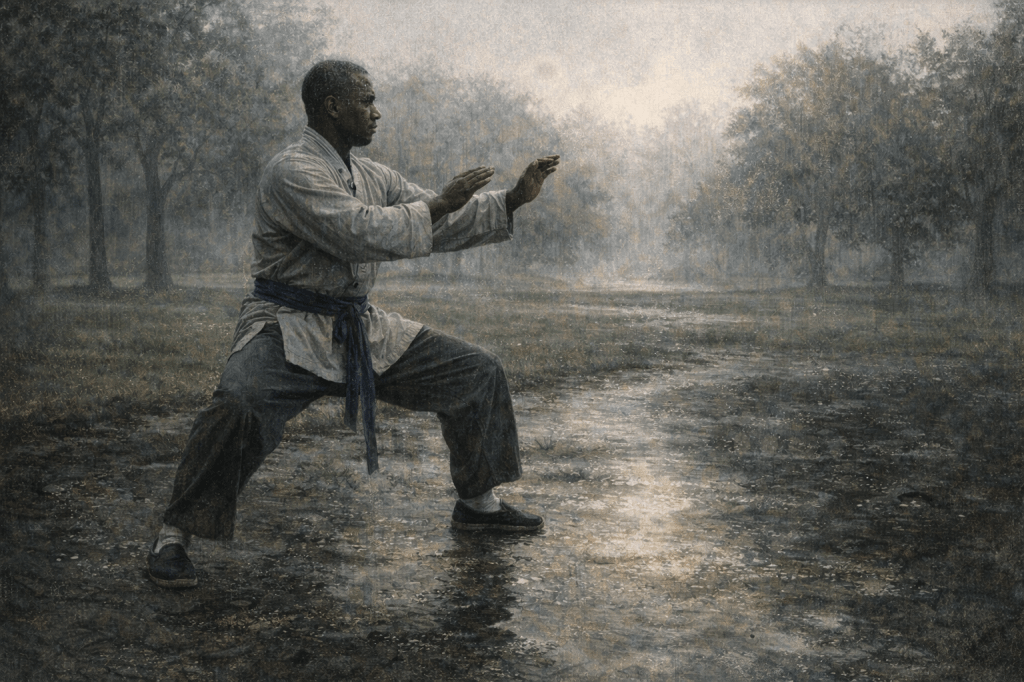
By the time the walk ends, the rain usually softens, not because the sky changes its mind, but because the body changes its relationship to the weather, and I notice that the whole morning’s lesson never asked me to become less driven, only less dragged, less yanked by the anxious need to prove, protect, accumulate, and control. I can earn, I can build, I can train, I can teach, and I can still refuse the old superstition that says exhaustion equals virtue. I can keep the work honest without keeping the life clenched, because the life doesn’t ask for permanent acceleration; it asks for proportion, for rhythm, for enough.
So I try to end the day the way I try to end a good session in the dojo: stepping back into guard, loosening what doesn’t serve, keeping what does, leaving the room with breath still available. If I sense that familiar tug to push a little further—one more task, one more message, one more refinement—I practice the quieter strength instead: I stop on purpose, I stop with skill, I stop while I still can. Then I return to the household life—tea, dishes, dogs, a conversation that doesn’t need performance—carrying the only wealth that multiplies when spent wisely: mobility, clarity, tenderness, time.
And when the mind tries to bargain again, dressing overextension in the language of responsibility, I let chapter 44 ask its three questions one more time, not as philosophy, but as a practical test that fits inside a single breath: name or body, which counts more; body or wealth, which deserves more; gain or loss, which hurts more. The answers don’t demand drama. The answers demand measure. I don’t need to win the day; I need to endure long.
Stay inspired and inspirational.
— Sifu Khonsura Wilson

 Musings on Martial Arts, Taoist Philosophy & All Things Wellness Related.