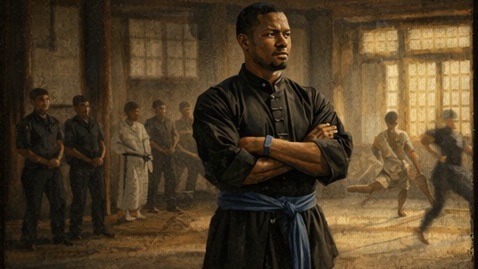
The temple held that familiar quiet that never felt empty — wood polish lingering in the air, sunlight falling in clean rectangles on the floor, bodies warming up with small circles and softer breath, everybody pretending they arrived calm even though life had already thrown its little punches before breakfast.
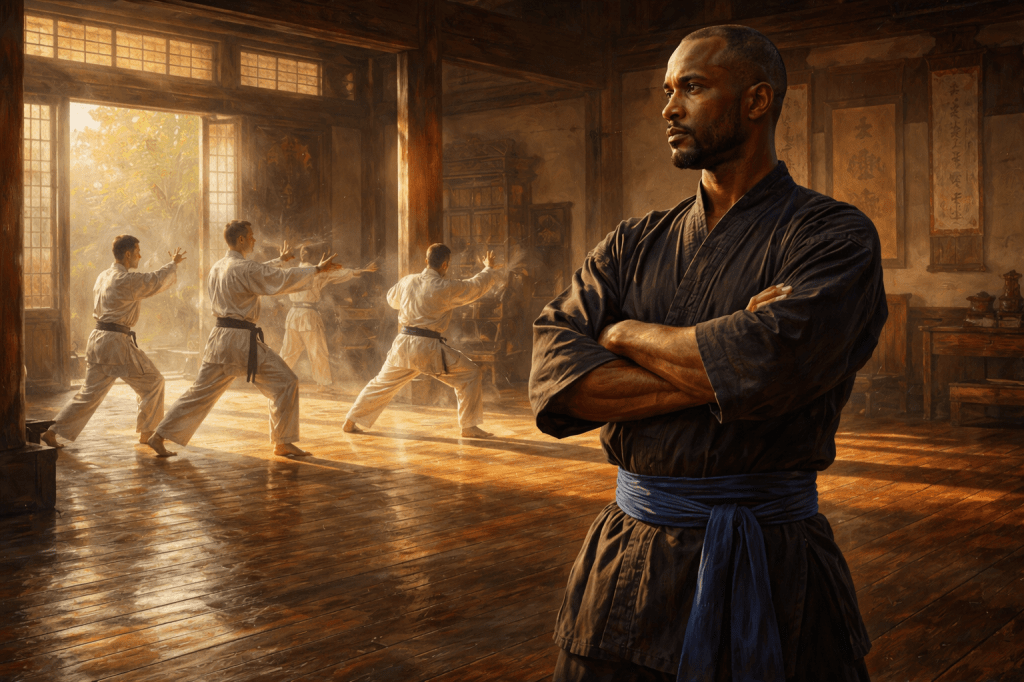
Sifu didn’t start with instruction. He started with observation. He watched one brother float too high in his stance, watched a sister rush her transitions, watched somebody chase speed the way people chase trends — hungry for the feeling of progress, hoping intensity might substitute for continuity. Then he spoke, low and plain, like a craftsman naming the real problem.
“Don’t become a part-time practitioner if you want to progress.”
He didn’t say it with anger. He didn’t say it with drama. He said it like fact, like physics. And I felt the room tighten, because everybody in there knew what “part-time” meant beyond attendance.
Part-time meant divided devotion.
Part-time meant starting strong, fading quiet.
Part-time meant wanting the fruit without watering the tree.
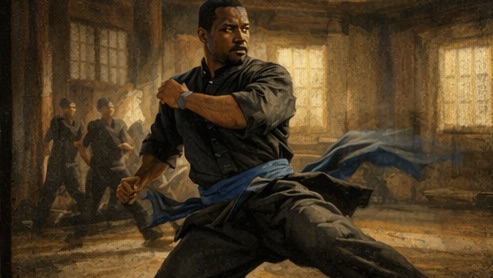
We moved into the third form — the one Sifu called “dynamic,” the one that changes range and rhythm, the one that teaches you how to travel from kick distance to strike distance to elbow distance without getting lost inside your own momentum.
Jab. Kick. Double jab.
Slow.
Not because slow looked good, but because slow revealed what speed tried to hide: weak structure, wandering balance, missing intent.
Then Sifu layered the next truth on top of the movement, like a weight you had to carry while you practiced.
“Never chase what your body, season, or life cannot support.”
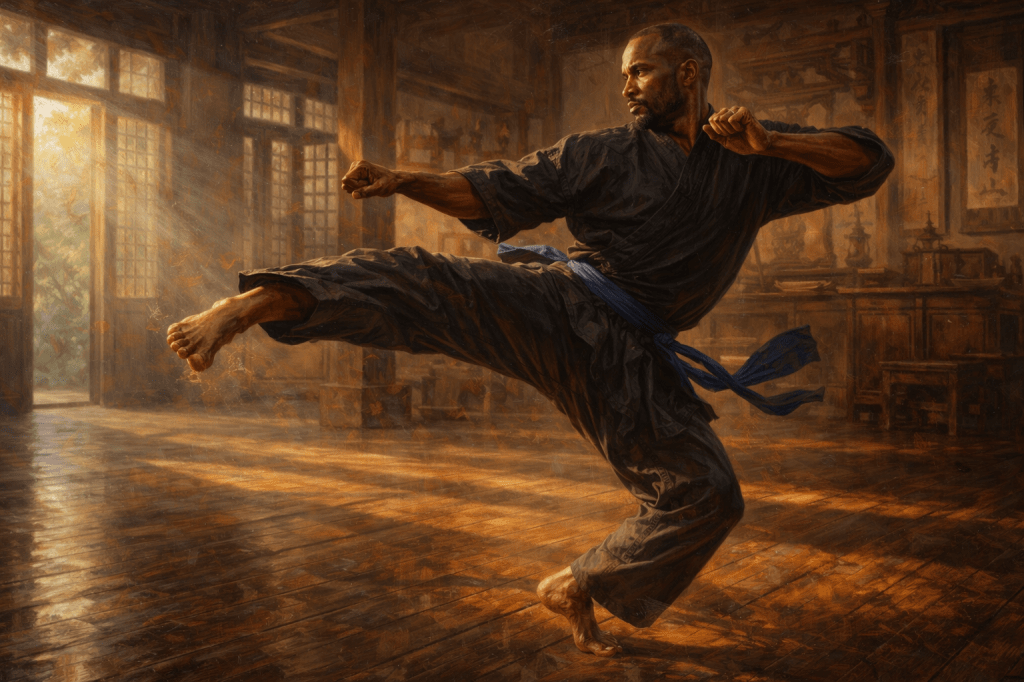
That line did not limit ambition. It corrected it. Because real training never asked, “What do I want?” without also asking, “What can I sustain?”
If your knees whisper caution, you listen.
If your week holds grading, meetings, and family obligations, you adjust.
If your season demands recovery, you honor it.
Chasing what your current life cannot hold does not make you disciplined. It makes you reckless, and sooner or later the body collects its debt.
We reset. We ran the sequence again.
And then he delivered the one that always feels personal, because it removes every excuse without raising its voice.
“Don’t expect results from interrupted practice.”

Everybody loves the idea of consistency. Few people respect what it demands. When practice breaks into fragments — a burst of effort, a slump of absence, a return fueled by guilt — the nervous system never lays the wiring deep enough to become instinct. You can keep touching the skill, but you never become the skill.
Sifu corrected a back fist — compact, clean, almost casual — and then he offered the sentence that explains why forms matter even when the mind complains.
“Forms build vessels before vessels understand why.”
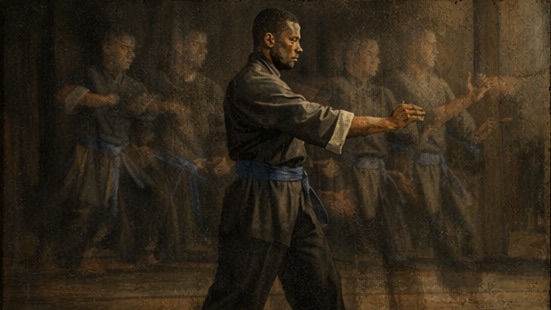
That one made me smile, because it named the hidden truth of real learning: we often repeat patterns long before we comprehend their purpose. We build a container first — posture, alignment, timing, recovery — and only later, under pressure, does understanding arrive like a late but faithful friend.
You never fully understand the form in the mirror.
You understand it when distance collapses and your body answers without hesitation.
And then Sifu concluded with the simplest line, the one that always offends the part of us that wants the shortcut.
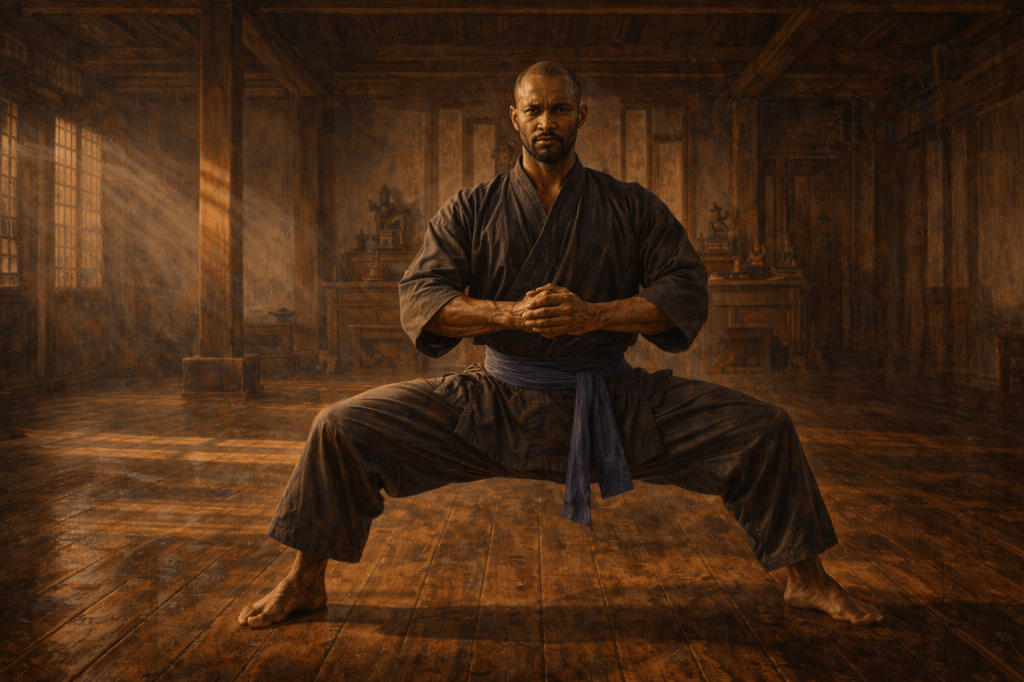
“Skill comes from boring loyalty to fundamentals. Not from excitement.”
There it was.
No mysticism. No marketing. No motivational speech.
Just the tyranny — and the mercy — of fundamentals.
Because excitement flames up fast and burns out faster, but fundamentals build quietly, day after day, rep after rep, until the body starts speaking a language you no longer need to translate.
Standing there among brothers and sisters, sweat beginning to gather but not yet pour, I realized something that felt both reassuring and inconvenient:
The temple did not give me a new philosophy.
It confirmed the one I already live by — in teaching, in writing, in training, in marriage, in every long project that asks for patience instead of applause.
Continuity beats intensity.
Proportion beats ego.
Repetition beats thrill.
And once you recognize that, you lose the right to pretend you didn’t know.
Stay Inspired & Inspirational!
Sifu Khonsura Wilson

 Musings on Martial Arts, Taoist Philosophy & All Things Wellness Related.