The Depth of Knowing

“If a man is worth knowing at all, he is worth knowing well,”

-Alexander Smith’s

THE ABOVE STATEMENT still holds in our modern world, where superficial interactions often overshadow meaningful connections. This statement speaks to a profound truth about human relationships and the depth of understanding we seek in meaningful connections. It aligns with the Taoist principle of diving deep into the essence of things, reflecting a wisdom that transcends mere acquaintance.

Imagine encountering someone whose presence sparks your curiosity, a sage, a thought-provoking stranger, or even a book stumbled upon in a vacation home whose words provoke deep reflection. In a world of rapid interactions and fleeting attention, these initial fascinations often hint at a wealth of experiences, insights, and stories waiting for us to explore. Smith’s words starkly contrast our fast-paced world, reminding us of the value of truly understanding someone and their ideas.

This journey of understanding is about others and ourselves, offering us the potential for profound personal growth.

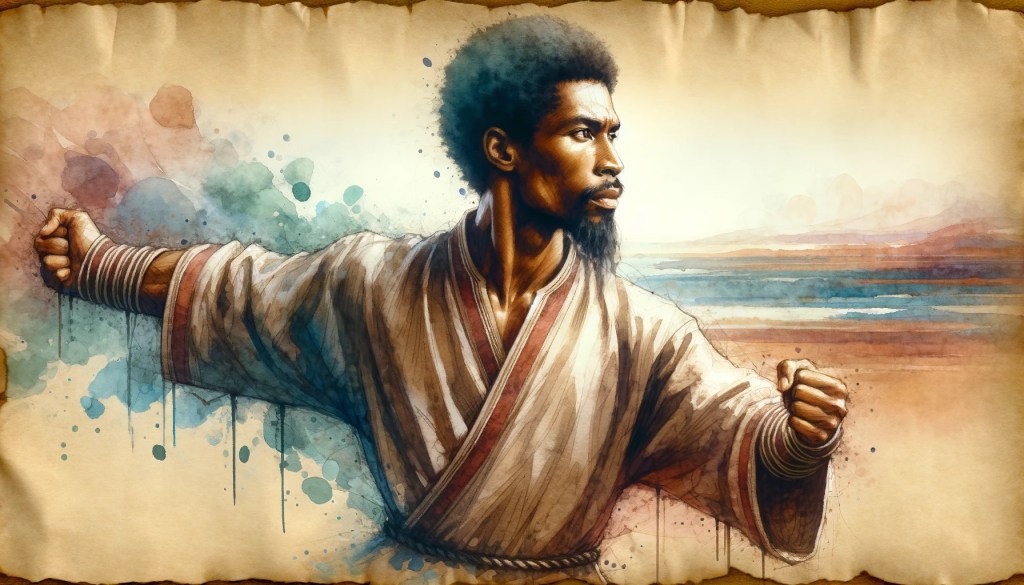
Genuinely getting to know someone is not a journey for the faint-hearted. It remains a process that demands patience, presence, empathy, and an open heart. It mirrors a martial arts journey, where mastery is not about copying movements but profoundly understanding each technique’s purpose and spirit. Whether in Kung Fu, Tai Chi, or any form of self-cultivation, the depth of practice determines the richness of experience.

As we navigate the complexities of daily interactions, let’s remember Smith’s wisdom. Let’s strive to forge relationships that transcend the surface, embarking on the journey of genuinely understanding those around us. In doing so, we enrich our lives and create connections that withstand the test of time. This journey of understanding is about others and ourselves, offering us the potential for profound personal growth.

Stay Inspired and Inspirational

Harmony in Motion: A Martial Artist’s Guide to Life

Why do martial artists pursue balance amid conflict? How can the principles of martial arts help us navigate life’s challenges?

“Harmony fosters growth in small things; its absence causes great things to wane.”

Sallust

Picture yourself at the edge of a serene lake at dawn, its surface reflecting the sky perfectly. A stone, when it hits the water, disturbs this tranquility yet unveils a deeper beauty and complexity. This scene, capturing both disruption and harmony, illustrates a key lesson from martial arts that goes well beyond the dojo, touching on life mastery’s essence.


The Dance of Harmony and Conflict

Martial arts show us that true strength comes from balance, not dominance. These arts—whether Kung Fu, Tai Chi, or others—emphasize harmonizing opposing forces: aggression with restraint, speed with stillness, power with flexibility. This dynamic extends beyond physicality, embodying the mental and emotional agility needed daily.

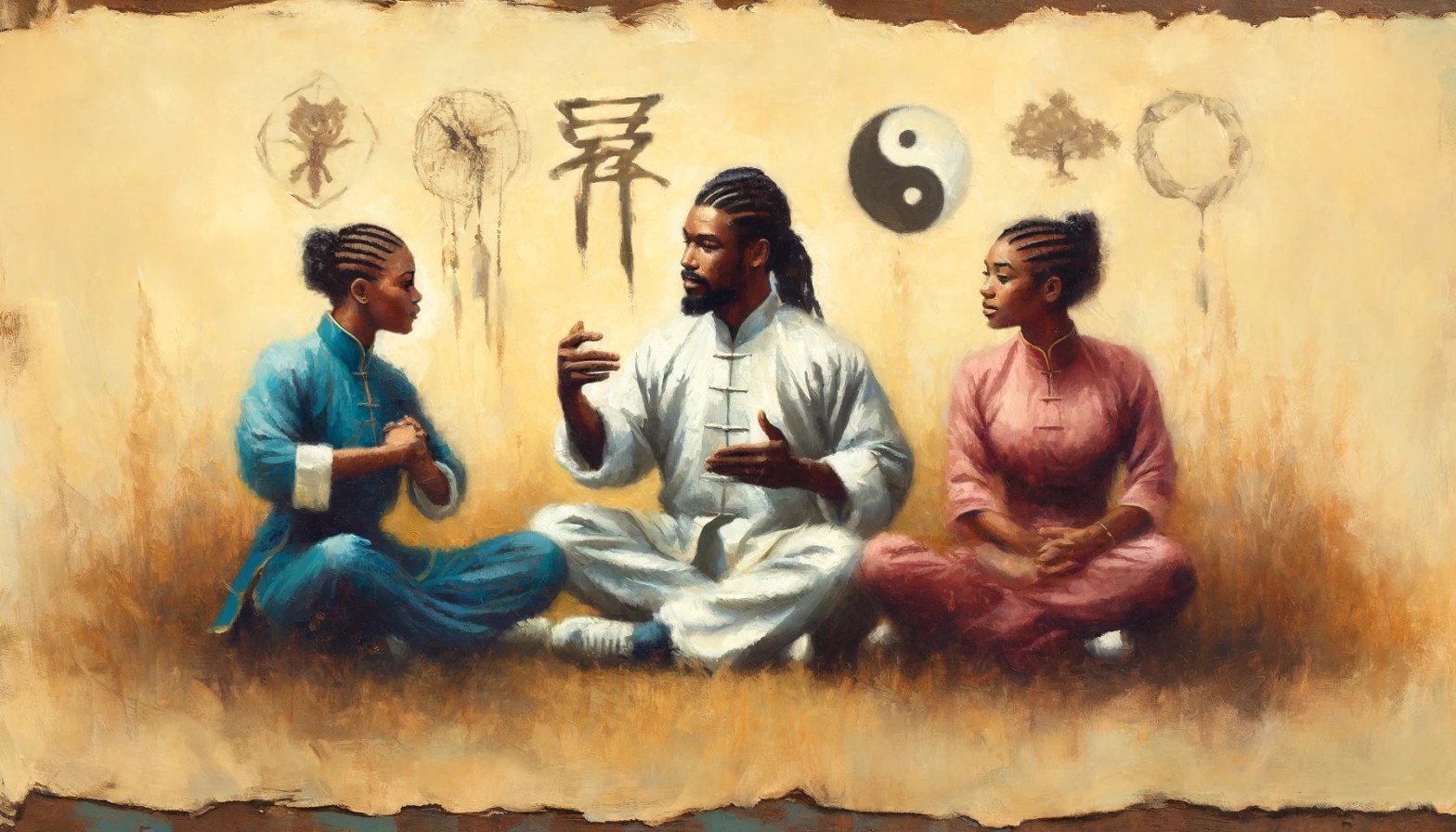
Consider the Yin and Yang, symbols that illustrate the interconnectedness and complementarity of seemingly contrary forces. In life, every challenge holds an opportunity, and every peaceful moment might lead to conflict. Mastery, in martial arts and in life, involves not suppressing one side for the other but integrating both.

Lessons in Resilience and Adaptability

Martial arts build physical strength and cultivate mental resilience and the capacity to recover from setbacks. Life, unpredictable by nature, tests our resilience. Just as a martial artist learns the art of falling and rising gracefully, we too can face life’s challenges without losing our balance.

Adaptability, a key martial virtue, proves essential for responding to changing situations. Just as martial artists adjust their tactics based on their opponents, we must stay flexible and open to life’s evolving scenarios. This teaches us the importance of adaptability in thought and action.

The Path to Inner Peace

Achieving inner peace represents the ultimate goal of martial arts. Through discipline and practice, martial artists learn to calm the mind, control the breath, and harmonize the spirit, finding serenity amidst chaos. This journey teaches us that peace does not mean the absence of conflict but the ability to find calm within turmoil.

By embracing and harmonizing the opposites within—strength and gentleness, action and contemplation—we navigate life’s complexities with greater ease and confidence.

Reflections

Our exploration today shows that martial arts offer more than combat techniques; they provide a blueprint for life. They remind us that balance, resilience, adaptability, and inner peace stand not just as ideals but as achievable realities. Reflect on these insights:

  1. Embrace Balance: Acknowledge the strength in your dualities.
  2. Value Resilience and Adaptability: Learn to move with life’s changes.
  3. Seek Inner Peace: Find your calm within.
  4. Practice Compassion: Let empathy guide you through life’s conflicts.

How can you integrate these principles into facing your life’s challenges? How might this perspective alter your approach to conflicts, both within and without?

In closing, let’s remember the guidance of Rumi and Mandela, who urge us to find balance and make choices reflecting our hopes, not our fears.

Until next time, Stay inspired & inspirational!

Harnessing Courage in the Shadows of Fear: A Journey Within

We suffer more in imagination than in real life,”

-Seneca

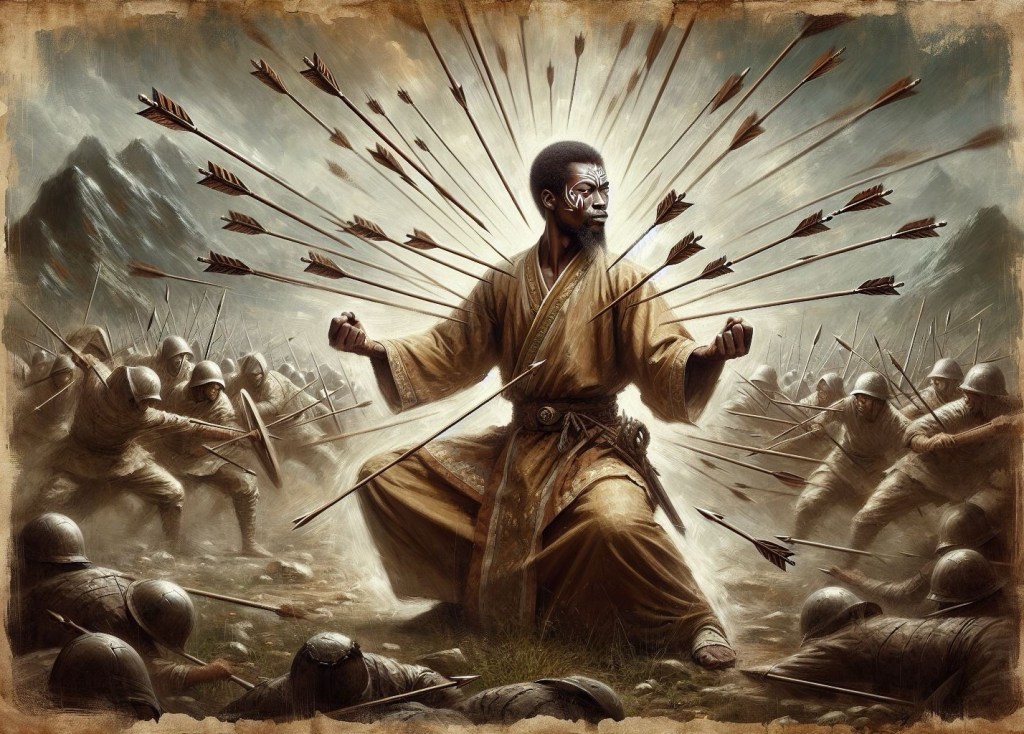
Imagine yourself as a warrior on the eve of battle, heart racing with myriad outcomes, most cloaked in danger. Yet, when the moment to act arrives, reality reveals itself to be less daunting than the phantoms of fear.

How, then, can we muster the courage to confront fears that loom larger in our minds than in the world around us?

Let’s embark on this exploration with a moment of gratitude, acknowledging our collective pursuit of wellness, wisdom, and inner peace. Together, let’s say, “Ashe,” as we toast to our journey ahead.

The Battlefield Within

Ever stood at the crossroads of a decision, feeling the imminent battles that lie ahead? Let’s delve into the essence of courage and the specters of fear and discern the nature of these forces, as well as how to navigate through them, emerging not just unscathed but fortified.

Fear, our primal alarm, signals danger, priming us for the freeze, fight or flight. Yet, it also illuminates our core values and desired transformations. Courage, conversely, stems from an unwavering resolve to unfreeze and face fear head-on.

As Maya Angelou beautifully articulated, “Courage is the most important of all the virtues because, without courage, you can’t practice any other virtue consistently.” Our minds, adept storytellers, often weave tales of terror that eclipse the actual threats, echoing Seneca’s insight that our fiercest battles are internal, a war between perceived danger and tangible risk.

Harnessing Courage

The journey to courage begins with facing our fears, recognizing them without judgment. Practices like mindfulness serve as our compass, guiding us through fear with clarity and intention. By setting incremental challenges, we gradually bolster our confidence, drawing strength from courageous exemplars and the solidarity of community.

Courage is the most important of all the virtues because, without courage, you can’t practice any other virtue consistently.

Maya Angelou

Bravery manifests in daily acts—voicing our truth, embracing uncertainty, or setting boundaries—revealing that heroism is not solely the domain of grand gestures but thrives in the quiet corners of our daily existence. These acts, however small, are the building blocks of resilience, affirming that true courage is the persistent choice to confront fear, irrespective of its magnitude.

Practical Strategies for Embracing Courage

  1. Mindfulness and Reflection: Cultivate an awareness of your fears through introspection and mindfulness, approaching them with openness and without judgment.
  2. Small Acts of Bravery: Like a muscle, courage strengthens with use. Start with minor challenges, progressively confronting more significant fears.
  3. Seek Inspiration: Look to tales of bravery across different realms for motivation and guidance.
  4. Reframe the Narrative: Shift your perspective on fear and courage. View each challenge as an opportunity for growth, not as an impenetrable barrier.

Reflections and Parting Thoughts

The true battleground lies not in the external world but within the mind’s vast expanse. In facing our inner battles, we uncover the deepest wellsprings of strength.

  • Consider how recognizing and understanding your fears could be a catalyst for personal growth.
  • Reflect on areas in your life where you could practice greater courage.
  • Think about how to foster a support network that encourages courageous actions.

Mark Twain once said, “Courage is resistance to fear, mastery of fear, not absence of fear.” Fear may distort reality, but courage is the light that guides us through the darkness.

Stay Inspired and Inspirational.