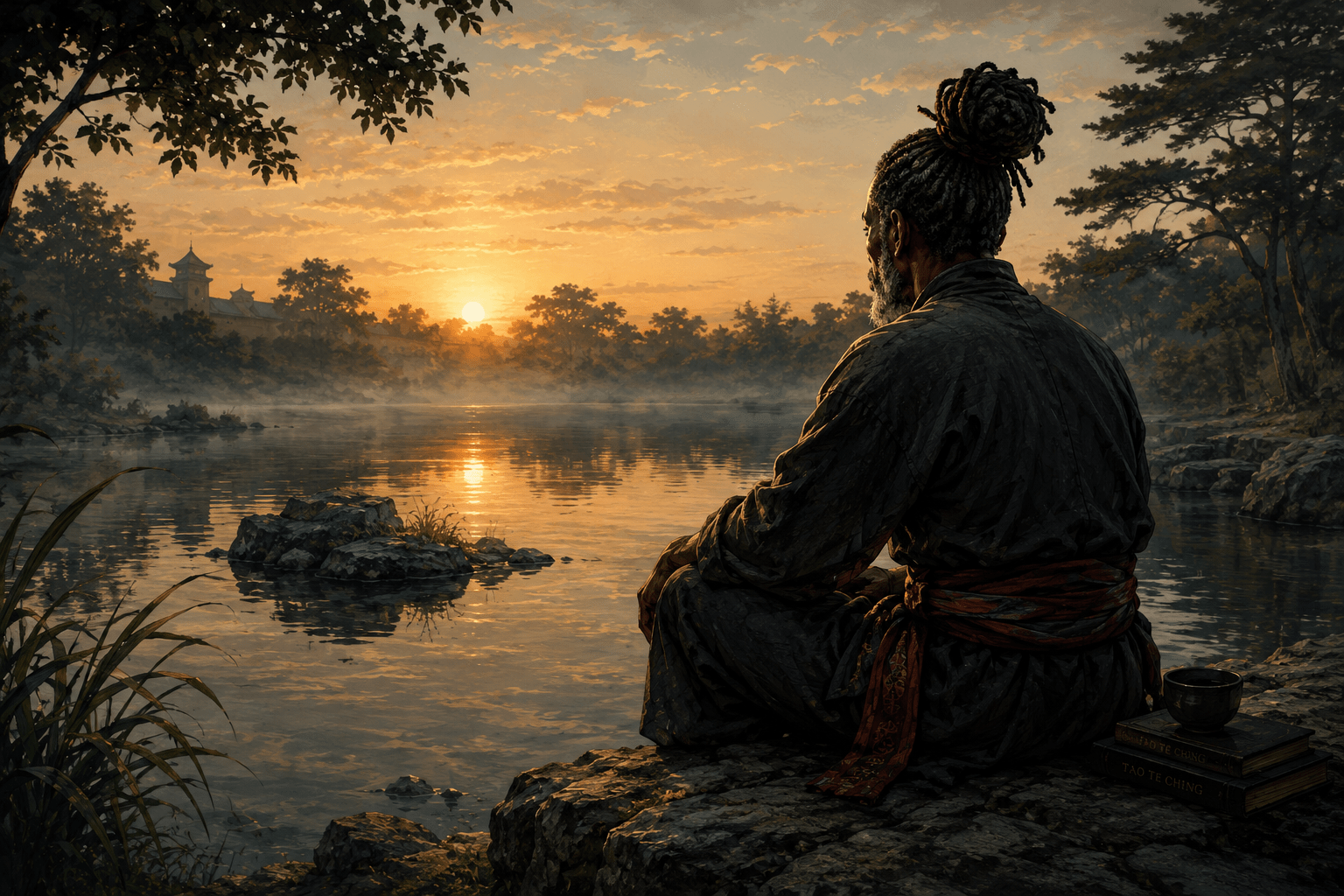
“The river does not argue with the mountain. The river studies the shape of resistance and finds another way.”
Imagine: A person sits awake at two in the morning replaying an argument that should have ended hours ago. Another person keeps refreshing email, trying to force certainty about a future that has not arrived yet. A tired couple repeats the same conversation for the fifth time in one week, each believing that more explanation will finally produce understanding. A creator pushes through exhaustion trying to rescue momentum. A worker sacrifices sleep believing that pressure alone will somehow create peace later on.
Modern life conditions people to believe that every difficult situation requires immediate action, immediate reaction, immediate clarity, and immediate resolution. Social media rewards fast responses before reflection has time to mature. Productivity culture praises exhaustion until many people begin confusing burnout with discipline. Public life encourages visible motion so constantly that stillness begins to feel suspicious, almost irresponsible, as though a person who pauses to think must somehow lack ambition or seriousness. Yet many situations worsen precisely because human beings refuse to stop pushing.
Stillness does not mean surrendering responsibility or pretending problems do not exist.
The deeper tragedy comes from the fact that the original desire often contains sincerity. A person may genuinely want peace, progress, repair, dignity, recognition, relief, or stability. Fear, however, can quietly distort the method used to pursue those goals. Anger starts disguising itself as urgency. Aggression begins disguising itself as strength. Panic disguises itself as responsibility. Under emotional pressure, the mind often says, “I must do something now,” when wisdom may actually require silence, distance, patience, prayer, recovery, or reflection.
The ancient contemplative traditions understood this tension clearly. The I Ching and the Tao Te Ching repeatedly return to questions of timing, restraint, rhythm, alignment, and intelligent withdrawal. These traditions do not reject effort itself. Rather, they warn against compulsive force disconnected from proportion and clarity. A person can work very hard while moving farther away from wisdom. A person can fight passionately while weakening the very thing that needs protection.
Nature offers a simple image that captures this truth. A muddy pond clears through stillness. The harder someone stomps through the water demanding immediate transparency, the cloudier the pond becomes. Sediment rises from the bottom and spreads through the water until clarity disappears completely. Human consciousness follows a similar pattern. Anxiety stirs the mind. Anger stirs the mind. Exhaustion stirs the mind. Emotional agitation clouds perception until people begin reacting not to reality itself, but to fear, projection, frustration, and accumulated fatigue. Stillness interrupts that process.
Many people exhaust themselves because they confuse pushing with progress.
Stillness does not mean surrendering responsibility or pretending problems do not exist. Conscious withdrawal does not require cowardice, indifference, or passivity. Stillness simply creates enough inner space for perception to reorganize itself before reaction creates unnecessary damage. Sometimes the wisest action involves stepping back from an argument before bitterness takes over, closing the laptop before exhaustion destroys judgment, taking a walk before replying emotionally, or allowing silence to soften the nervous system before trying to solve a problem that agitation has already made worse.
Martial arts training reveals the same principle through the body. Beginners often try to overpower every movement with muscular tension and excessive effort. The shoulders tighten, breathing shortens, and energy drains rapidly because tension gets mistaken for effectiveness. More experienced practitioners gradually discover another relationship between effort and power. Skilled movement emerges through timing, structure, relaxation, alignment, and conservation. The seasoned practitioner learns not only when to move, but when stillness offers greater intelligence than force. Emotional life requires the same discipline.
The deepest forms of clarity rarely arrive while the mind shakes with agitation.
Many people exhaust themselves because they confuse pushing with progress. They argue longer, explain more intensely, work later into the night, train past recovery, consume endless information, and chase solutions before the mind has regained balance. Eventually the body weakens, patience thins, perception narrows, and judgment deteriorates beneath the strain. Movement continues, but wisdom quietly leaves the room.
The older I become, the more I recognize that not every problem deserves full emotional engagement. Some conversations improve through distance. Some goals require patience instead of escalation. Some seasons demand recovery rather than expansion. Human beings often assume that wisdom requires adding more effort, more explanation, more pressure, more activity, when wisdom may actually require subtraction: less noise, less reaction, less force, less ego, less frantic attachment to immediate resolution.
The river does not argue with the mountain.
The deepest forms of clarity rarely arrive while the mind shakes with agitation. Wisdom often emerges during silent mornings, meditative reflection, long walks, breath practice, recovery after exhaustion, and honest moments when a person finally stops wrestling reality long enough to observe it clearly. Different people will use different language for this process. Some will call it prayer. Others will call it meditation, contemplation, listening, communion with God, alignment with the Tao, reflection, or spiritual guidance. The practical lesson remains the same: before anger takes control, create enough stillness to hear something wiser than the first emotional impulse.
The river does not argue with the mountain. The river does not exhaust itself trying to punch through stone. Patient water studies the shape of resistance and discovers another path, moving steadily, adapting intelligently, preserving its strength while still continuing forward. Over time, even stone changes beneath the quiet persistence of aligned movement. Human beings can learn from that rhythm.
Before the next argument, pause. Before the next attempt to force progress through anger or exhaustion, breathe. Before the next emotional reaction begins pulling clarity farther out of reach, allow the inner water to settle long enough for wisdom to return. The muddy pond clears through stillness, and many forms of salvation begin the moment agitation finally stops speaking first.
Stay inspired and inspirational.
The Mindful Martial Artist
Sifu Khonsura Wilson