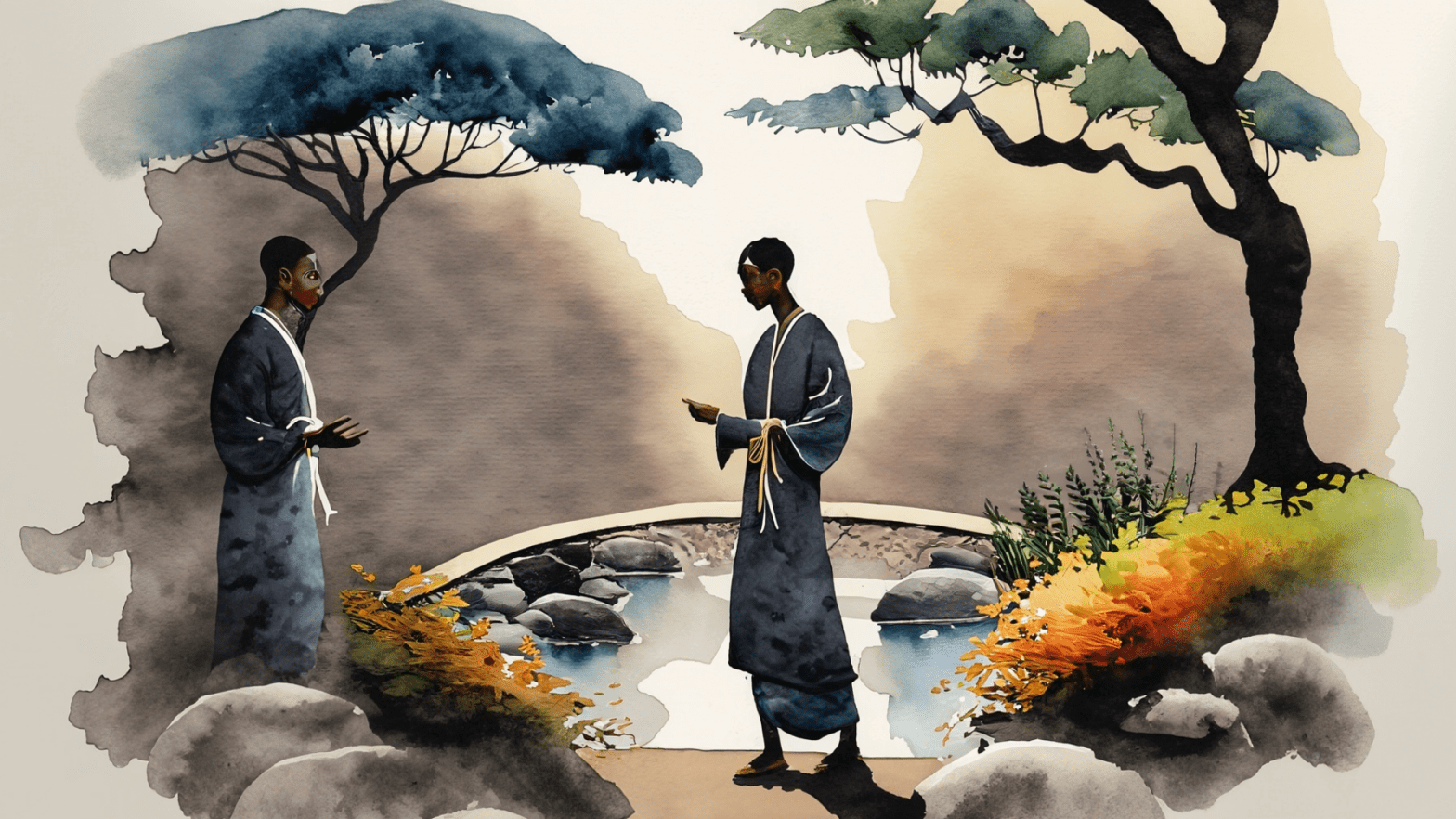
The Baobab, The Phoenix, and The Dance of Regret

“However long the night, the dawn will break.” – African Proverb

The tapestry of existence is often tinged with hues of regret and shades of resentment. As with the ebb and flow of the tide, life’s journey sometimes brings about storms that darken our paths. However, it’s within this backdrop that I recall a tale, whispered among the ancients, blending the allure of African landscapes with the magical realism .

The Tale of Desires and Dreams

In a verdant realm where dreams are woven with reality, a young Baobab stood. With aspirations as lofty as the branches it envisioned, this tree yearned to caress the heavens and whisper secrets to the stars. But time, that relentless sculptor, had other designs. The Baobab found itself ensnared by creeping vines of doubt and overshadowed by towering trees that monopolized the sun’s embrace.

Not far, a Phoenix, aflame with the brilliance of a thousand suns, took note of the Baobab’s subdued luster. Gliding to the earth, the Phoenix posed a query, “Why, majestic Baobab, do you let the weight of bygones anchor your spirit?”

The Baobab, with a sigh that rustled its leaves, responded, “Every decision, every turn was to dance with the stars. Yet shadows imprison me, and my dream seems but a distant echo.”

The Phoenix, gazing with eyes that held the promise of countless dawns, retorted, “While the grip of the past may seem unyielding, remember that every dusk brings the canvas for a new dawn. From embers and endings, one can always discover beginnings.”

With these words, the Baobab felt a resurgence, a reminder of its intrinsic vigor. Slowly, but with newfound purpose, it began to shed its restraints and basked in beams of hope, even amidst the forest’s giants.

A Reflection for the Soul

Dear reader, in this allegory, aren’t we all, at times, akin to the Baobab? We might occasionally feel the weight of our choices, the pull of past decisions, grounding our aspirations. Yet, the essence of martial arts, as I’ve learned and taught over the years, is the art of adaptability and fluidity. It’s about flowing like water, conforming yet persistent, shaping our destiny even when faced with obstacles.

Regret can indeed be a lesson, resentment a reminder. Both can be the fertile ground from which we sprout anew, reaching once again for the stars.

So, as we embark on our respective journeys, let’s remember the dance of the Baobab and the Phoenix. Let’s rise from our ashes, rekindle our passions, and sway to life’s ever-evolving rhythm.

“Even a misstep can lead to a dance.” So, let’s keep dancing, shall we?

Embracing Change

Life can be unpredictable and chaotic, filled with unexpected twists and turns that can leave us feeling disoriented and uprooted. How can we find balance in the midst of such turbulence?

The Taoist Teachings

The Taoist teachings offer valuable insights into achieving balance and harmony in our lives, even amidst disruption. The Tao reminds us that life goes on, even as we make plans. Events and occurrences ebb and flow like water, adapting and changing according to conditions where necessary. Sometimes it’s calm, serene, and clear, and other times it’s tumultuous and muddy, but always moving.

Maintaining balance is an ideal state, but it’s important to remember that opposing forces – Yin and Yang – operate at varying degrees depending on current conditions and context. Striving for balance gives us purpose and inspiration, but it’s also vital to accept that life changes, and sometimes we must let go of our preconceived notions and resist our fears to flow with life’s dynamic currents.

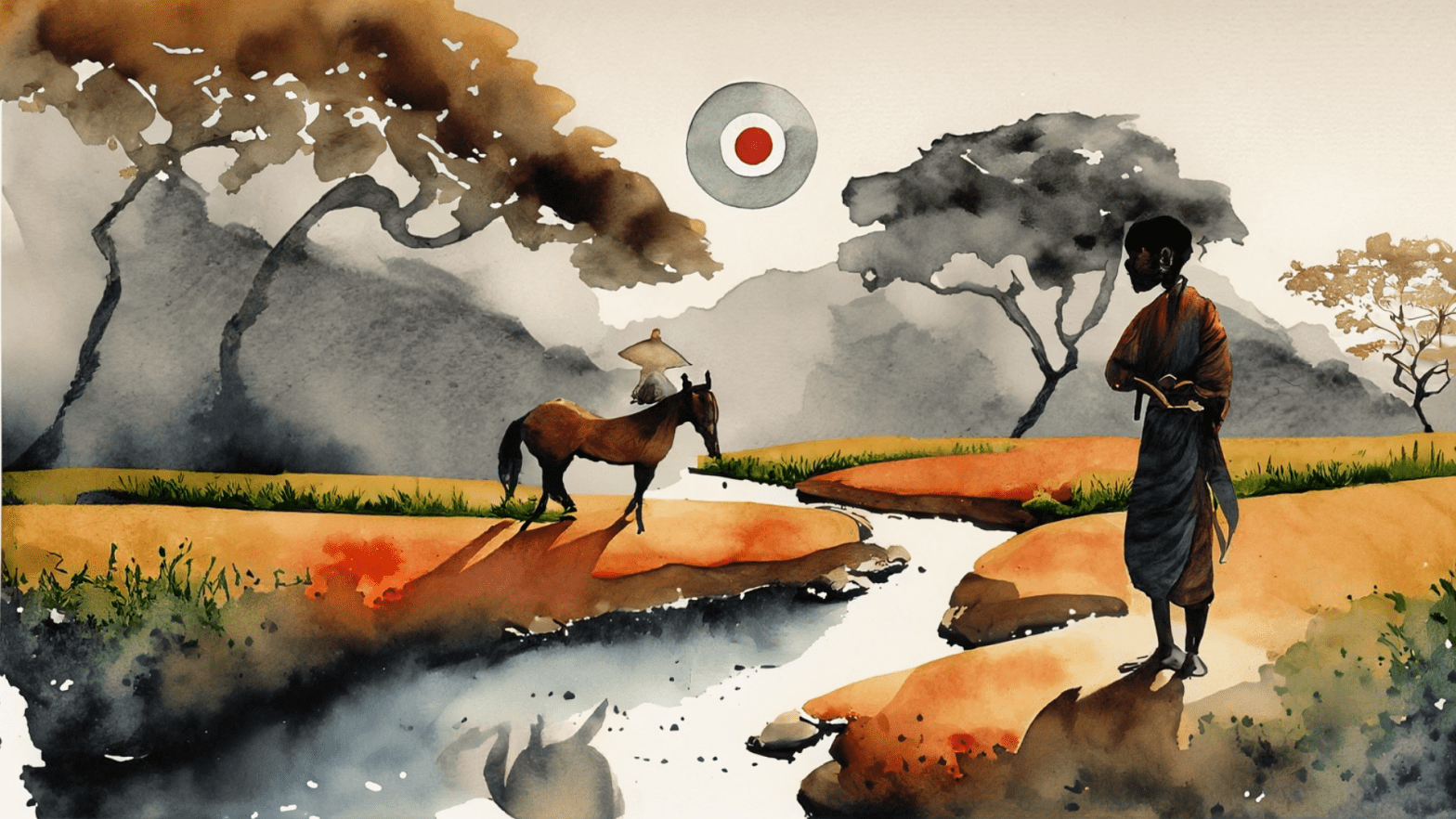
The Farmer and His Horse

The Taoist tale of the farmer and his horse is a powerful reminder of the ever-changing nature of life and the importance of embracing new beginnings. The story goes like this:

Once upon a time, there was a farmer who lived in a small village. He had a beautiful horse that he used to plow his fields and transport his goods to the market. One day, the horse ran away, and the villagers came to the farmer to express their condolences, saying, “What bad luck! Your horse has run away. How will you manage without it?”

The farmer simply replied, “Good luck, bad luck, who knows?”

A few days later, the horse returned, bringing with it a group of wild horses. The villagers came to the farmer and congratulated him, saying, “What good luck! Your horse has returned with more horses. You are now a rich man!”

The farmer simply replied, “Good luck, bad luck, who knows?”

The next day, the farmer’s son tried to ride one of the new horses and fell off, breaking his leg. Again, the villagers came to the farmer to express their condolences, saying, “What bad luck! Your son has broken his leg. How will you manage without him to help you with the farm work?”

The farmer simply replied, “Good luck, bad luck, who knows?”

A few weeks later, the army came to the village to conscript all the able-bodied young men for a war. But when they saw the farmer’s son with his broken leg, they passed him by. Once again, the villagers came to the farmer and congratulated him, saying, “What good luck! Your son doesn’t have to go to war!”

The farmer simply replied, “Good luck, bad luck, who knows?”

This tale teaches us that events are just events, and it’s our perception that labels them. Whether it’s good luck or bad luck, fortunate or unfortunate, who knows? The universe is unpredictable, and what may seem like a disaster one day may turn out to be a blessing in disguise the next.

Embracing New Beginnings

To achieve balance, we must embrace new beginnings and view disruptions as opportunities to grow and learn. Mindfulness meditation or movement meditations such as Tai Qi, Dao-In, and Qi Gung can help us develop a greater awareness of our thoughts and emotions, allowing us to observe them without judgment and ultimately release them. By embracing the present moment through mindfulness, we learn to flow with life’s dynamic currents and achieve balance.

Personal Anecdotes

Recently, I’ve had to uproot myself, relocate further away from my training place and work, and deal with the financial debt, burden, and frustration it created. It also created challenges with traveling to work, and the disorder and disruption a sudden move created. However, I’ve learned to embrace these changes and find ways to maintain balance and harmony in my life, actions that work for me, at the moment.

Conclusion

Remember, your journey towards balance and harmony begins with a single step in the right direction. Embrace the present moment, and you will discover harmony even in disruption. By accepting and letting go, all gets done, and balance gets achieved. Sometimes, letting go of our preconceived notions and resisting our fears allows us to flow with life’s dynamic currents.

What do you think? How do you handle change?

Having Doubts…

This morning, I hurried to the temple for training, having overslept but grateful for being pain-free and eager to continue with my day. However, doubts clouded my mind as I entered the empty training ground to practice Ba Qua and Tai Qi. I said to myself, “Is there truly value in dedicating so much time to something that might never bring financial gain? After all, I still struggling to eliminate the debt and pain of poverty I created through unprofitable investments over the last few years.” Despite these doubts, I reminded myself of the mental and physical fitness, sense of accomplishment, social connections through teaching, and the sense of discipline, focus, and purpose the training has provided. Then I said to myself, “What else could offer more tranquility, a creative outlet, connections with others, an escape from the chaos at home, and the chance to create meaningful moments in a quiet space of solitude while persisting in patience?”

What about you? Do you have something you enjoy doing that you hoped would reward you with status, a sense of accomplishment, connection with a community, pleasure and peace, and financial well-being and freedom at some point, but currently feels unproductive and fruitless?