
“Without orientation, reflection quietly turns against itself.”
The problem with most New Year thinking doesn’t live in a lack of ambition. It lives in orientation. We approach January as if it offers a blank slate, a clean edge, a ceremonial reset that somehow absolves what came before, when in reality the year arrives carrying momentum, residue, habit, fatigue, and unfinished conversations. January doesn’t interrupt life. It continues it. And the question worth asking doesn’t sound like Who will I become now? but rather How will I think more clearly inside the life I already occupy?
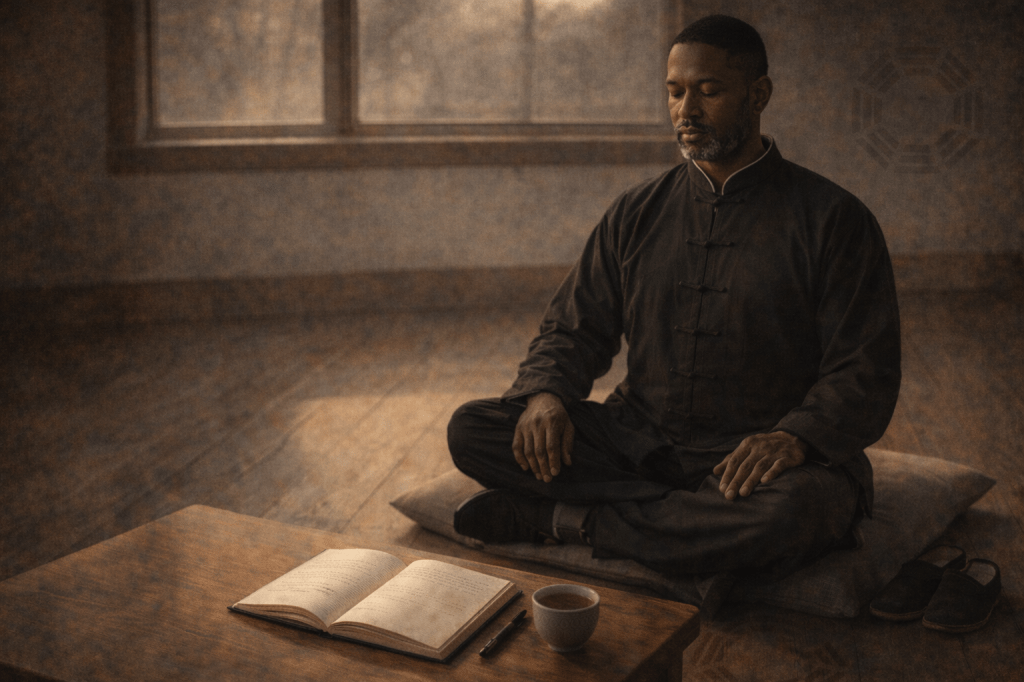
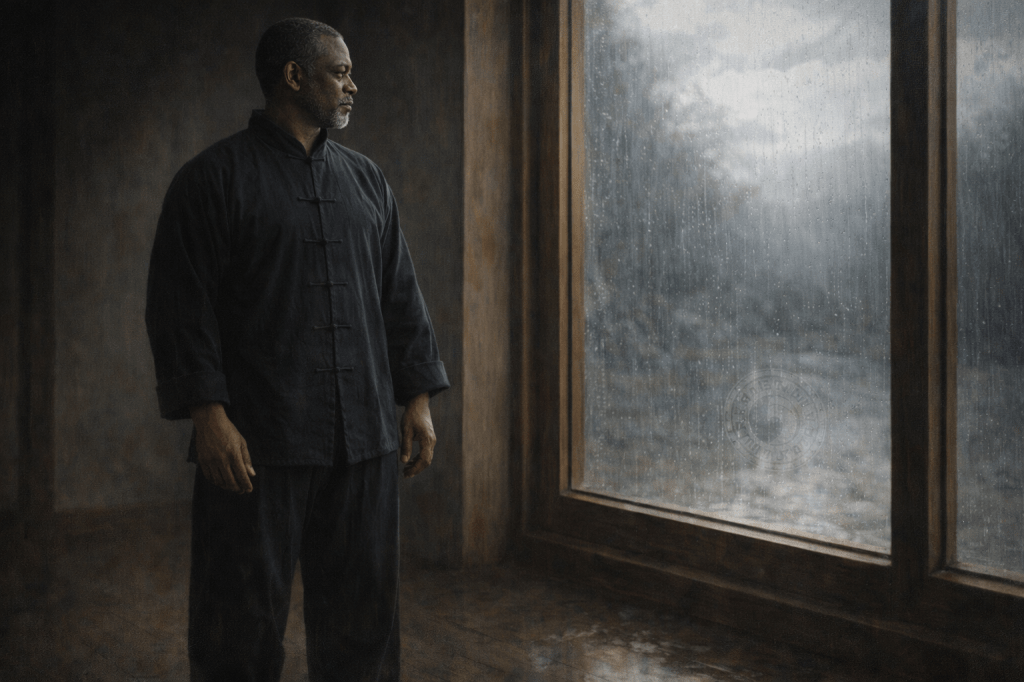
Most mornings I don’t sit down with a ceremonial mood or a perfect mind. I wake into weather, waking into body, waking into obligation, into barking dogs, into messages already moving, into the soft pressure of time leaning forward before I do. I used to treat reflection like a luxury item, something reserved for rare quiet, for the days when the world seemed to grant permission for stillness. Yet the world rarely grants permission. It keeps moving, keeps knocking, keeps stacking demands. Eventually, I stopped waiting for ideal conditions and started asking a different question, one rooted less in mood and more in maintenance.
This time of year carries its own quiet pressure, subtle but persistent, a cultural insistence that January should feel clean, decisive, resolved, even when most lives arrive there carrying weight instead of clarity. The calendar flips, but bodies remember. Schedules remember. Patterns remember. Momentum doesn’t dissolve simply because a date changes its name.
“Those who rush ahead do not travel far.”
Dao De Jing
I’ve noticed that the turn of the year rarely brings emptiness or renewal in the way we’re taught to expect. It brings inventory. What continues shows up louder. What strains begins to ache. What worked quietly keeps working. What didn’t accumulates interest. January doesn’t arrive as a blank page. It arrives as feedback, offering information rather than permission, asking for orientation rather than reinvention.
Without orientation, reflection quietly turns against itself. Thought loops tighten instead of opening. Effort increases while effectiveness thins. Fatigue disguises itself as discipline. Overcommitment starts posing as character. A thoughtful person can keep moving, keep producing, keep showing up, all while drifting slightly off course, mistaking motion for direction and resilience for wisdom. Nothing collapses all at once. The cost accumulates slowly, paid in attention, in energy, in a growing sense that something feels heavier than it should. That slow drift, unnoticed and uncorrected, creates the real urgency—not crisis, but continuation without clarity.
“Learning without orientation repeats itself.”
I Ching, Hexagram 4 (Youthful Folly)
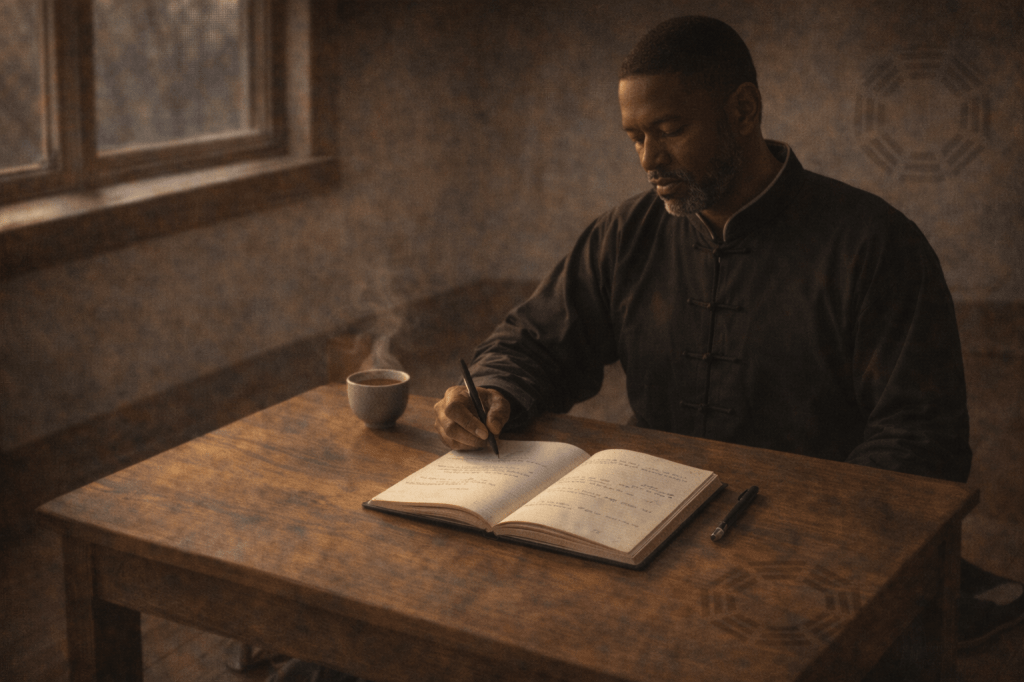
That recognition pushed me to build a system, something that doesn’t behave like a rigid ritual, and it doesn’t behave like a spiritual performance staged for self-improvement theater. It also doesn’t behave like a productivity hack disguised in incense and better fonts. It behaves, instead, like a simple, repeatable method that respects the real constraints of adult life. Time counts. Energy fluctuates. Attention scatters. Tools matter. Process matters. Outcomes matter. Feedback matters. When reflection meets those realities, it stops floating around as a vague virtue and starts functioning like maintenance, like brushing teeth for the mind, like warming joints before a long walk, like checking stance before adding speed. Reflection shifts from aspiration to upkeep, from performance to practice. That system carries a name now: R.I.E.F. (Retrospection. Introspection. Extrospection. Forespection.)
Its value doesn’t come from mystical certainty or visionary promises. It works because it gives the mind four directions to face instead of forcing it to stare at itself in one harsh mirror, replaying the same angles, prosecuting the same memories, and calling that awareness. When people say “reflect,” they often mean “think inward,” and while inward attention can help, it can also trap, folding the mind in on itself, replaying scenes, arguing with ghosts, forecasting disasters, attempting to fix everything at once, and mistaking mental noise for insight. R.I.E.F. changes the geometry.
“The heavy serves as the root of the light.”
Dao De Jing
R.I.E.F allows backward glances without drowning in backstory, inward noticing without spiraling, sideways perspective without denial, and forward inspection without pretending you can see the future. In one small cycle, reflection turns into orientation, and orientation compounds quietly over time, guiding effort instead of inflating it.
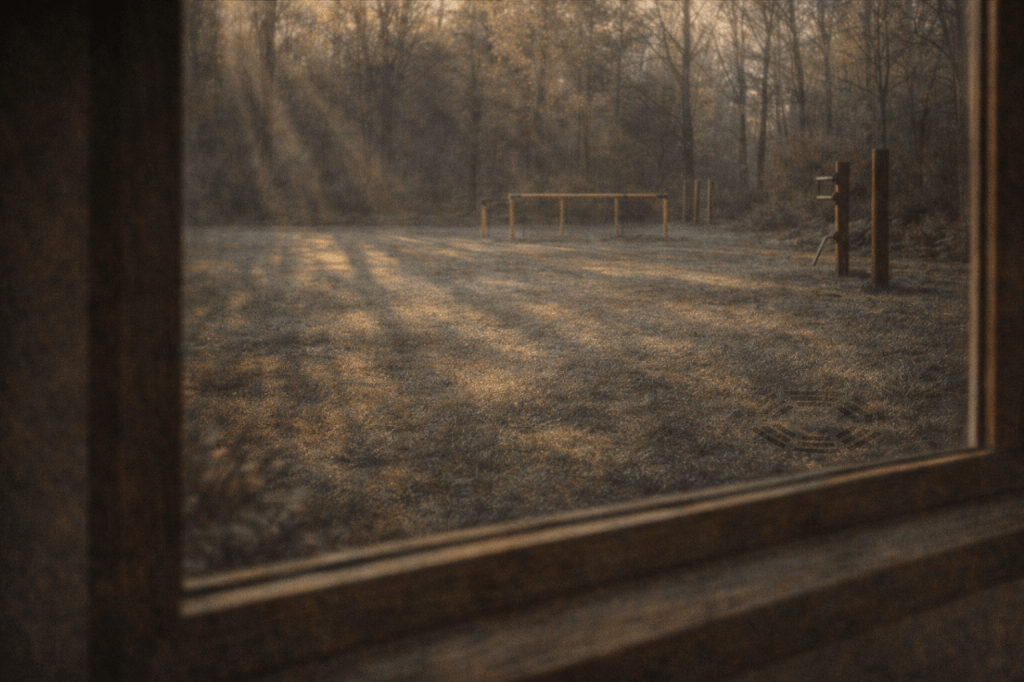
Choosing where to stand so seeing can sharpen.
I Ching, Hexagram 20 (Contemplation)
Every system begins with what you can realistically bring. R.I.E.F. doesn’t demand grandeur. It asks for a moment, for breath, for the body you woke up in, for whatever question, tension, or openness rises naturally. Its resources stay simple and honest: time measured in minutes rather than hours, energy acknowledged as low or high or somewhere uneven between, tools limited to attention, language, perspective, and a willingness to observe without rushing toward resolution. Systems fail when they demand a mood you can’t afford. This one runs on what already sits in your hands. The process itself works like rotating lenses, each doing its work without competing for dominance.
Retrospection asks what shaped this moment, and it avoids the language of blame or failure. It doesn’t ask what ruined you, and it doesn’t ask what you did wrong. It examines what trained you, conditioned you, primed you, prepared you, nudged you here. Retrospection harvests lessons without reopening wounds, giving context without captivity, allowing gratitude without denial, keeping the past informative rather than directive. When retrospection runs clean, patterns begin to surface gently, patterns like repeating friction when rest disappears, teaching best when grounding precedes effort, tightening under observation, relaxing when remembering why the work began.
Introspection asks what’s present right now, and it avoids chasing what should exist or what needs fixing. It tracks what actually registers when attention turns honest. Energy, mood, tension, breath quality, appetite, resistance, readiness—this internal weather report prevents self-deception and prevents overreach. Naming fatigue stops negotiation. Naming irritation prevents leakage. Naming loneliness prevents mislabeling it as laziness. The point doesn’t involve diagnosis. It involves clarity, the kind that protects both body and voice.
Extrospection shifts the vantage point, asking where else you could stand to see the same facts differently, stepping sideways without erasing reality, refusing the assumption that your first framing deserves final authority. Seeing a moment through a student’s eyes, viewing a problem from a future distance, recognizing tension as a signal rather than a sentence, treating obstacles as design constraints instead of character flaws—these moves loosen habitual interpretation and reintroduce wonder, replacing “I know what this means” with “Let me look again.”
Forespection inspects trajectory rather than predicting outcomes, checking direction before momentum decides for you. It saves energy by catching drift early, before bodies break, schedules collapse, resentment hardens, creativity dries up. It asks forward-looking inspection questions quietly and early:
• if this pace continues, what will my body request later;
• if this yes repeats, what quiet no will accumulate elsewhere;
• if this pattern persists, will I respect the version of myself who arrives.
At the turn of a year, this lens matters even more, not because the future suddenly opens, but because momentum often accelerates. Schedules fill quickly. Commitments harden early. Direction, once set in January, tends to carry farther than expected.
“Attend to things before disorder appears.”
Dao De Jing
R.I.E.F. doesn’t promise bliss. It promises orientation.
A good cycle often produces steadier attention, less urgency, earlier course correction, a cleaner relationship with uncertainty, and a closer alignment between effort and values. Sometimes it produces decisions. Sometimes patience. Sometimes a small next step. Sometimes relief, the kind that comes from stopping a fight with what you already knew. The system succeeds when you exit the cycle carrying more honesty and less noise.
Because systems learn through feedback rather than fantasy, the closing loop matters. After a cycle, three questions keep the process alive without dramatics: did clarity increase; does this direction feel lighter or heavier; what small adjustment suggests itself without force. If clarity rises, proceed. If clarity stays flat, pause. If clarity drops, simplify and return to basics—breath, body, one honest sentence. That still counts. That still works.
R.I.E.F. runs anywhere. On a dog walk, steps become a metronome, each block holding a different lens while the world remains the world. Before class, a quick cycle in an office chair clears residue, names energy, shifts vantage, checks trajectory so teaching doesn’t borrow from depletion. Before training, the system warms the mind the way mobility warms joints, recalling what worked last session, checking the nervous system, exploring new angles on stuck technique, inspecting how today’s effort will age.
This matters because we live inside velocity. Culture rewards reaction. Platforms reward heat. Schedules reward speed. Thoughtful people still get dragged, not from a lack of discipline, but from lacking a system that fits the day they actually live. R.I.E.F. fits. It respects limits. It honors time. It preserves energy. It uses simple tools. It produces usable outcomes. It turns reflection into a repeatable practice rather than a personal project.
Store power, practicing restraint and choosing timing over display.
I Ching, Hexagram 26 (Great Accumulation)
That’s the quiet miracle, and it doesn’t depend on enlightenment. It depends on maintenance that restores orientation and supports returning.
A good year doesn’t begin with certainty. It begins with orientation, with a steady hand hovering over a compass, morning light touching each direction, pace chosen before path. The calendar doesn’t ask for reinvention. It asks for attention. You don’t need a new self this year. You need a clearer way to face where you already stand, a way of thinking that respects energy, time, consequence, and return. When orientation comes first, effort stops scattering. When thinking steadies, movement follows. And the year, rather than demanding transformation, begins to respond.
Later today, or tomorrow morning, there will be a small pause you didn’t schedule—a moment between tasks, a quiet stretch before movement, a place where nothing urgent asks for speech. That’s usually where this kind of thinking fits best, not when the mind feels ready, but when life briefly loosens its grip. That pause doesn’t need fixing or filling. It only needs noticing, the way a body notices weather before deciding how far to walk.
Stay Inspired & Inspirational
— Sifu Khonsura Wilson








 Musings on Martial Arts, Taoist Philosophy & All Things Wellness Related.