“Do the best you can until you know better. Then when you know better, do better.” — Maya Angelou
Someone close to me has reminded me more than once that I do not always live the truths I teach. That kind of reminder lands differently when it comes from someone who knows the private weather behind the public wisdom, someone who has seen the teacher after teaching, the martial artist after training, the calm voice after fatigue walks into the room and starts touching everything on the table. A stranger can misunderstand the lesson and keep moving. A critic can miss the point and toss noise into the wind. But someone close can say, in plain language, without ceremony, without a footnote, without waiting for the perfect emotional weather, “You speak beautifully about this, but you do not always live it,” and suddenly the room changes.
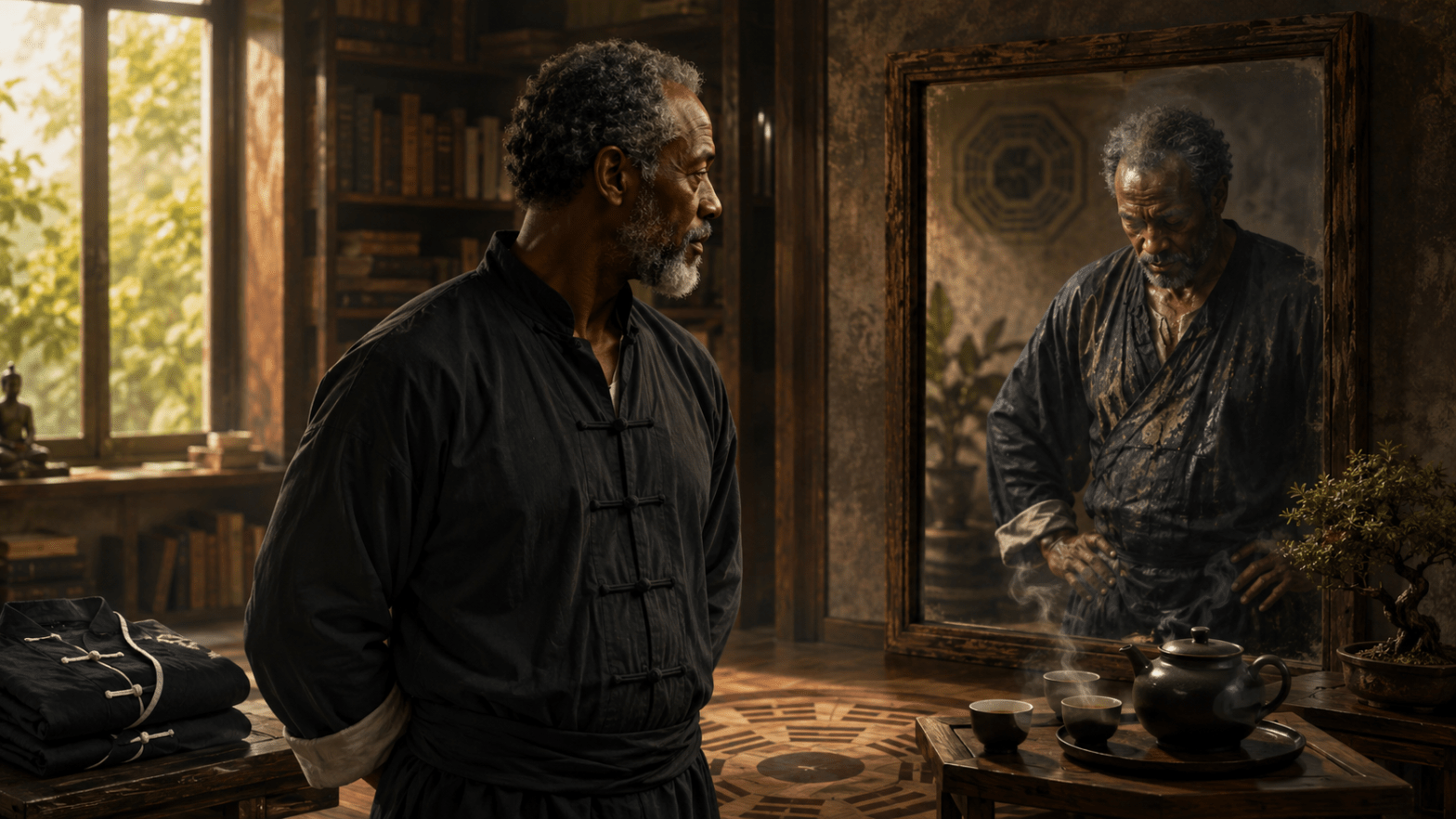
The words do not merely critique the performance; they touch the contradiction. And that touch can sting because loved ones often see where our ideals still limp. They see the person who talks about patience but still gets irritated, the person who teaches rest but still pushes past the body’s warning lights, the person who praises softness while carrying tension in the shoulders, jaw, tone, or timing. They see where the scroll still has wrinkles, where the robe still drags in the mud, where the truth has reached the mouth but not yet the reflex.
Not every contradiction deserves the same verdict.
This gap interests me because it belongs to the human condition. We often know better before we live better. The mind can recognize a truth long before the body can carry it under pressure. The mouth can teach a principle long before the nervous system trusts it in conflict. The spirit can say yes while the habits sit in the back row, arms folded, looking unimpressed, muttering, “We’ll see about that.”
This paradox does not excuse our contradictions; it locates the work. We often understand wisdom before we embody it, and that sentence carries mercy in one hand and accountability in the other. Some contradictions deserve direct naming. A person can speak noble language while avoiding change, performing goodness in public while protecting selfishness in private, polishing the mirror for everyone else while refusing to look into it alone. That kind of hypocrisy needs exposure. But not every contradiction deserves the same verdict. Some contradictions reveal unfinished practice, truth still traveling, insight still descending from the head into the breath, the hands, the habits, the hard little moments where character gets tested without applause.
Kung fu teaches this without flattery. A student can understand a correction in the mind long before the body can express it under pressure. The teacher says, “Relax your shoulders,” and the student says, “They feel relaxed,” while both shoulders hover near the ears like nervous security guards outside a nightclub. The teacher does not need a sermon. The teacher says, “Again.” Again does not mean failure. Again means the lesson still needs a body.
Life works the same way. We can know rest matters and still bully ourselves when tired. We can know softness carries power and still brace against the day. We can know love needs attention and still forget to water what we planted. We can know patience and still rush, know peace and still react, know discipline and still drift, know detachment and still clutch the very thing we claim to release. That does not make us hopeless. That makes us human.
The deeper question asks how we respond when someone shows us the gap. Do we deny it, deflect it, attack the messenger, or build a courtroom around the ego and start presenting evidence? Or do we breathe long enough to ask, “Where does this correction have a root?” Not every correction from a loved one deserves automatic acceptance. Proximity can sharpen perception, but it can also carry projection, fatigue, frustration, and old arguments wearing new clothes. Still, a mature person can learn from imperfect delivery. A growing soul does not need every mirror polished, framed, and emotionally convenient. Sometimes the mirror arrives across the kitchen table, through a spouse, a child, a friend, a student, an elder, or somebody who remembers our own words well enough to hand them back to us with a little heat still on them.
That kind of reminder can humble us and help save us from pretending. The truth we share with the world should keep working on us. A teacher who pretends completion has already arrived can become dangerous, especially when charisma outruns humility, when language outruns conduct, when the robe becomes costume instead of discipline. But a teacher who admits incompletion can still guide, provided he does not use imperfection as a hiding place. “I still have work to do” should never become a hammock for habits that need correction. “Nobody lives perfectly” should never become permission to keep wounding people in familiar ways.
We do not need to defend every unfinished corner of ourselves like lawyers for the ego.
The mature response holds humility and responsibility together: yes, I know better; yes, I still fall short; yes, the gap pains me; yes, I will keep practicing. That response saves us from both arrogance and despair. Pride claims arrival too early. Shame abandons the road too soon. Practice walks between them, carrying breath, repetition, repair, apology, laughter, discipline, and the old stubborn hope that a human being can still change one small pattern at a time.
Practice says, “Return.” Return to the breath, return to the principle, return to the apology when one has become necessary, return to the body, return to the small correction, return to the relationship with less pride and more presence. Return to the truth, not as a slogan, not as a performance, not as a polished line for public admiration, but as a path that still needs footprints.
We know better before we live better. That does not cancel the truth. It shows where the truth must travel next. A truth may reach the mind before it reaches the mouth. It may reach the mouth before it reaches the body. It may reach the body before it reaches the reflexes that appear when we feel tired, rushed, disappointed, hungry, hurt, or misunderstood. So when the people closest to us remind us that we have not yet become all that we teach, we do not need to collapse into shame, and we do not need to defend every unfinished corner of ourselves like lawyers for the ego. We can breathe, listen, let the mirror sting without letting it destroy us, and return to practice. The contradiction does not cancel the calling. It names the next place where the calling must go.
God ain’t done with me yet.
Stay inspired and inspirational.
— Sifu Khonsura Wilson


This spoke to me on multiple levels. Sharing it with family, and my university students.
LikeLike