This morning I stood to put on my socks, one foot grounded, the other hovering, and noticed more resistance than usual—not from balance slipping but from reach shortening, hips and low back holding onto work done honestly over recent days—and I paused long enough to register the signal without arguing with it.
Stiffness didn’t complain.
It informed.
Later, during warm-up kicks, the message completed itself.
A few lifts in, the knee refused heights it reached easily just days ago, not through pain or instability but through stiffness settling deeper into the hips, effort still processing, tissue still reorganizing itself after training that asked real questions of the system, and memory tried to rush the present with expectations it hadn’t earned.
I trained.
I loaded the system.
Now the system recalibrates.
Muscles don’t simply recover; they adapt through rehydration, re-patterning, and time that resists negotiation, sometimes resolving quietly overnight, sometimes asking for patience we forget to budget when progress feels good, and when the mind whispers, You lifted higher last week, irritation arrives ready to mislabel information as decline.
Nothing failed.
Nothing reversed.
Nothing disappeared.
I reached the hinge between effort and integration.
Warm-up kicks don’t measure worth; they reveal readiness, and readiness speaks clearly to those who cultivate training literacy—the ability to read signals without dramatizing them, to distinguish fatigue from injury, stiffness from loss, adaptation from regression—so instead of forcing yesterday’s range onto today’s tissues, I lowered height, slowed tempo, let the pelvis organize before demanding lift, and stayed loyal to clean mechanics rather than borrowed memory.
That choice didn’t signal retreat.
It signaled fluency.
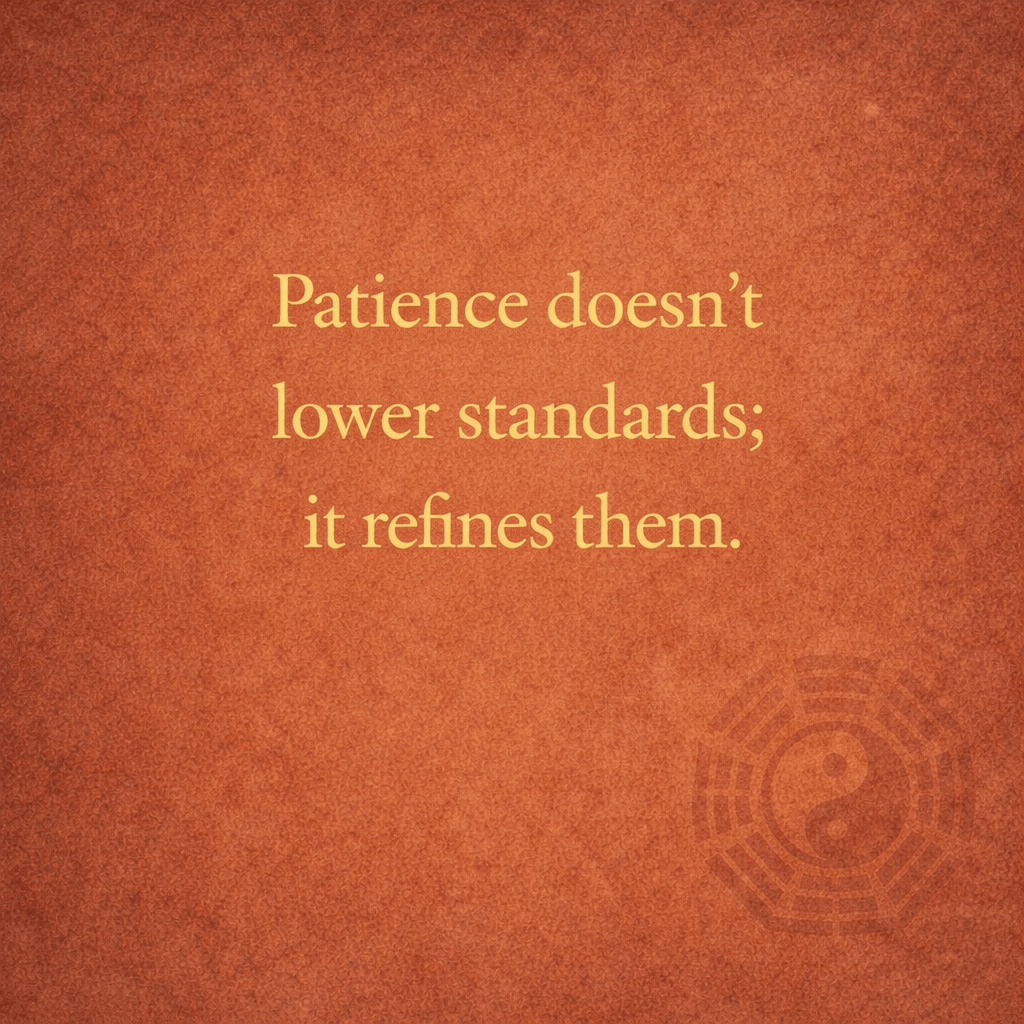
Training literacy matures alongside the body, especially as years accumulate experience faster than they restore tissue, teaching us that strength expresses itself in waves, flexibility returns by invitation, and patience belongs to discipline itself—not as a concession to age, but as its refinement.
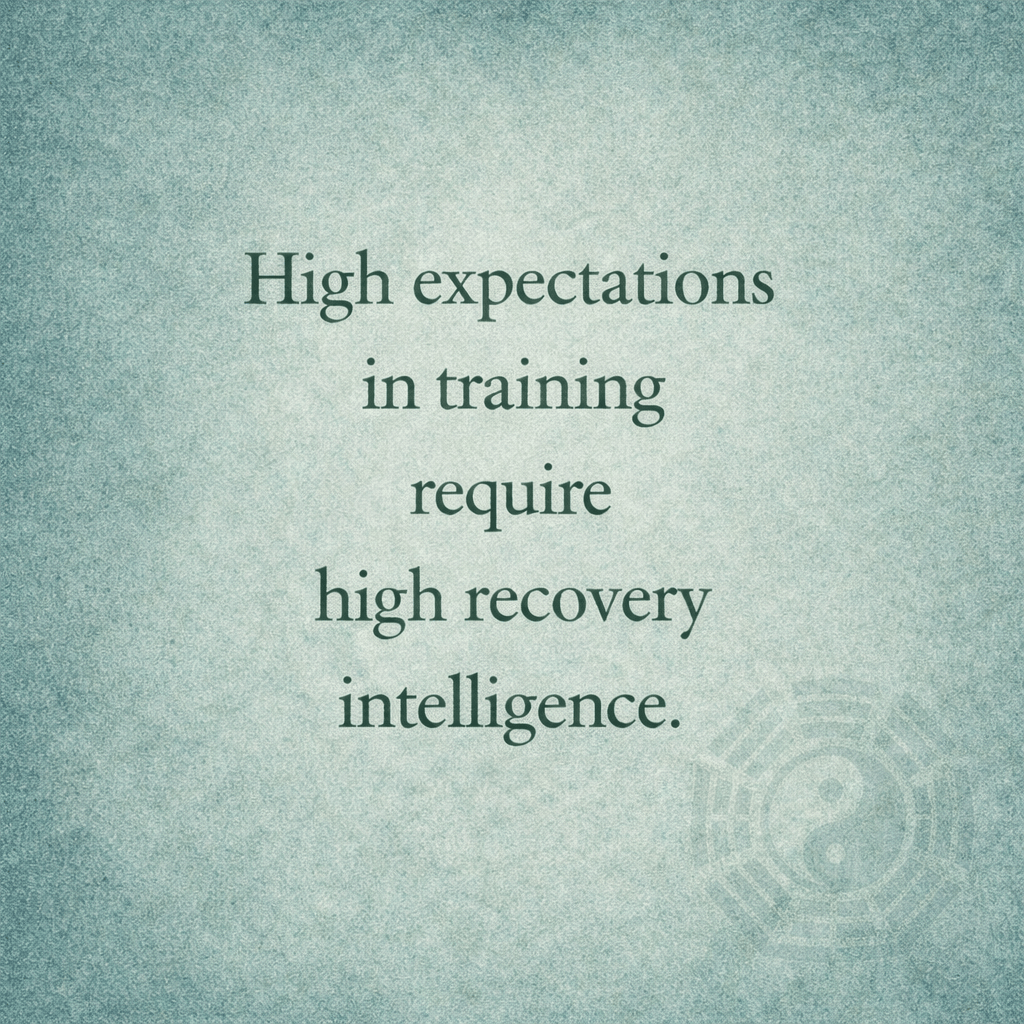
High expectations require high recovery intelligence.
So the session continued—quieter, more precise, breath leading where muscle hesitated—and as often happens, range softened gradually, not because I demanded compliance, but because I allowed the system to complete the conversation it started hours earlier.
If something in your training feels temporarily unavailable, don’t rush to fix it.
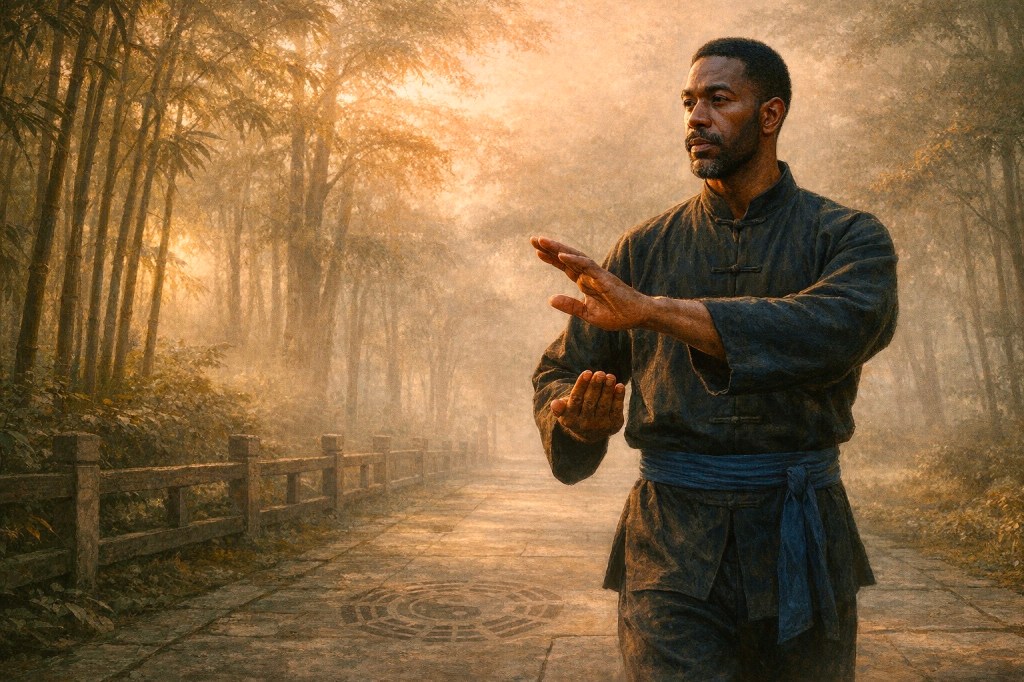
I walked into practice that morning the way I often do, arriving without ceremony and without calculation, stepping onto the training space with warm bones from the walk in, loose hands hanging at my sides, breath already deepening on its own, expecting repetition and return, the familiar rhythm of moving through form until the noise of the day loosens its hold and the body remembers what it already knows.
The first rounds carried a surprising smoothness, a softness that stayed steady without supervision, my shoulders remaining relaxed without reminders, my breath settling low before I reached for it, weight shifting from foot to foot cleanly and quietly, hands floating into position while the spine lengthened and the hips leveled, allowing the sequence to continue with a calm continuity that felt less like effort and more like agreement. That ease suggested a simple story at first, the familiar one that says progress reveals itself through comfort, that practice rewards repetition by making the work feel lighter.
I kept moving, circling through the form again and again, noticing the ease and letting it linger, assuming the lesson would arrive through my body alone, through timing and transition, through balance finally cooperating instead of resisting, trusting that whatever insight waited there belonged to me and my movement. That assumption held just long enough to feel convincing, which made its quiet undoing more instructive when attention drifted elsewhere.
Practice rewards repetition by making the work feel lighter.
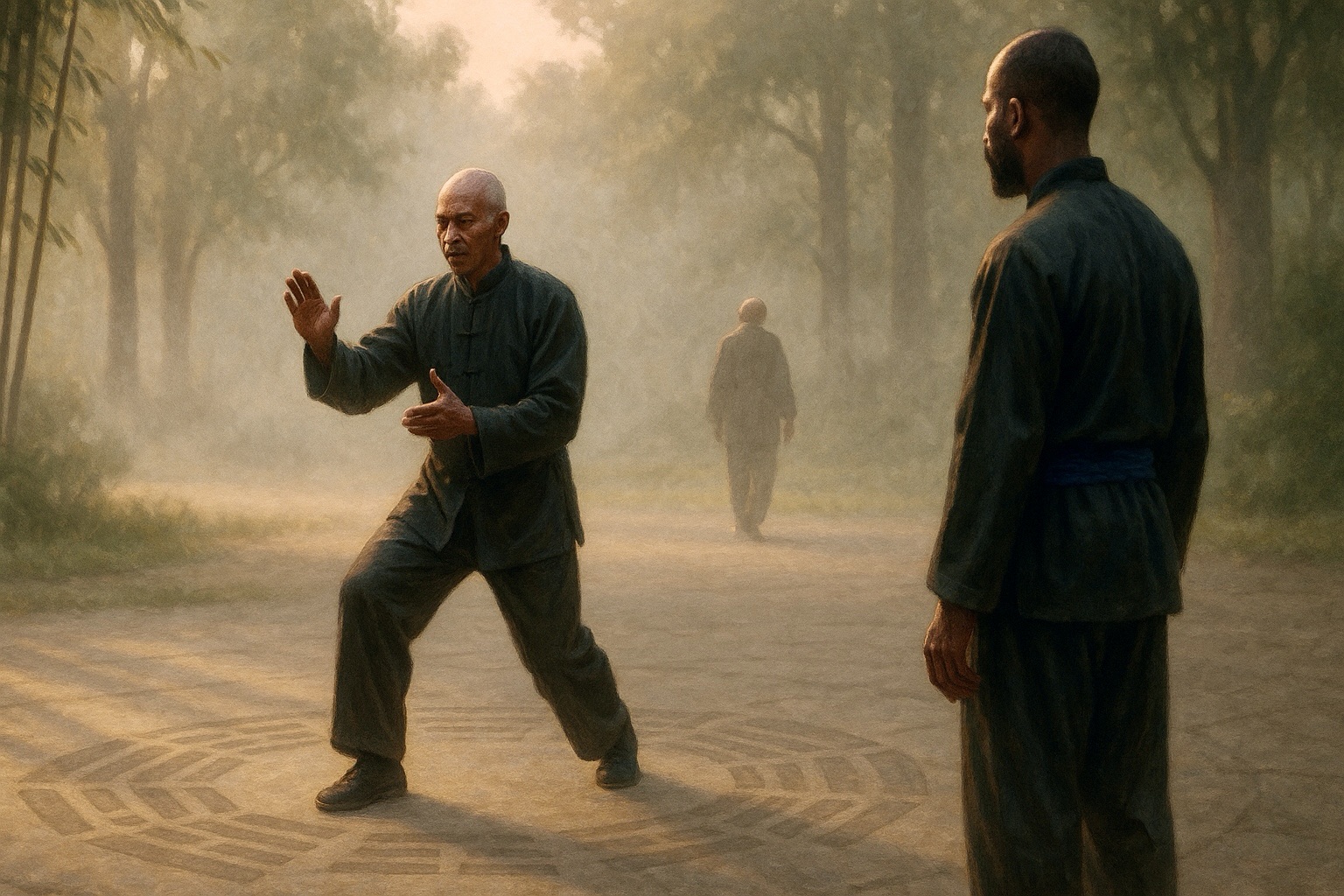
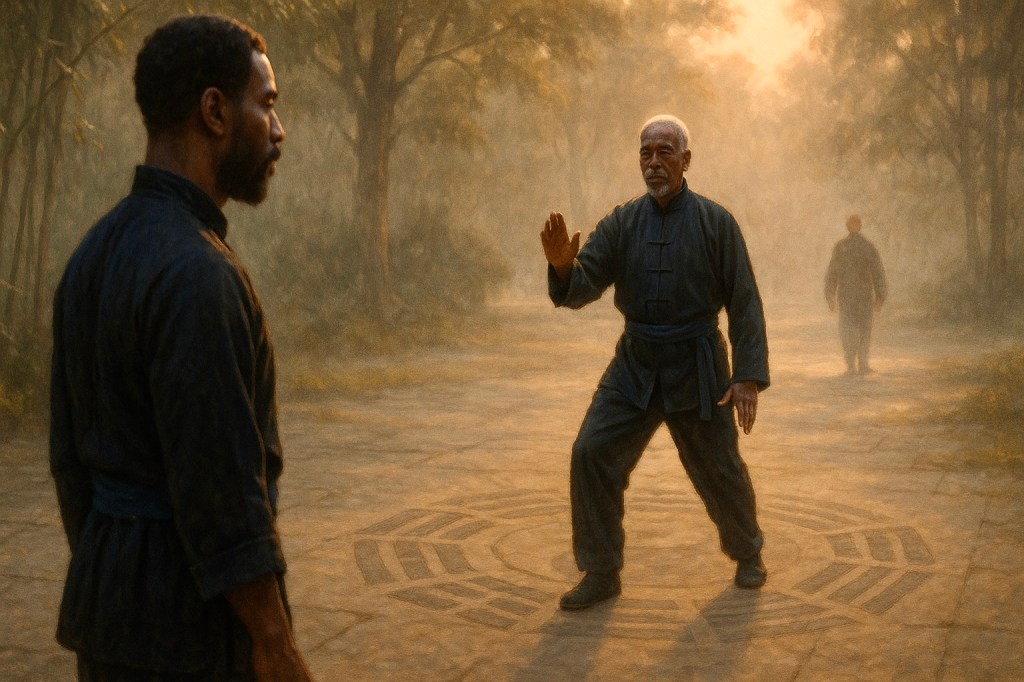
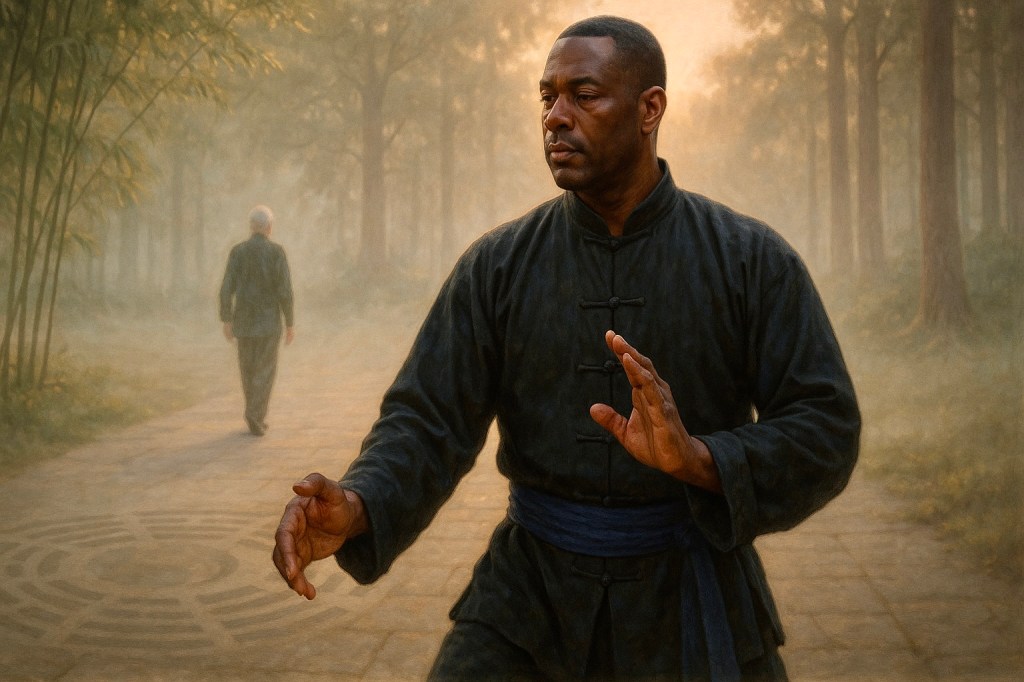
As my focus shifted away from my own body and settled on my teacher, the atmosphere of the practice changed without announcement, the room feeling fuller and heavier in a way that asked for observation rather than self-assessment. Watching him move through the same material, I noticed a difference that resisted quick judgment, his stances holding their shape and his structure staying honest, while the transitions between movements arrived in sections rather than in one unbroken stream, pauses appearing where flow once carried him forward without interruption, not as errors and not as lapses, but as signs of attention dividing, of breath and body sharing space with obligations leaning in from the edges of his life.
Each posture completed its task, landing firmly and settling where it should, the segments arriving with clarity while the larger rhythm hesitated, revealing a practice carrying more than form and holding more than technique. That hesitation did not read as decline, yet it unsettled the earlier story I had told myself about ease, because what I saw in him carried weight that my own smoothness did not yet explain.
“What looked like difference in skill revealed itself, with patience, as a difference in circumstance.”
Standing there and breathing, watching him work, I felt my own ease sliding into the background, replaced by a recognition forming slowly and steadily, gathering weight as observation took the lead and self-evaluation loosened its grip. No pride rose to claim the moment, no competitive thought rushed in to rank it, and even discomfort stayed quiet, replaced instead by a sober attentiveness that arrives when something important presents itself without asking me to name it.
My mind still attempted to hurry meaning into the moment, offering familiar explanations about advancement or improvement or outgrowing, each explanation promising clarity while flattening what I actually witnessed, turning a living process into hierarchy and compressing complexity into a ladder with numbered rungs. Watching him continue to move interrupted that impulse, because the facts of the practice refused the story my intellect wanted to tell.
I train daily, returning to the same transitions again and again, repeating shifts of weight and turns of the waist, staying with stiffness until softness appears, staying with imbalance until balance finds its footing, refining not through force or flourish but through patience, breathing, listening. That surplus of time and attention shows itself in my movement as ease, as cooperation, as flow, and recognizing that surplus immediately reframed what I saw in my teacher.
He carries decades of teaching, mentoring, organizing, and holding space so others can train at all, that expenditure showing itself not as decline but as redistribution, the art continuing through him while life asks him to carry more than form. Holding those two realities together altered the meaning of the moment, because difference stopped resembling hierarchy and began revealing sequence instead, the practice moving through seasons, circulating through bodies, traveling through time.
Once I saw the moment that way, the earlier ease in my own movement lost its innocence. What had felt like a personal reward now pointed outward, away from my body and toward the larger life of the practice, asking a different question than the one I had arrived with.
From that vantage point, the lesson of the morning clarified without rushing itself forward. It did not arrive through my own smoothness, but through watching my teacher and recognizing what maturity in practice quietly demands, a recognition that did not conclude training so much as alter its terms. Ease no longer signaled arrival; it narrowed responsibility.
When effort fades from movement, excuses fade with it, and when repetition stops taxing the body, the practice begins testing something else, shifting its attention from endurance and ambition toward care and continuity, toward stewardship and sincerity. Seeing this meant I could no longer practice as though refinement remained a private matter, because comfort removed the cover that effort once provided.
That realization restricted something in me. Once I saw the practice living through me rather than forming me, I could no longer move as a student alone, could no longer hide inside repetition without asking what now traveled forward through my hands, my habits, and my choices about how and why I train. Understanding closed off an earlier posture and replaced it with obligation.
“Some practices survive not because they get performed, but because they get carried.”
Many martial traditions arrive at a moment like this, a moment that comes quietly and avoids announcement, when the teacher no longer needs daily demonstration for the art to continue because the practice already lives elsewhere, carried forward by those who still have the time, curiosity, and physical readiness to tend it. That moment often passes as an ordinary class, arriving while someone adjusts a stance, pauses between transitions, watches closely, and finally understands something technique alone never promised to teach.
Inheritance does not arrive as triumph, but as weight, settling into the hands and habits of whoever keeps showing up, keeps refining, keeps returning, the discipline no longer asking for applause and beginning to ask for accuracy, the practice no longer asking for proof and beginning to ask for preservation. Responsibility replaces permission, not dramatically, but decisively.
Since that morning, a question follows me through training, not loudly and not theatrically, but steadily and insistently, asking what this practice requests now, at this stage of life, when sustaining it no longer demands struggle, only care. That question keeps the work honest by refusing nostalgia and refusing display.
I do not carry a finished answer, and I trust that unfinished state, because the work now points toward practicing quietly, correcting myself before correcting others, carrying the form forward with patience rather than proclamation, letting responsibility take root without shaping it into a story about achievement. The lesson holds firm and demanding, reminding me that practice matures from effort into care, that transmission completes itself through continuity rather than announcement, and that what we carry forward matters more than what we display.
As you move through your own disciplines, martial or otherwise, notice where movement begins cooperating instead of resisting, and ask what that ease now asks from you in return, not more exertion, but deeper care.
Two friends walked a few steps ahead of me, voices low and loose, the kind of talk that carries no performance—only truth—and I caught the phrase that kept returning like a tide-line: ebb and flow, the way life surges, then recedes, then surges again, the way unpleasant surprises arrive periodically—an ache, a delay, a hard conversation, a sudden expense—then move on, leaving you to decide whether you learn or you tighten, whether you adapt or you argue.
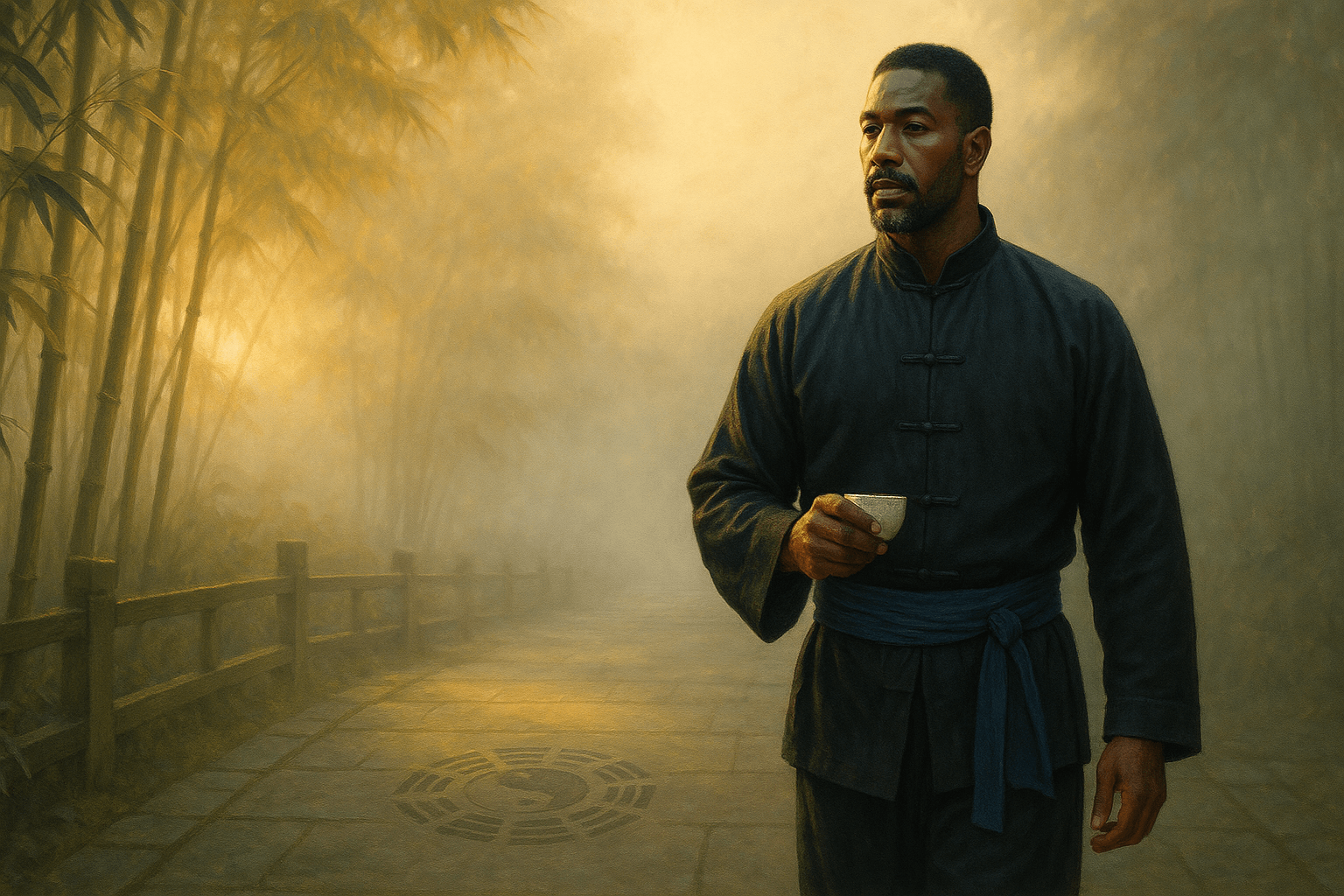
I kept moving, tea-warmth in my palm, morning air on my face, and I felt my own reflex rise anyway, that stubborn urge toward control, toward clean plans and quiet days and smooth sequences, as if the universe owed me unbroken rhythm, as if reality should text first before it interrupts, and I almost laughed at myself, because I know the pattern: the ego loves certainty the way a toddler loves a permanent marker—grip hard, scribble everywhere, then act surprised when the walls look wild.
That overheard conversation carried me right back into the old Taoist teaching, not the polite version, not the poster version, but the lived version that shows up when the day drops something awkward in your lap. In the Tao Te Ching (Chapter 21), the text leans into mystery with a steady face, talking about the Way as “elusive and evasive,” “shadowy and dim,” yet still carrying “a core of vitality.” I hear that and I don’t hear despair; I hear instruction, because the line doesn’t promise certainty, it promises contact—move with incomplete visibility, choose with imperfect information, walk anyway, because sincerity can still guide you through fog.
Then William Martin’s The Sage’s Tao Te Ching (Passage 33) comes through with that upside-down grin that makes the ego squint: “We have embraced those things which others shun,” and “Embracing uncertainty, we find awe,” and “Embracing limitations, we find a path of effective action.” Not romance about suffering. Not denial about difficulty. Just a clean pivot in posture: stop treating the knock like an invasion and start treating it like instruction.
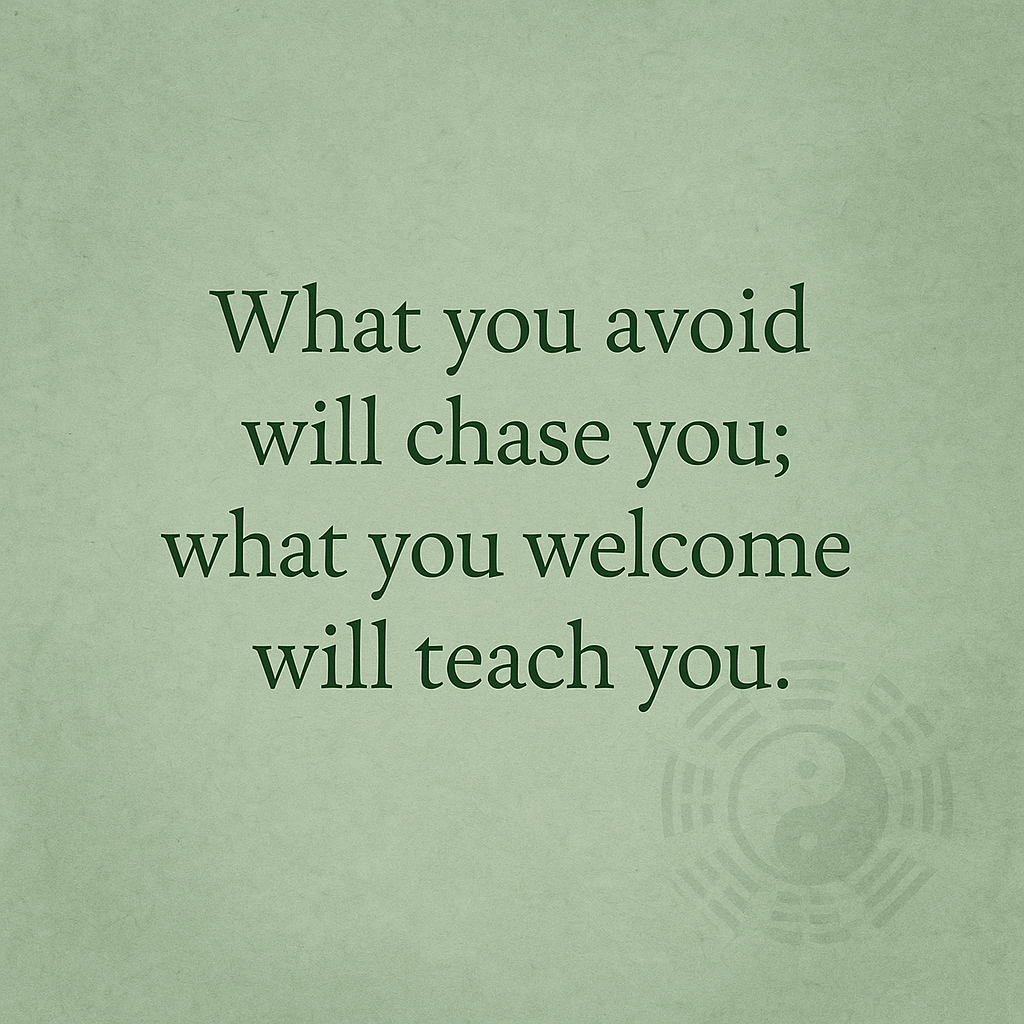
Because avoidance never counts as neutral. Avoidance runs like debt—you don’t skip the bill, you schedule interest. You don’t dodge the conversation, you grow a whole garden of rehearsal and rumination, watering it daily with imagination, then wondering why your shoulders stay high and your sleep comes late. You don’t ignore the ache, you let your body raise its voice until it can finally get your attention. What you avoid will chase you, not out of malice, but out of mathematics.
So I started carrying a small method, simple enough to use under stress, sturdy enough to use on ordinary days, because ordinary days hold the real test. When something unpleasant shows up—an awkward talk, a schedule fracture, a tech failure, a social sting, a sudden limit in the body—I treat it like a sparring partner that just stepped on the mat, gloves on, eyes honest, and I stop asking, “Why me?” and I start asking, “What does this reveal?” because revelation often arrives faster than reassurance, and the thing you fear can become a teacher the moment you stop running and turn toward it.
I call the method Welcome the Knock, and I run it in three clean beats: name the visitor without poetry—uncertainty, limitation, fear, loss, delay—then bow to the boundary—I accept what I cannot control right now—then take one effective action that fits the boundary, a smaller step, a cleaner plan, a simpler rep, a calmer conversation. That sequence doesn’t shrink your life; it steadies your feet, and steady feet can move through weather.
“I welcome the visitor, I honor the boundary, and I take the next effective step.”
Martial arts already taught me the same lesson—my body learned it first, my mind just tried to catch up—because footwork never lies. In sparring, you read distance and choose lines, inside and outside, long and medium and short, and the moment you respect the limit you stop flailing and reaching and hoping your way into position, therefore your movement gains clarity, your breath gains calm, your intention gains precision. Limits don’t ruin the art; limits reveal the art.
So today, if something “unattractive” knocks—an obligation, an ache, a delay, a doubt—try the move. Turn toward it. Let it speak. Let it teach. And if you feel like sharing, drop a line in the comments: what knocked lately, and what lesson did it try to deliver? Your reflection might hand somebody else the calm they needed.





 Musings on Martial Arts, Taoist Philosophy & All Things Wellness Related.