Sometimes clarity arrives too quickly. A small spark rises in the chest and convinces you that a little knowledge reaches farther than it truly does. The mind loves that early warmth — the way a familiar surface feels like something deeper, the way a tiny rise underfoot masquerades as a mountain, the way the first hint of understanding tempts the voice to speak before the breath settles.
That sensation returned to me recently and brought with it a memory from a training hall in the foothills — a place where dawn touched the stone floor with intention and discipline shaped every slow inhale.
A young student entered that hall one season carrying more confidence than practice. His certainty moved ahead of his comprehension, his commentary arrived before his stances matured, and his voice rose long before his repetition earned it. He moved as if enthusiasm replaced foundation, as if speed mattered more than structure.
One morning the master led him up a quiet ridge. The path carried enough ease for the student to speak the entire climb — interpretations, theories, predictions — a steady flow shaped by impressions instead of understanding. When they reached the crest, he stood upright as if claiming a summit.
The master placed a wooden cup in his hands, filled nearly to the brim.
“Walk the ridge,” he said. “Keep the water with you.”
The path revealed its truth quickly. Stones shifted. A crosswind brushed the rim. The water trembled, then slipped free, then vanished entirely. By the time he reached the far side, the cup held only remnants.
The master watched, unhurried.
“You moved as though the ground existed to flatter you,” he said. “Pressure rarely cooperates.”
Something inside the student shifted — not humiliation, but recognition. Recognition of the gap between confidence and capability. Recognition of the places where practice had not yet touched. Recognition of how easily pride paints a hill as a summit.
He returned the next dawn and walked the ridge again with the same cup, the same water, the same shifting ground. Each crossing revealed truths the first climb hid how balance whispers before it collapses, breath stiffens when the mind rushes, claims crack when real weight arrives.
Days passed before the clouds lifted enough to show the real mountains farther off — immense, unmoved, indifferent to his earlier certainty. He stood long enough for humility to settle.
“I see how far I have not traveled,” he said.
The master nodded with a quiet acceptance.
“Wisdom grows where noise fades,” he said. “Volume can never replace the work.”
Most of us meet our own ridge at some point — that stretch of ground where confidence steps forward too quickly and the earth reminds us of the distance we still need to walk. The moment rarely arrives with drama; it usually comes quietly, tucked into a conversation, a challenge, a correction that lands just right.
What stays with us afterward is not the stumble, but the clarity that follows it — the sense that the world widened while we weren’t paying attention, that the terrain around us holds more depth than the mind first believed, that humility sharpens the eye in ways pride never can.
When we allow that clarity to move through us without resistance, something subtle but strong takes shape. Our voice softens, not from doubt, but from understanding. Our pace slows, not from fear, but from intention. Our learning deepens, not from force, but from the steady willingness to see what we missed.
The ridge remains. So does the cup.
But the way we approach them changes.
And that shift — quiet, honest, earned — becomes the first true sign that wisdom has begun its work.
Stay inspired and inspirational.
Sifu Khonsura Wilson
P.S
If this lesson met you at the right moment, consider walking a little farther with me.
I’m building a space for deeper teachings — extended scrolls, behind-the-scenes practice notes, and longer reflections on the journey of self-cultivation.
Your support helps me keep this work alive, steady, and growing.
If you feel called, become a supporter and join me on the next ridge.
Ever feel like you hit a wall right when you aim to elevate? I stepped into one of those moments in my martial arts practice today, and it reminded me—growth doesn’t come from staying in comfort zones. Growth comes from facing what challenges us, and sometimes, like this morning, that challenge lies not in the body but in the mind.
Growth Through Challenge: Finding Flow Beyond Frustration
Picture this: I’m working on a new form, determined to refine each motion and find that perfect balance. But today, it seemed as if my feet sank into the ground, my balance betrayed me, and no matter how hard I pushed, I couldn’t seem to float. Frustration welled up, and that voice started creeping in: Why isn’t this working? I can’t get this right.
Now, in moments like these, we face a choice. Do we double down, forcing our way through the resistance? Or do we pause, breathe, and observe the struggle within? As the familiar frustration bubbled, I chose to stop. I closed my eyes, took a deep breath, and simply stood still, feeling the ground beneath me.
In that stillness, clarity came. The battle wasn’t in the movement—it was in my mind.
The Wisdom of Yielding: Lessons from Water
Martial arts teach us that true mastery doesn’t come from sheer force but from yielding, from bending when needed rather than breaking. Laozi, the great sage of Taoism, reminds us that “Water is fluid, soft, yielding, but eventually, it wears away even the strongest rock.”
Up until that point, I had approached my practice like the rock, stiff and determined to control every aspect. But the real power lay in embracing the qualities of water: soft, flexible, and ready to flow. Instead of straining, I softened my stance, relaxed my shoulders, and shifted my approach. Rather than moving against the energy, I chose to move with it.
And just like that, the struggle transformed. My movements flowed, and what once felt like resistance became a dance.
Reflection: Where Can You Yield?
So here’s a question I pose to you today: Where in your life are you holding rigidly, like the rock, when you could embody the adaptability of water?
We often encounter challenges that prompt us to tighten our grip, to control, to resist. Yet, perhaps the true path to strength lies in knowing when to yield. In finding flow, we cultivate resilience that moves through obstacles rather than attempting to break them down.
Drop a line in the comments and share your reflections. Let’s explore together where we can release, where we can soften, and how we can flow even in the midst of life’s toughest moments.
Closing Thoughts
Strength often lies in knowing when to yield. If today’s reflection resonated, explore more of my wisdom on growth, resilience, and the art of yielding in my other videos. And until next time, may you find your path, like water flowing effortlessly through rock.
In our fast-paced society, the concept of wellness constantly evolves. What does it truly mean to feel well? We often hear the phrase “take care of yourself and prioritize your wellness,” but what does that entail? How can we achieve and maintain wellness in a meaningful and sustainable way?
For martial artists and fitness enthusiasts like myself, wellness holds great importance. We strive for physical and mental fitness through activity and discipline. In this blog post, I will share insights from my research on:
1. The origins and evolution of the concept of wellness.
2. How it compares to similar concepts and its unique distinctions.
3. How we can leverage the dimensions of wellness as a framework for prioritizing, organizing, and balancing our lifestyle—ultimately optimizing our lifespan and enhancing our quality of life.
Understanding Wellness in Its Totality
What does “wellness” mean in its fullest sense? We often use terms without fully grasping their meanings. During one of my morning meditations, I contemplated the true essence of “wellness.”
Initially, I believed wellness aligned with “health,” but I began to question whether something more existed. After researching, I discovered that before 1948, people did not commonly use the term “wellness” to describe an individual’s overall health. Instead, they referred to the absence of infirmity or disease as “health.” Many people also used “wellness” to describe one’s physiological, psychological, or social state. Therefore, someone might appear healthy while experiencing internal or social struggles.
Today, even professionals in health and wellness fields use the term in various, sometimes contradictory ways. My research revealed conflicting sources on its origins and first usage. Some claimed that “wellness,” “well-being,” “health,” “healthcare,” and “self-care” referred to the same concept, which complicates rather than clarifies the meaning of wellness.
Further investigation showed that while wellness relates to health, it does not completely overlap with it. Scholars have attempted to create a unified definition for wellness, addressing several issues identified by Charles B. Corbin and Robert P. Pangrazi of Arizona State University in their 2001 paper titled “Toward a Uniform Definition of Wellness: A Commentary.”
Challenges included:
• The widespread use of the term by health and fitness professionals and the general public.
• Different people and organizations defining wellness in different ways.
• The lack of a coherent and consistent definition creating confusion among consumers and professionals.
• A lack of a clear definition hindering the development of a robust body of wellness research.
The Origins and Evolution of Wellness
The concept of wellness originated in ancient civilizations. Early societies viewed wellness as a holistic balance of mind, body, and spirit. Practices such as Traditional Chinese Medicine and Ayurveda emphasized the interconnectedness of physical, mental, and spiritual health.
In 1948, the World Health Organization (WHO) expanded the formal definition of health to “a state of complete physical, mental, and social well-being and not merely the absence of disease or infirmity.” This definition acknowledged that health encompasses more than the absence of illness—it includes overall well-being.
Over the decades, the concept of wellness evolved as our understanding of health and self-care grew. The 1960s and 1970s saw the emergence of the wellness movement, which emphasized personal responsibility for one’s health through lifestyle choices and preventive measures.
Pioneers of Wellness: Halbert Dunn and John Travis
Dr. Halbert L. Dunn, often referred to as the “father of the wellness movement,” introduced the concept of “high-level wellness” in his 1961 book of the same name. Dunn described wellness as a dynamic process of growth and high functioning—a contrast to the medical model’s focus on treating illness.
Building on Dunn’s work, Dr. John W. Travis developed the Illness-Wellness Continuum in 1972. Travis conceptualized wellness as a dynamic process moving along a continuum from premature death to high-level wellness. His model emphasized that wellness does not simply mean the absence of disease but involves a proactive approach to health, involving awareness, education, and personal growth.
The Illness-Wellness Continuum
Travis’s Illness-Wellness Continuum illustrates that individuals can move towards higher levels of wellness even without disease symptoms. It recognizes that a person without physical illness may still experience emotional or psychological distress. Conversely, someone with a chronic condition can achieve a high level of wellness through positive attitudes and proactive health behaviors.
The continuum encourages individuals to take responsibility for their health by making conscious choices that enhance well-being. It underscores the importance of a positive mindset and proactive behaviors in achieving optimal wellness.
Comparing Wellness to Related Concepts
While wellness, health, well-being, and self-care interrelate, they remain distinct concepts:
• Health: Often defined as the absence of disease or infirmity; a state of physical well-being.
• Well-being: A broader concept encompassing physical, mental, and social aspects of life; refers to a state of feeling comfortable, healthy, or happy.
• Self-care: Activities individuals undertake to enhance health, prevent disease, limit illness, and restore health.
• Wellness: The active pursuit of activities, choices, and lifestyles that lead to a state of holistic health. It includes physical, mental, emotional, spiritual, social, environmental, occupational, and financial well-being.
Leveraging the Dimensions of Wellness
My research led me to a comprehensive framework for balancing and organizing life priorities—leveraging the dimensions of wellness. The National Wellness Institute identifies six dimensions of wellness, while others expand it to eight or even ten. These dimensions interconnect, and maintaining balance among them proves crucial for optimal wellness.
The Commonly Accepted Dimensions of Wellness:
1. Physical Wellness: Maintaining a healthy body through regular exercise, proper nutrition, adequate sleep, and avoiding harmful habits.
2. Emotional Wellness: Understanding and managing one’s feelings, coping effectively with stress, and maintaining satisfying relationships.
3. Intellectual Wellness: Engaging in creative and mentally stimulating activities, expanding knowledge and skills.
4. Social Wellness: Developing a sense of connection, belonging, and a well-developed support system.
5. Spiritual Wellness: Exploring meaning and purpose in human existence, appreciating life, and aligning actions with values.
6. Occupational Wellness: Personal satisfaction and enrichment derived from one’s work, balancing work and leisure time.
7. Environmental Wellness: Recognizing the responsibility to preserve, protect, and improve the environment.
8. Financial Wellness: Managing resources to live within one’s means, making informed financial decisions.
Implementing the Wellness Framework
To achieve true wellness, we must focus on all aspects of ourselves to create stability, balance, and harmony. By organizing our priorities around these dimensions, we can identify areas needing improvement and take proactive steps toward enhancing our well-being.
Physical Wellness
Physical wellness involves adopting healthy habits that improve physical health and functioning. This includes:
• Regular Physical Activity: Engaging in exercises that improve cardiovascular fitness, strength, flexibility, and balance.
• Nutrition: Consuming a balanced diet rich in fruits, vegetables, lean proteins, whole grains, and healthy fats.
• Sleep: Prioritizing adequate and quality sleep to restore energy and support bodily functions.
• Preventive Care: Regular health screenings and check-ups to detect and prevent health issues early.
• Avoiding Harmful Behaviors: Limiting or eliminating the use of tobacco, excessive alcohol, and other harmful substances.
Emotional Wellness
Emotional wellness encompasses understanding and accepting one’s feelings and effectively managing stress. Strategies include:
• Mindfulness and Meditation: Practices that promote awareness of the present moment and reduce stress.
• Emotional Intelligence: Developing the ability to recognize, understand, and manage our own emotions and those of others.
• Healthy Coping Mechanisms: Engaging in activities that reduce stress, such as hobbies, exercise, or talking with trusted individuals.
• Professional Support: Seeking counseling or therapy when needed.
Intellectual Wellness
Intellectual wellness encourages lifelong learning and intellectual growth. This can happen by:
• Learning New Skills: Pursuing education, learning a new language, or developing a hobby.
• Creative Activities: Engaging in artistic endeavors like writing, painting, or music.
• Critical Thinking: Challenging oneself to think critically and consider different perspectives.
Social Wellness
Social wellness focuses on building healthy, nurturing, and supportive relationships. Steps include:
• Community Engagement: Participating in community activities or volunteer work.
• Building Relationships: Investing time in friendships and family connections.
• Effective Communication: Developing good communication skills to interact positively with others.
Spiritual Wellness
Spiritual wellness involves seeking meaning and purpose. This may include:
• Reflection and Meditation: Practices that encourage self-reflection and inner peace.
• Values Alignment: Living in a way that remains consistent with personal beliefs and values.
• Connection with Nature: Finding inspiration and tranquility in the natural world.
Occupational Wellness
Occupational wellness involves personal fulfillment and enrichment through work. This includes:
• Career Satisfaction: Finding work that aligns with personal values and provides meaning.
• Work-Life Balance: Managing time to balance professional and personal responsibilities.
• Professional Development: Pursuing opportunities for growth and advancement.
Environmental Wellness
Environmental wellness emphasizes living in harmony with the Earth by understanding the impact of your interaction with nature and your personal environment. Actions include:
• Sustainable Practices: Reducing waste, recycling, and conserving resources.
• Creating Healthy Spaces: Ensuring living and working spaces promote health.
Financial Wellness
Financial wellness involves the effective management of financial resources. This includes:
• Budgeting: Planning and tracking spending.
• Saving and Investing: Preparing for the future through savings and investments.
• Financial Education: Increasing knowledge about financial matters.
Conclusion
Exploring the concept of wellness reveals it as a dynamic and multidimensional state that extends beyond physical health. By understanding and addressing the various dimensions of wellness, we can create a balanced and fulfilling life.
Implementing this wellness framework allows us to prioritize and organize our lives effectively. It provides a practical guide for self-improvement, helping us identify areas needing attention and offering strategies for enhancement.
When we care for ourselves and prioritize wellness, we not only improve our own lives but also set a positive example for others. By striving for balance across all dimensions of wellness, we can optimize our lifespan and enhance the quality of our life experiences.
Final Thoughts
Wellness represents an ongoing journey, unique to each individual. It requires continuous effort and commitment to personal growth and well-being. By embracing the concept of wellness in its totality, we empower ourselves to lead healthier, happier, and more fulfilling lives.
Ready to dive deeper into your wellness journey? For practical tips, martial arts insights, and mindfulness practices, I invite you to subscribe to my YouTube channel, Tea Time Warrior Wisdom. Together, we’ll explore holistic ways to enhance your physical, mental, and spiritual well-being. Join me on this path toward a balanced and fulfilling life.
References:
1. Corbin, Charles B., and Robert P. Pangrazi. Toward a Uniform Definition of Wellness: A Commentary. Arizona State University, 2001.
2. Dunn, Halbert L. High-Level Wellness. R. W. Beatty Ltd., 1961.
3. Travis, John W. Wellness Workbook: How to Achieve Enduring Health and Vitality. 3rd ed., Ten Speed Press, 2004.
“Knowing others is intelligence; knowing yourself is true wisdom. Mastering others is strength; mastering yourself is true power.” – Lao Tzu
A Heartfelt Welcome to Our Journey
This morning, as the first light of day gently covered my serene garden, I found myself immersed in the peaceful practice of Qigong. The air was crisp, carrying the delicate scent of blooming jasmine, while the sun’s rays filtered through the leaves, casting a warm glow around me. Moving in harmony with nature, I felt the energy flow through every fiber of my being, grounding and centering me. This moment of tranquility wasn’t just a personal ritual—it set the stage for the journey I want to share with you today.
Imagine embarking on a voyage that doesn’t take you across vast landscapes but instead leads you deep into the intricate and expansive realm of your own soul. This inner journey transforms the unpredictable winds and formidable waves of nature into wise teachers, guiding us in the art of resilience, balance, and harmony.
The Inner Quest for Self-Discovery
Have you ever wondered why the most profound victories are those we achieve over ourselves? Why does overcoming personal doubts, fears, and limitations feel more fulfilling than any external triumph? Today, I invite you to explore this intriguing mystery with me. By the end of our time together, you’ll discover how true strength and power originate from within, not from displays of force or arrogance.
Let’s delve into these thought-provoking questions:
1. How can we learn about resilience, adaptability, and growth from a humble sapling braving the elements?
2. What lessons can the ocean’s unpredictable waves impart to us about navigating life’s myriad challenges and uncertainties?
3. How does the disciplined path of a martial artist serve as a metaphor for the journey of inner growth and self-improvement?
The Tale of the Resilient Sapling
Picture a modest sapling, slender and seemingly fragile, standing alone in the vastness of nature. At first glance, it might seem vulnerable to harsh elements, yet it embodies a hidden strength. When fierce winds blow, the sapling doesn’t break; instead, it bends gracefully, moving in harmony with the gusts. This isn’t resistance but resilience through flexibility. Even in adversity, the sapling doesn’t just survive—it thrives, teaching us that true strength lies in our ability to adapt and grow through challenges.
Navigating the Ocean’s Unpredictable Waves
I often envision myself on the deck of a sturdy ship, navigating the expansive ocean. Around me, waves rise and fall in a relentless dance, each one testing my resolve and skill. Instead of battling these unpredictable forces, I learn to understand their rhythm and respect their power. By adapting my course and harnessing their energy, I find harmony amidst chaos, transforming adversity into opportunity. This lesson mirrors our own lives, where patience, understanding, and balance guide us through uncertainty.
The Martial Artist’s Path: A Journey of Self-Improvement
The journey of a martial artist beautifully illustrates how true power stems from continuous self-improvement, inner growth, and unwavering discipline. Unlike displays of aggression or brute force, their power is evident in the fluidity and precision of their movements—each action a testament to years of dedicated practice. Their calmness and focus, nurtured through meditation and mental training, reveal a depth of character that transcends the physical, touching the spiritual. Martial artists embody the wisdom of knowing when to act and when to yield, balancing strength with gentleness and action with restraint. This profound understanding shows us that the greatest power often comes from within, from mastering ourselves rather than dominating others.
Drawing Lessons from the Heart of Our Experiences
• Resilience through Flexibility: Like the sapling that bends with the wind, our true strength lies in our ability to adapt, be flexible, and grow through challenges and adversities.
• Harmony with Life’s Rhythms: Navigating life’s unpredictable waves requires patience, understanding, balance, and harmony with the world around us.
• Inner Growth as the Source of True Power: The discipline and wisdom of a martial artist teach us that the essence of power comes from consistent self-improvement, discipline, and the wisdom of self-mastery.
Recognizing and Harnessing the Power Within
To truly embrace the power within, consider engaging in these contemplative exercises:
1. Breathwork Meditation: Inhale deeply for a count of 4, hold for 4, exhale for 4. Repeat this cycle 10 times, allowing each breath to remind you of the natural ebb and flow of power.
2. Journal Reflection: Write down moments when you felt a genuine sense of power. What were the circumstances? How did it differ from moments of prideful power? Aim for three entries.
3. Visualization: Close your eyes and imagine a river. See yourself not fighting against the current, but flowing with it. Feel the strength that comes from alignment and harmony. Visualize this for five minutes.
As we reflect on the profound power and potential of our inner journey, remember that true strength and power are found not in controlling others but in mastering ourselves. In the inspiring words of Maya Angelou, “You alone are enough. You have nothing to prove to anybody.”
Returning Full Circle
As my morning practice comes to a close, standing once again in my tranquil garden, I feel a deep sense of peace and empowerment. The lessons of resilience, harmony, and inner growth resonate within me, reminding me that the most rewarding journey is the one within ourselves.
“Power isn’t shown in one’s ability to wield it, but in one’s grace to keep it sheathed.”
If you’re ready to dive deeper into this journey of self-discovery and empowerment, I invite you to watch my videos. Join me, Khonsura—the Kung Fu Creative—as we continue to explore and grow together.
Stay Inspired & Stay Inspirational!
Thank you for being part of this community. I look forward to sharing more insights and experiences with you in future essays. Until next time, embrace your inner strength and keep striving for wisdom and wellness.
“Do not regret growing older. It is a privilege denied to many.“
Unknown
Recently, while scrolling through my social media feed, I stumbled upon a post featuring content creators over 50 discussing the beauty of aging. Their words and images struck a chord with me, as they celebrated the wisdom and authenticity that come with age. This encounter prompted me to reflect on my own journey and the powerful role content creators can play in shifting societal narratives around aging.
WARM GREETINGS and Welcome Back Seekers of Freedom, Wisdom, and Wellness! Have you ever wondered why society often fears aging?Spoiler alert: not because we get better at bingo.
Today, I want to share some reflections on a theme that resonates deeply with me—aging. As I navigate my fifties, I contemplate the intricate dance between growing older and the pervasive influence of social media.
Aging, a natural part of life, often becomes shrouded in fear and denial within our society. The relentless pursuit of eternal youth dominates many aspects of our culture, leading to an obsession with maintaining a façade of perpetual vitality. I, too, have felt the pressure of these societal norms. However, through my journey of self-cultivation and martial arts, I have come to embrace aging as a source of strength and wisdom rather than a decline.
In the content creator market, youthfulness often takes center stage. Content creators, with their perfectly curated images and youthful exuberance, set trends and shape perceptions. Yet, this focus on youth can overshadow the authenticity and beauty that come with age. As a content creator myself, I recognize the immense potential we possess to reshape these narratives. We can use our platforms to celebrate aging, to show that it does not signify something to fear but rather something to embrace.
“Aging is a fact of life. Growing up is optional.”
Maya Angelou
Imagine a world where aging receives celebration, the lines on our faces tell stories of resilience and the gray in our hair signifies wisdom gained through life’s trials and triumphs. Several content creators such as Jen of “Silver and Solo” already lead this charge, sharing their journeys and embracing their age with pride. They remind us that handsomeness, beauty and vitality do not belong solely to the young; they belong to anyone who lives fully and authentically, regardless of their age.
In my life, the practices of Qigong, Tai Chi, and martial arts have been sources of renewal and vitality. These ancient disciplines connect me to a more profound sense of self and help maintain my physical and mental well-being. They serve as daily reminders that aging does not equate to decline; rather, it offers an opportunity to grow in wisdom and inner strength. (I detail this more on my YouTube channel: Khonsura’s Balanced Way to Wellness)
Aging Positive
To embrace aging positively as content creatives try these steps:
First, embrace the benefits: Aging brings wisdom, experience, and a deeper understanding of life. Let’s celebrate these aspects in our content and conversations.
Second, maintain a healthy lifestyle: I encourage practices that support well-being, such as regular exercise, a balanced diet, and mindfulness. These habits help me age gracefully and maintain my vitality.
Third, create inclusive content: Share wisdom stories and achievements of people from all age groups, showcasing that life’s journey contains rich and varied experiences at every stage.
By shifting the narrative around aging, we can create a more inclusive and positive society. As content creators, we hold the power to lead this change. I encourage you to reflect on how you view aging and to support those who celebrate the fullness of life at every age. Together, we can redefine what it means to grow older, embracing it as a journey of continual growth and discovery.
Thank you for joining me in this reflection. Like, subscribe, and share your thoughts in the comments below. How do you feel about aging? Let’s continue this conversation and support each other in embracing every stage of life with grace and authenticity.
Stay Inspired and Inspirational!
“Beautiful young people are accidents of nature, but beautiful old people are works of art.“
To the mind that stays still, the whole universe surrenders.
– Lao Tzu
Warm greetings, Seekers of Freedom, Wisdom, and Wellness. Picture yourself in the heart of a bustling city, or busy building the cacophony of sounds pressing from all sides. The blaring horns, the fragments of conversations, and the distant hum of machinery create a symphony of noise. Amid this chaos, you close your eyes and take a deep breath. Suddenly, a profound stillness washes over you, silencing the external world. This moment of calm within the storm exemplifies the transformative power of embracing stillness and silence.
Read on to understand how regular meditation can bring clarity and calm your life. I explore the following questions: What makes stillness and silence essential for well-being? Second, how does meditation help us transcend the noise? Third, what practical steps can we take to integrate meditation into our daily routines?
The Importance of Stillness and Silence
Imagine your mind as a glass of muddy water. When constantly stirred, the water remains cloudy, obscuring clarity. However, the sediment settles if undisturbed, and the water becomes clear. Similarly, stillness and silence let our mental clutter settle, revealing our innate clarity. This clarity enhances our decision-making, creativity, and emotional well-being.
In our society, we often equate productivity with constant action and noise. However, actual productivity arises from a place of calm and focus. By embracing stillness and silence, we can access deeper concentration and insight. This shift in perspective enables us to navigate life’s challenges with greater ease and resilience.
Transcending the Noise through Meditation
Meditation serves as a bridge between external chaos and our inner sanctuary. Through regular practice, we cultivate the ability to quiet our minds, even amid external noise. Meditation teaches us to observe our thoughts without attachment, allowing us to transcend the mental chatter that often governs our lives.
Consider the analogy of a turbulent ocean. The waves may rage on the surface, but deep beneath, the water remains calm and undisturbed. Meditation helps us access this more profound, tranquil state of being. From this place of inner calm, we can respond to life’s demands with greater clarity and composure.
Practical Steps to Integrate Meditation into Daily Life
Integrating meditation into our daily routines requires commitment and consistency. Here are some practical steps to help you get started:
1. Start Small: Begin with just five minutes of meditation each day. Gradually increase the duration as you become more comfortable with the practice.
2. Create a Sacred Space: Designate a quiet, comfortable spot in your home where you can meditate without interruptions. This space will remind you of your commitment to stillness and silence.
3. Focus on Your Breath: Use your breath as an anchor to ground yourself in the present moment. Pay attention to the sensation of each inhale and exhale, allowing your mind to settle. Tip: Inhale slowly for 4 counts, hold for 3, exhale for 8. Try for 6 rounds. Assess how you feel then continue for another set of 6 rounds. (You can also see demos on my YouTube channel. See the link below.
4. Practice Mindfulness: Throughout your day, pause and tune into your surroundings. Notice the sounds, smells, and sensations around you. This practice helps cultivate mindfulness that extends beyond formal meditation sessions.
5. Be Patient and Gentle with Yourself: Meditation is a journey, not a destination. Some days, your mind will be more restless than others. Importantly, Approach your practice with patience and compassion, allowing yourself to grow at your own pace.
Summary
Key lessons from embracing stillness and silence through meditation include: recognizing the importance of mental clarity, understanding how meditation helps transcend noise, and integrating practical steps for consistent meditation practice. To bring these lessons into your life, start with small, manageable steps, create a dedicated space, focus on your breath, practice mindfulness, and approach your journey with patience.
Conclusion
Remember regular meditation brings clarity and calm, allowing us to navigate the noise of modern life gracefully. We unlock the potential for profound insight, creativity, and emotional well-being by embracing stillness and silence. Start today, take a few moments to close your eyes, breathe deeply, and immerse yourself in the tranquility that lies within. Also, check out my YouTube channel in the link below.
Epilogue
Now, returning full circle to the beginning of of exploration, imagine standing in that bustling city or busy building once more. Now, equipped with meditation, you find that the noise no longer overwhelms you. Instead, you carry a piece of stillness within you, a sanctuary of calm that you can access at any time.
“If a man is worth knowing at all, he is worth knowing well,”
-Alexander Smith’s
THE ABOVE STATEMENT still holds in our modern world, where superficial interactions often overshadow meaningful connections. This statement speaks to a profound truth about human relationships and the depth of understanding we seek in meaningful connections. It aligns with the Taoist principle of diving deep into the essence of things, reflecting a wisdom that transcends mere acquaintance.
Imagine encountering someone whose presence sparks your curiosity, a sage, a thought-provoking stranger, or even a book stumbled upon in a vacation home whose words provoke deep reflection. In a world of rapid interactions and fleeting attention, these initial fascinations often hint at a wealth of experiences, insights, and stories waiting for us to explore. Smith’s words starkly contrast our fast-paced world, reminding us of the value of truly understanding someone and their ideas.
This journey of understanding is about others and ourselves, offering us the potential for profound personal growth.
Genuinely getting to know someone is not a journey for the faint-hearted. It remains a process that demands patience, presence, empathy, and an open heart. It mirrors a martial arts journey, where mastery is not about copying movements but profoundly understanding each technique’s purpose and spirit. Whether in Kung Fu, Tai Chi, or any form of self-cultivation, the depth of practice determines the richness of experience.
As we navigate the complexities of daily interactions, let’s remember Smith’s wisdom. Let’s strive to forge relationships that transcend the surface, embarking on the journey of genuinely understanding those around us. In doing so, we enrich our lives and create connections that withstand the test of time. This journey of understanding is about others and ourselves, offering us the potential for profound personal growth.
Why do martial artists pursue balance amid conflict? How can the principles of martial arts help us navigate life’s challenges?
“Harmony fosters growth in small things; its absence causes great things to wane.”
Sallust
Picture yourself at the edge of a serene lake at dawn, its surface reflecting the sky perfectly. A stone, when it hits the water, disturbs this tranquility yet unveils a deeper beauty and complexity. This scene, capturing both disruption and harmony, illustrates a key lesson from martial arts that goes well beyond the dojo, touching on life mastery’s essence.
The Dance of Harmony and Conflict
Martial arts show us that true strength comes from balance, not dominance. These arts—whether Kung Fu, Tai Chi, or others—emphasize harmonizing opposing forces: aggression with restraint, speed with stillness, power with flexibility. This dynamic extends beyond physicality, embodying the mental and emotional agility needed daily.
Consider the Yin and Yang, symbols that illustrate the interconnectedness and complementarity of seemingly contrary forces. In life, every challenge holds an opportunity, and every peaceful moment might lead to conflict. Mastery, in martial arts and in life, involves not suppressing one side for the other but integrating both.
Lessons in Resilience and Adaptability
Martial arts build physical strength and cultivate mental resilience and the capacity to recover from setbacks. Life, unpredictable by nature, tests our resilience. Just as a martial artist learns the art of falling and rising gracefully, we too can face life’s challenges without losing our balance.
Adaptability, a key martial virtue, proves essential for responding to changing situations. Just as martial artists adjust their tactics based on their opponents, we must stay flexible and open to life’s evolving scenarios. This teaches us the importance of adaptability in thought and action.
The Path to Inner Peace
Achieving inner peace represents the ultimate goal of martial arts. Through discipline and practice, martial artists learn to calm the mind, control the breath, and harmonize the spirit, finding serenity amidst chaos. This journey teaches us that peace does not mean the absence of conflict but the ability to find calm within turmoil.
By embracing and harmonizing the opposites within—strength and gentleness, action and contemplation—we navigate life’s complexities with greater ease and confidence.
Reflections
Our exploration today shows that martial arts offer more than combat techniques; they provide a blueprint for life. They remind us that balance, resilience, adaptability, and inner peace stand not just as ideals but as achievable realities. Reflect on these insights:
Embrace Balance: Acknowledge the strength in your dualities.
Value Resilience and Adaptability: Learn to move with life’s changes.
Seek Inner Peace: Find your calm within.
Practice Compassion: Let empathy guide you through life’s conflicts.
How can you integrate these principles into facing your life’s challenges? How might this perspective alter your approach to conflicts, both within and without?
In closing, let’s remember the guidance of Rumi and Mandela, who urge us to find balance and make choices reflecting our hopes, not our fears.
Imagine yourself as a warrior on the eve of battle, heart racing with myriad outcomes, most cloaked in danger. Yet, when the moment to act arrives, reality reveals itself to be less daunting than the phantoms of fear.
How, then, can we muster the courage to confront fears that loom larger in our minds than in the world around us?
Let’s embark on this exploration with a moment of gratitude, acknowledging our collective pursuit of wellness, wisdom, and inner peace. Together, let’s say, “Ashe,” as we toast to our journey ahead.
The Battlefield Within
Ever stood at the crossroads of a decision, feeling the imminent battles that lie ahead? Let’s delve into the essence of courage and the specters of fear and discern the nature of these forces, as well as how to navigate through them, emerging not just unscathed but fortified.
Fear, our primal alarm, signals danger, priming us for the freeze, fight or flight. Yet, it also illuminates our core values and desired transformations. Courage, conversely, stems from an unwavering resolve to unfreeze and face fear head-on.
As Maya Angelou beautifully articulated, “Courage is the most important of all the virtues because, without courage, you can’t practice any other virtue consistently.” Our minds, adept storytellers, often weave tales of terror that eclipse the actual threats, echoing Seneca’s insight that our fiercest battles are internal, a war between perceived danger and tangible risk.
Harnessing Courage
The journey to courage begins with facing our fears, recognizing them without judgment. Practices like mindfulness serve as our compass, guiding us through fear with clarity and intention. By setting incremental challenges, we gradually bolster our confidence, drawing strength from courageous exemplars and the solidarity of community.
“Courage is the most important of all the virtues because, without courage, you can’t practice any other virtue consistently.“
Maya Angelou
Bravery manifests in daily acts—voicing our truth, embracing uncertainty, or setting boundaries—revealing that heroism is not solely the domain of grand gestures but thrives in the quiet corners of our daily existence. These acts, however small, are the building blocks of resilience, affirming that true courage is the persistent choice to confront fear, irrespective of its magnitude.
Practical Strategies for Embracing Courage
Mindfulness and Reflection: Cultivate an awareness of your fears through introspection and mindfulness, approaching them with openness and without judgment.
Small Acts of Bravery: Like a muscle, courage strengthens with use. Start with minor challenges, progressively confronting more significant fears.
Seek Inspiration: Look to tales of bravery across different realms for motivation and guidance.
Reframe the Narrative: Shift your perspective on fear and courage. View each challenge as an opportunity for growth, not as an impenetrable barrier.
Reflections and Parting Thoughts
The true battleground lies not in the external world but within the mind’s vast expanse. In facing our inner battles, we uncover the deepest wellsprings of strength.
Consider how recognizing and understanding your fears could be a catalyst for personal growth.
Reflect on areas in your life where you could practice greater courage.
Think about how to foster a support network that encourages courageous actions.
Mark Twain once said, “Courage is resistance to fear, mastery of fear, not absence of fear.” Fear may distort reality, but courage is the light that guides us through the darkness.
“Out of clutter, find simplicity. From discord, find harmony. In the middle of difficulty lies opportunity.” — Albert Einstein.
Imagine a serene warrior navigating through a chaotic battlefield, seeking refuge and wisdom in an unassuming cave. What secrets might it unveil? This mystery beckons us to explore the art of finding order in chaos.
Embarking on a Journey of Enlightenment
How can the chaos that surrounds us not act as a barrier but instead pave the way to inner peace? This intriguing question marks the beginning of our journey through the storm to uncover peace within chaos. Our quest is illuminated by three pivotal themes: the art of mindfulness, the fortress of discipline, and the serenity found in embracing chaos.
The Mindfulness Mantle: Embracing the Now
The concept of mindfulness, often portrayed as the practice of anchoring oneself in the present moment, serves as a guiding light amidst the chaos of modern life. Visualize the stoic composure of ancient warriors, radiating an aura of serenity even amidst the fiercest turmoil. It is this very essence of mindfulness that acts as a protective shield, deflecting the arrows of distraction and allowing us to immerse ourselves in the peace and tranquility of the present moment, like finding solace in the rhythmic heartbeat of existence. This ability to stay grounded in the now, to truly experience each fleeting moment without the intrusion of external pressures, is a valuable skill that can enrich our lives and bring an unparalleled sense of clarity and inner peace.
Discipline as a Bastion: Crafting Calm within the Chaos
Discipline plays a crucial role in our lives, introducing much-needed structure to the chaos that often surrounds us. It acts as a guiding force, leading us through the turbulent dance of life with a sense of purpose and determination. By instilling discipline in our actions, we transform each step and decision into a deliberate movement toward tranquility and fulfillment. It is the refined art of discipline that allows us to navigate the stormy seas of life, finding peace and balance amidst the tumultuous waves.
Chaos, Understood: The Pathway to Peace
Understanding chaos reveals its true nature—not as an adversary but as a sage guiding us to hidden tranquility. In the heart of turmoil lies a cave of serenity, teaching us that peace blossoms within chaos, awaiting our care. In this sanctuary, the secret unfolds: tranquility is attained through mindfulness mastery, disciplined strength, and chaos comprehension.
Integrating Wisdom into Life
Try these practices:
Begin a daily mindfulness practice focusing on breath observation, body sensation awareness, and non-judgmental thought acknowledgment to foster peace and presence.
Establish a discipline ritual by committing to a simple daily task like making the bed, reading, or reflecting to weave peace into daily life.
Embrace journaling to explore chaos, dive into emotions, and unravel insights, turning chaos into a teacher of peace and resilience.
Conclusion: Crafting Peace Amidst Chaos
Navigating the chaos that engulfs us can indeed be an arduous task, but it is not insurmountable. Embracing the art of mindfulness allows us to cultivate an awareness of the present moment, enabling us to detach ourselves from the turbulence around us and find tranquility within. This heightened sense of awareness helps in acknowledging the chaotic elements, whilst also recognizing the underlying serenity that exists amidst the storm.
Furthermore, the fortress of discipline plays a crucial role in not letting the chaos deter us from our path to inner peace. By establishing and adhering to routines, habits, and rituals, we create a sense of stability and control within ourselves, guarding against the disruptive nature of chaos. Discipline acts as a shield, enabling us to stay grounded and focused even in the midst of turmoil.
Finally, there is an unexpected serenity found in embracing chaos itself. Instead of resisting or resenting the disorder that surrounds us, learning to accept and adapt to the ever-changing nature of chaos can lead us to a profound sense of peace. Embracing chaos allows us to relinquish our need for control, thus liberating us from the anxiety and distress it often brings.
In conclusion, the path to inner peace amidst chaos is illuminated by the art of mindfulness, the fortress of discipline, and the unexpected serenity found in embracing chaos. By treading this transformative journey, we can find solace and equilibrium even in the most turbulent of times.
“Movement breathes life into the practice of mindfulness, turning each step into a symphony of awareness.” This profound thought sets the stage for today’s exploration beyond traditional perceptions of mindfulness. Imagine an ancient scroll, unearthed in the ruins of a forgotten temple, revealing the secret pathway to enlightenment not through stillness but through motion.
The Art of Living Fully in the Present
Did you know the act of walking, often overlooked, can transform into a profound meditation, connecting us with our essence? Today, we embark on a journey, inspired by an ancient master, to unlock the secret of integrating mindfulness into every move.
A Ceremonial Beginning
Let us begin the moment with a simple ceremony. Hold a cup of tea, coffee, or water, and together, let’s toast to our collective pursuit of wellness, wisdom, and inner peace. Now, as we sip, let’s embark on this journey not of stillness but of motion.
Unfolding the Journey
Today’s exploration unfolds in three acts:
Defining Mindfulness in Motion.
Discovering how movement enhances mindfulness.
Sharing practices to integrate mindfulness into daily life.
Embracing Movement as Meditation
Mindfulness in Motion teaches us to find presence in our actions, transforming routine movements into rituals of awareness. Whether walking, cooking, or practicing martial arts, each action is a unique opportunity for mindfulness.
The Harmony of Mind and Movement
Movement acts as a mental anchor, fostering a connection between our physical actions and mental state. This bond elevates our consciousness, allowing us to navigate life’s challenges with grace and turn each step into an opportunity for growth.
“Movement breathes life into the practice of mindfulness, turning each step into a symphony of awareness.“
Integrating Mindfulness into Daily Life
To seamlessly weave mindfulness into our lives, we begin with conscious breathing, focusing on the life force within us. Intentional walking and mindful martial arts further enrich our lives with peace, purpose, and insight.
Key Takeaways
Mindfulness thrives in motion.
Movement anchors our awareness.
Daily activities offer opportunities for mindfulness.
The Legacy of the Ancient Scroll
As we conclude, the secret of the ancient scroll becomes clear: mindfulness flourishes not in stillness alone but in motion, offering a powerful anchor for awareness and transforming ordinary moments into extraordinary experiences.
Embarking on the Path of Mindfulness
Let every step, breath, and gesture become a masterpiece of presence, painting our lives with vivid colors of awareness and grace. If you’ve enjoyed this journey, share your thoughts and join me next time for more wisdom.
Adaptability stands as the only constant in a universe of change,” a timeless truth echoing through the corridors of existence, challenging us to embrace the flux of life with resilience and grace.
One morning, I was hit with the Flu just before my first martial arts test in a new system. Despite feeling weak, I pressed on, knowing that this test would test my skill in adapting to a new martial arts system and the new language of movement.
Martial arts, as in life, exist as more than losing or winning a battle, whether internal or external; Martial Arts, like life, can have moments when we face setbacks when life seems to get the better of us. There’s a profound saying by Bruce Lee – ‘Be water, my friend.‘ This means cultivating adaptability, not brute force, and flowing around obstacles with persistence. This wisdom rings true when we face setbacks or feel defeated.
We can control our response to setbacks and defeats. So, if you ever feel stuck, pause…Breathe deeply and ask yourself: ‘What one small step forward can I take right now?’ It might look as simple as standing up, putting your clothes on, walking, or even savoring your next sip of your tea. These small steps build the path to overcoming resistance to do something in the face of setbacks or challenges.
Now I Return to my story. After an intense three-hour test, I fortunately emerged as one of the highest scorers despite feeling less than optimal. But more than that, the test challenged my mental resolve and physical endurance, unlike any other challenge I have faced in the past.
The lesson? Adaptability and resilience remain a journey, not destinations. Small, consistent actions lead to significant changes. Embrace setbacks as opportunities for growth.
What about you? What small step can you take today to turn a setback or a defeat into a stepping stone?
Consider the following practices:
Identify a Recent Setback: Take a moment to reflect on a recent challenge you faced. Write it down.
Plan a Small Step: Decide on a tiny, actionable step to overcome or learn from this setback.
Practice Gratitude: Each morning, identify one thing you’re grateful for. It can be as simple as a cup of tea or the sunrise.
Closing: “In closing, I leave you with Maya Angelou’s words, ‘You may encounter many defeats, but you must not be defeated.’
In the dance of existence, where intellect intertwines with the simplicity of life, we find a profound truth: with the accumulation of knowledge, often comes the intricacy of our lives. Therein lies the essence of Taoist consciousness, a realm that transcends mere intellect, beckoning us to a state of presence, a harmony beyond the grasp of thought alone.
As we meander through the labyrinth of understanding, solely armed with intellect, we often overlook the power of practical experience – the true crucible where theories are tested and truths unveiled. Intellectual endeavors, akin to jugglers in a carnival, keep facts aloft in a mesmerizing display. Yet, it is through the lived experience, the unadorned act of living, that the deeper truths are revealed.
Intellect, a vital facet of the Tao, shines bright, yet it does not illuminate all. It is but one piece of a grander puzzle. The trio of study, experience, and meditation forms the trinity that guides us in erasing the veils that obscure true knowledge. Through this balanced approach, where thought and action, reflection and experience, dance in unison, we edge closer to the heart of understanding.
In this journey, the seeker must embrace a holistic path: intellect for the mind, experience for the heart, and meditation for the soul. Each element, a thread in the tapestry of wisdom, weaves together to form a more complete understanding of the Tao, the way of the universe.
Remember, intellect is but a single thread in the fabric of wisdom. Combine your intellectual pursuits with experiential learning and meditative reflection. Embrace the journey with both mind and heart, for in this balance, true understanding awaits.
If you seek more wisdom on this path, watch these. I am Khonsura, the Afro-Taoist & Kungfu Creative. Stay Inspired & Inspirational!
Often my mind wanders back to the paths I’ve trodden, the mountains I’ve climbed in the metaphorical journey of life. It strikes me how each step, each breath, has been a part of a grand ascent – a climb towards self-mastery and understanding.
The ascent of life is not just about the destination but about appreciating and embracing each step.
Our journey often mirrors the ascent of a mountain – steep, relentless, yet profoundly rewarding. Reflecting on this notion, I remember the ancient adages about the essence of perseverance and growth.The path to our destination, much like the winding trails of a mountain, feels never-ending, precipitous, and a challenge to both body and spirit.
We stumble, sometimes falling forward, other times backward, but like the steadfast warrior in an age-old fable, we must rise, dust off our weary selves, and proceed. This journey, marked by both struggle and splendor, is a testament to our unyielding spirit.
Self-cultivation, a daily, almost Sisyphean task, beckons us onward. Our efforts, though at times feeling brutal and fruitless, are the very essence of our quest. There’s an old saying, ‘No one ever ate an elephant in one bite”- a whimsical yet profound reminder that we achieve self-perfection through steady, consistent effort, akin to climbing a mountain to reach its lofty apex.
In our pursuit, we often seek joy, fixating on the happiness we anticipate at the journey’s end. Yet, in this fixation, we overlook a vital truth: joy stands not just as a destination but as an integral part of the journey itself. We find it in our moments of struggle, in the small victories, and in the beauty of the path we tread.
As we ascend, remember that success is not solely in material gains or grand adventures. It lies in our devotion and unwavering dedication to this long, arduous journey. It’s our iron will, our consistency, that sustains us, propelling us toward the mountaintop. So then,
1. What small steps can you take today that contribute to your more significant journey?
2. How can you find joy in the process, not just the destination?
3. In what ways have you shown resilience and strength in your ascent?
Remember, the journey of ascent is not just about reaching the peak; it’s about embracing each step, each breath, and each moment with presence and joy. Stay Inspired and Inspirational
In the tapestry of life, each thread of sorrow and joy weaves a pattern rich with the hues of human experience. As I ponder, in reflective meditation, the essence of sadness and suffering, a realization dawns, akin to a gentle whisper of wisdom in the stillness of a moonlit night.
You may not control all the events that happen to you, but you can decide not to be reduced by them.
Maya Angelou
Imagine, if you will, a stream of consciousness where sorrow and joy dance in a delicate balance. Life, in its profound mystery, often appears as a dream, ethereal and evanescent. It is in the very act of feeling—be it sorrow or bliss—that our humanity finds its deepest expression. In this dance, there is an invitation to presence, a call to be fully alive in each moment. This presence, my friends, has the power to transcend the polarities of sadness and happiness, leading us towards a realm of enlightenment, where something more enduring resides.
Yet, witnessing others entangled in the sorrowful grasp of fate often tugs at our heartstrings with a force greater than our own burdens. The pain of others, mirrored in the depths of our empathy, feels heavier, more poignant. But here lies a revelation: we possess the resilience to bear our own suffering, for within us lies the ability to exercise choice. By altering our context, deflecting the arrows of sadness, or absorbing the blows with a shift in perspective, we can transform our relationship with our trials and tribulations.
Consider this: like the ephemeral clouds in an ever-changing sky, our emotions—sadness, joy, anger, love—are rooted in the alchemy of our body chemistry. They are transitory, fleeting, leaving behind traces in the sands of time. And in their passing, we return to the balanced way, to a state of harmony and equilibrium.
In this journey, let us embrace the full spectrum of our emotional landscape, for it is through these experiences that we uncover the richness of our being. In the embrace of sorrow and the release of joy, we find the threads that connect us all, weaving a tapestry of shared humanity.
As we part, I leave you with three engaging questions to ponder:
How can we transform our perspective to find strength in our sorrows?
In what ways can our empathy for others’ suffering become a source of our own growth?
What practices can help us return to a balanced state amidst the ebb and flow of emotions?
In the words of Maya Angelou, “You may not control all the events that happen to you, but you can decide not to be reduced by them.” Let us carry this wisdom as we navigate the seas of life, finding strength in our shared humanity.
In the quiet early hours, as the world whispers its first secrets, I find myself on a path less trodden, a journey inward. It stands as a realm where solitude isn’t solitude at all but a companion, a teacher whispering the timeless wisdom of introspection.
Imagine -if you will- a road, not just any road, but one bathed in the soft light of self-awareness. It winds gently through landscapes rich in tranquility and wisdom. Along this path, wellness, balance, and peace are more than mere concepts; they’re steadfast companions, always at my side. Clarity and calmness guide each step, transforming confusion and chaos into distant memories.
This journey, marked not by the loud fanfare of the world but by the quiet sheen of inner peace, has become my chosen way. It’s a path that resonates with the harmony of a life well-lived, away from the world’s clamor, deep in the contemplative nooks of the soul.
And what about you? Have you ever found solace in the quiet moments of your life? Where do you find your peaceful sanctuary?
Here, in the embrace of solitude, I’ve found a nurturing tree, its roots anchored deeply in the fertile soil of self-contentment and quiet stillness. This tree doesn’t always bear the traditional fruits of material riches. Yet, it offers a different kind of wealth — a wealth that sustains the spirit, nourishes the heart, and enriches the mind.
And my devotion to this path is unwavering, for it has rewarded me with the most precious jewel — peace, that rare and delicate treasure that adorns my life with bursts of creative insight and inspiration. These moments, fleeting yet profound, remain the true treasures, far more valuable than any material wealth.
As I traverse this introspective voyage, the shadows of debt, poverty, and loneliness that once loomed large now fade into the light of a life enriched by personal fulfillment and inner harmony. Yes, my path remains a solitary road and lonely journey. Yet still, on this road, I’ve discovered the most authentic companionship — the companionship of my own soul.
What treasures have you discovered on your own journey of introspection? How have they enriched your life beyond the material?”
This journey teaches me daily that the true richness of life isn’t measured in external achievements, but in the internal landscapes we cultivate within ourselves. Each step I take, though solitary, is guided by the wisdom of ages, the lessons of life, and the harmonious rhythm of a heart that seeks truth and authenticity.”
Also, I’m curious: what insights have come to you in your moments of solitude? How have they shaped your understanding of yourself and the world around you?
How do you embrace solitude in your life? What lessons has it taught you?”
In the quiet hum of my solitude, my thoughts danced to the most beautiful rhythm of all — the rhythm of introspection, imagination and self-discovery.
What steps have you taken to explore the internal landscapes of your own heart and mind?”
If you feel inspired and ready, try your journey of introspection, uncovering your own path, embracing your solitude, and discovering the peace waiting in the quiet corners of your soul. I go by the name Khonsura, the Kungfu Creative. Check out these other videos for other Taoist Musings. Thank you for listening
My mission in life is not merely to survive, but to thrive.
Maya Angelou
Warm greetings, dear readers!
Reflecting upon the ebb and flow of life, I find myself perched under the shade of an ancient oak, a gentle breeze carrying whispers of wisdom from ages past. In this moment of serenity, I think of the importance of wellness, a symphony played on the strings of our daily habits.
As I journey through health and wellness, drawing from my experiences as an evolutionary wellness coach and martial artist, I’ve discovered essential rhythms that compose the melody of baseline wellness. Allow me to share these ten harmonious habits, each a note in the grand score of well-being:
1. Embrace Morning Mindfulness: As the sun peeks over the horizon, greet the day with gratitude or a positive affirmation. This practice sets the tone for a day filled with purpose and positivity.
2. Integrate Movement into Your Day: Dance with movement. Schedule short, joyful intervals of physical activity. Be it a brisk walk or Tai Chi, let your body move in rhythm with life.
3. Cultivate Nutritional Awareness: Treat food as both fuel and art. Embrace whole, nourishing foods and delight in the adventure of new recipes. Listen to the whispers of your body’s needs.
4. Prioritize Hydration: Let water be your elixir. Hydration is crucial in maintaining vitality, clarity, and health.
5. Establish a Sleep Ritual: As night falls, prepare for restorative sleep. Create a calming ritual that may include reading or gentle stretching, inviting a night of peaceful slumber.
6. Practice Mindful Breathing: Amidst the day’s hustle, pause for deep, intentional breaths. This simple act can dispel stress and sharpen focus.
7. Involve Your Social Circle: Share your wellness journey. Physical activities gain color and joy when experienced with others, enriching bonds and building community.
8. Commit to Learning: Seek knowledge in health and wellness. Let books, documentaries, and conversations be your guides on this journey.
9. Reflect and Journal: Each evening, reflect upon the day. Journal your achievements and learnings, embracing growth and mindfulness.
10. Engage with a Supportive Community: Find strength in togetherness. Connect with groups that share your passion for wellness, enriching your journey with their support and wisdom.
Now, consider trying these practical exercises to get you started :
• Begin each day with a 5-minute mindfulness meditation.
• Incorporate 10 minutes of stretching or walking twice daily.
• Try one new healthy recipe each week.
Also reflect on:
• What small step can you take today towards your wellness?
• How can your journey inspire those around you?
• What does wellness mean to you in the context of your life?
As the sun dips below the horizon, I often think of the interconnectedness of our journeys. These habits are more than mere actions; they are the brushstrokes painting our lives and baseline of our wellness. Let these habits be your guide to not just survive but thrive in wellness.
“Life is not measured by the number of breaths we take, but by the moments that take our breath away.”
Maya Angelou
In moments of solitude, my mind often wanders to a profound allegory, one that delves into the enigmatic dance of life and death. Though this narrative is ageless, it resonates deeply with those in their vibrant years of 25 to 35, a time where the vigor of youth begins to blend with the wisdom of experience.
At the crux of our existence lies the intricate interplay of life and death. For us, living in an era of unprecedented change, this relationship holds unique significance. We stand as witnesses to the relentless march of time, yet amidst this, we confront the immutable truth of our own mortality.
In life, time is a constant companion, a silent observer to our joys and sorrows. Yet in death, this linear procession loses its meaning. Our physical form, a remarkable assemblage of elements, undergoes a transformation, returning to the earth from which it came. But the query that often lingers in the mind is about the spirit, the consciousness. Does it too, like our physical selves, undergo a metamorphosis, or does it simply cease to exist?
This mystery, shrouded in the veils of the unknown, is one that science has yet to unravel. It poses a compelling question about the nature of our existence and the essence that lies beneath our physical being.
The concept of identity, particularly poignant in this stage of our lives, gains a new dimension in the context of death. Our identities, a mosaic of experiences, relationships, and actions, seem to dissolve with our physical selves. Yet, there is something enduring about the impact we leave behind – the memories we create, the lives we touch, and the changes we instigate in the world.
In understanding the transient nature of our existence and the lasting impact of our actions, we find a liberating perspective. The fear of death begins to wane, and we start to view time not as a ticking clock but as a canvas for creating meaningful moments and lasting legacies.
In conclusion, as we navigate through the prime years of our lives, the contemplation of life and death offers a profound lens through which to view our existence. It beckons us to live with intention, to cherish each moment, and to create a legacy that transcends the physical confines of our being. Let this wisdom continue guide us as we forge our paths, crafting lives filled with purpose, meaning, and impact.
“Knowing others is intelligence; knowing yourself is true wisdom.”
Lao Tzu
In the quietude of an ancient garden, where time seems to stand still and the air itself whispers tales of old, there once walked a sage. His steps were measured, his gaze deep and thoughtful, as if every pebble and petal held secrets to life’s greatest mysteries. Here, amidst the symphony of rustling leaves and chirping birds, he imparted lessons of wisdom to those who sought his counsel.
One day, a young wanderer, eyes filled with the hunger for knowledge, approached the sage. “Master,” the wanderer asked, “what is the essence of life? How does one navigate its unpredictable tides?” The sage, with a gentle smile, beckoned the inquirer to sit beside him under the shade of an ancient oak. “The journey you speak of,” he began, “begins with self-cultivation, a path that all must walk in their own time.”
As the sage unfolded the lessons of life, the wanderer listened intently, each word a drop of nectar feeding the soul. These teachings, profound yet simple, stood not as mere philosophical musings but reflections of life itself—its beauty, its challenges, its paradoxes. This narrative, inspired by those very lessons, seeks to guide you, the reader, through the intricate dance of self-discovery and growth.
So, let us embark on a journey through the classroom of life, exploring nine lessons and uncovering the truths that lie within and all around us.
1. The Essence of Self-Cultivation Self-cultivation is more than mere self-improvement; it’s a transformative process that shapes us into beings capable of navigating life’s complexities. It’s about creating meaning and significance, not just in grand achievements but in the everyday moments of existence.
2. Life: The Ultimate Classroom In the vast classroom of life, we are both students and teachers. Every experience, every encounter is a lesson. Often, it’s through the most challenging situations that we learn the most about ourselves, uncovering aspects we might have preferred to keep hidden.
3. Navigating Sentiment and Fear Emotions like sentiment and fear, while natural, can cloud our judgment and hinder our growth. Recognizing and understanding these emotions is crucial. They are not roadblocks but signposts, guiding us towards deeper self-awareness.
4. The Scars of Experience Life’s challenges leave their marks on us – scars that speak of pain endured and overcome. These scars are not just reminders of what we’ve been through; they are evidence of our resilience and capacity to heal.
5. Seeking Refuge in Beauty and Connection In our search for solace, we often turn to beauty, laughter, solitude, and connection. These elements act as a balm, soothing our wounds and reminding us of the joy and love that make life worth living.
6. Confronting the Reality of Life Peeling back the veil of reality exposes us to the full breadth of life’s experiences – its beauty, glory, and horror. This confrontation can be overwhelming, but it is essential for our growth. It teaches us to embrace life in all its complexity.
7. The Role of Discerning Knowledge Discerning knowledge is the tool that helps us navigate through life’s uncertainties. It allows us to face reality without fear, to see our true reflections – flaws and all – and to accept ourselves as beautifully imperfect beings.
8. Embracing Humanity in its Entirety To see the good and the bad, the beautiful and the ugly, is to understand the essence of being human. Our journey through life is about accepting and embracing this duality, learning to find balance and harmony.
9. Preparing for the Unveiling of Truth In moments of silent solitude, we gather our strength and prepare ourselves to face life’s truths. Each revelation, each unveiling, brings us closer to understanding the extraordinary beauty of existence.
In conclusion, our journey of self-cultivation remains an ongoing process, one that requires patience, perseverance, and courage. As we continue to navigate through the rich tapestry of life, let us do so with an open heart and a willing spirit, ready to embrace whatever truths we may uncover and let us strive for this wisdom, continually seeking to understand and cultivate ourselves in the ever-unfolding journey of life.
For more insights into the art of self-cultivation and embracing life in all its forms, I invite you to explore my other posts.
Wisdom does not come overnight, the journey of self-cultivation is a path walked step by step, with the patience of the ancients and the vigor of the wind.
There once was an old, sprawling tree, whose roots delved as deeply as its branches soared. It was said that each leaf bore a lesson, a whisper of wisdom from the ages. And so our tale unfurls, the tree standing as a timeless exemplar of self-cultivation, its robust form a testament to a life steeped in growth and meaning.
The first theme we’ll explore mirrors the tree’s roots, ever-expanding and drawing sustenance—the practice of self-cultivation. It is through this diligent nurturing of our inner garden that we become suitable vessels for life’s boundless experiences. Like the tree, we must delve deep into the soil of knowledge, sprouting new leaves of understanding that lend beauty and purpose to our existence.
Venturing forth, we find ourselves in life’s grand amphitheater, the second insight dawning upon us. Study is not confined within walls; it is the act of conscious observation in the theater of existence. Here, we are both audience and actor, observing the play of reality, scene by vivid scene. This stage reveals the tapestry of the cosmos, each thread a route to fundamental truths, a glimpse of the world as it truly is, unmasked and unabashed.
Lastly, this grand classroom bears a mirror, reflecting not just our visage but the depths of our being. It’s in these reflective moments that we confront the less palatable facets of our character. Like the tree shedding leaves in autumn, we learn to let go of these fragments of our former selves, allowing new growth to take their place.
Now, for those who seek to translate these insights into practice—commence with quiet introspection, meditate upon your daily interactions, ten breaths at a time. Engage in active learning, be it through books or the silent teachings of nature, five pages or five moments of observation per day. Reflect on your discoveries, journaling three thoughts each night that the stars whisper to you. Lastly, create something that makes your heart sing, a powerful prose, a poem, or a painting.
In closing, I pose three questions to stir the soul: What rich soils of knowledge have you yet to turn? How might your reality shift when viewed as a student of the universe? What parts of you are you ready to shed to unveil a truer self? Let us draw from the well of African proverbs, Remember, the journey of self-cultivation is a path walked step by step, with the patience of the ancients and the vigor of the wind.
The slow but steady drip of water can carve its way through stone—not through force, but through persistence.
Once upon a time, in the theater of life’s grand stage, there was a soul who soared, not on the wings of innate prowess, but on the sturdy beams of discipline. Reflecting upon this thought, three resonant themes emerge: perseverance, transformation, and the undeniable power of habitual fortitude.
For example, consider the painter who, devoid of the inborn finesse of masters past, dips his brush into the palette of persistence, stroke by disciplined stroke crafting a masterpiece not of paint, but of perseverance.
In the realm of physical fitness and martial arts, where I also pursue a path of disciplined practice, such a journey is familiar. The regimen is simple: perform 3 sets of relentless slow 10-second repetitions in various directions—forward and backward, up and down, left and right, in and out, push and pull. Whatever movement you engage in, each set presents a challenge to push your limits today and each session serves as a bridge to unlock your potential for tomorrow.
In conclusion, let us ponder these questions: How might we transform our daily routines into rituals of resilience? What hidden masterpieces await the patient hand of disciplined practice? And how might the stories of those who have walked this path before us guide our way?
Remember beloved reader, discipline is the heartbeat of mastery, the unseen engine driving the wheels of progress. Let it be your ally on the road to excellence.
Someone once stated that patience equates to being at peace with presence and life’s process. This got me thinking about the balance between wu-wei, or non-doing, and doing to make the things happen. I’m at a point in my life where I feel like I’m doing as much as I can without overextending myself, but I still seem to be ending up in a very stagnant place, seemingly not making any real progress. I can’t possibly be the only person in the world that has felt this or is experiencing this.
Warm Greetings & Welcome Back!
Once upon a yesteryear, I found myself nestled in the arms of an ancient oak, pondering a parable of the river that flows effortlessly towards the sea. It struck me then—the river does not rush, yet its journey is not lessened by its pace. This reflection led me to meditate upon the dance of effort and ease, the interplay of wu-wei with the willful stride.
For instance, consider the bamboo—it bends with the wind, a testament to resilience, bending but not breaking. Its secret? It does not toil against the tempest, nor does it surrender its stand.
In this delicate act of balance, one might find solace in the Taoist wisdom—effort without strain, action without attachment. It is the art of the archer who, having released the arrow, trusts the bow’s wisdom to deliver it unto the target.
Yet, stagnation, like a silent pond, can be a mirror for introspection. It begs the question, does the seed beneath the soil not also pause before it splits the surface? Your current plateau could be the prelude to a profound unfurling.
In the pursuit of progress, perhaps it’s not the pace but the presence we bring to each step. Let us then weave a tapestry of patience, embroidering our days with mindfulness and trust in life’s tempo.
To enrich this contemplation, one might engage in exercises that embody this principle:
Tai Chi’s Push Hands—practice with a partner, focusing on balance and yielding rather than forcing, for three sets of five-minute rounds.
Journaling Reflection—each morning, write a passage on where you felt flow versus force in the previous day’s actions.
Meditation on Stillness—sit in quietude each evening, observing the thoughts that clamor for progress, for ten breaths.
In conclusion, might we ask ourselves: Where can we find strength in softness? How might patience reveal the potential within the present? What wisdom does the stillness whisper to us about the way forward?
From the rich loam of African proverbs, let us remember that “Patience can cook a stone.” Like the stone, our being is shaped not just by the rush of water, but also by its persistent caress.
May you find strength in serenity, and progress in patience.
In the hush of evening’s glow, I recall a lore of old, a simple truth cloaked in the complexity of being. There was once a stream that flowed, unfettered, through the embrace of ancient woods, its waters clear and true. It whispered a wisdom known to few: the secret dance of energy, from the subtle spirit to the manifest vigor of life. As the dusk cradles day to night, I invite you to embark on a journey with me—an exploration of the unseen force that animates our very essence.
The Manifestation of Spirit into Energy
Energy, the essence of life’s symphony, plays its first note in the quiet chamber of the spirit. It is an invisible dancer, moving to the rhythm of our intentions and thoughts. The spirit expresses itself, not with grandeur or noise, but with a gentle push, a soft nudge that sets our life’s melody into motion.
Self-Cultivation through Movement and Meditation
The body and mind engage in an ancient alchemy. Through movement, we stir the caldron of self, blending the ingredients of energy and consciousness. In stillness, we simmer the potion, allowing insights to bubble up from the depth of quietude.
The Sacred Breath: The Push and Pull of Life
Breath is the charioteer of energy, driving it through the channels of our being. It is both the gentle zephyr and the tempest’s roar—nourishing our limbs, nerves, and organs, uniting the corporeal with the celestial.
The Practice
Here are exercises that serve as a portal to understanding the continuum of energy in our lives:
1. Standing Meditation (Zhan Zhuang)
Stand like a tree, with roots sinking deep into the earth and branches reaching towards heaven. Embrace stillness, and feel the energy circulate within.
Repetition: Hold for 5 minutes.
2. Tai Chi Walking
Walk with intention, as if treading upon lotus leaves on a tranquil pond. Allow each step to be an expression of grace and balance.
Duration: Practice for 10 minutes.
3. Silk Reeling Exercises (Chan Si Gong)
Move as if drawing silk from a cocoon, unwinding the threads of chi smoothly and steadily, in a harmony of movement that connects the body and soul.
Sets: 3 sets of 8 repetitions.
Conclusion:
We now stand at the confluence of thought and reflection. Consider these questions:
1. When does the invisible energy become visible in your daily life?
2. In the silent sanctuary of stillness, what truths have you unearthed?
3. Can you sense the breath as a divine caress, a life-giving presence within?
The continuum of life is a tapestry woven with threads of energy, breath, and spirit. As you ponder these lessons, imagine the words of sages and seers as stepping stones on your path to awakening. Dance with the whispers of your spirit, sway to the rhythm of the world’s heart, let your breath compose the song of your existence and let your soul laugh.
There was once a sage, ancient yet timeless, who took daily strolls through the woods. With each step, the sage whispered mantras so potent that even the tempestuous winds hushed to listen. These strolls were not mere walks but odysseys through the inner sanctum of the soul. The lesson? “Each step, a moment; each moment, a universe.”
Today, we explore the Balanced Way, focusing on three unfolding petals of wisdom: the sanctifying essence of meditative walking, the soaring importance of present-moment awareness, and the divine truth that our world—yes, our very world—is a classroom, speaking to us in the eloquent language of nature.
The Dance Between Earth and Soul: Meditative Walking in Nature
In the Balanced Way, one finds an entrancing hymn sung to the beauty of meditative walking—a practice that weaves the ether of the soul with the terra firma beneath our feet. This is more than mere locomotion; it is a dialogue, a communion between inner and outer worlds. To walk meditatively in nature transcends mere physicality, bridging the gap to something spiritually nutritious and emotionally fulfilling.
Meditative walking asks us not just to move, but to feel—each step caressing the Earth, each breath a partnership with the sky. The feet may touch the ground, but the mind communes with a higher plane, orchestrating a dance that unites not just the body and mind, but the spirit as well.
The Eternal Now: Superiority of Present State Awareness
The wisdom of the Balanced Way does not pause its teachings at the mere act of walking. No, it elevates us to the quintessence of being: the now. Many of us wander, lost in the foggy landscapes of past regrets or future anxieties, neglecting the golden present stretched before us like a banquet of opportunities.
When we observe, truly observe, we invite the mind to rest from its endless wanderings and chatter. In this state, one becomes more than just a passerby in life; one transforms into an active participant in the orchestra of existence. Every nuance, every crescendo and diminuendo, every pause, gains significance. The present, in its silent majesty, thus becomes the only classroom where life’s most profound lessons are both taught and learned.
Landscape as Scripture: The World Is Our Classroom
The third revelation, drawing from the inkwell of the Balanced Way, is the concept that the world itself is a vibrant tapestry of teachings. Nature does not simply exist; it communicates. Each leaf, each wave, each gust of wind, serves as a verse in the unwritten scripture of life. The skies aren’t merely blue; they narrate tales of endless possibilities. The rustling leaves do more than just sway; they impart stories of resilience and renewal.
If we approach life with this pedagogical perspective, suddenly every moment becomes an opportunity to learn, and every setting transforms into a cathedral of wisdom. Each vista, each horizon, each mountaintop and valley, has something to say. Do we hear their message?
Epilogue: The Symphony of Wisdom
Beloved souls, let us ponder these meditations, drawing wisdom not just from ancient Taoist scriptures but from the omnipresent teachings around us. In the words of an age-old African proverb, “Wisdom is like fire. People take it from others.”
So, let us be “foolish” in our pursuit of wisdom, knowing that in this cosmic dance of life, each step is a lesson, each moment a classroom, and each of us both student and teacher. Stay Inspired & Stay Inspirational!
Here I sit, my gaze drifting over the rolling ink of Wei Wu Wei Ching, ancient wisdom imprinted on yellowed pages of a favorite book, as I ruminate over my current life challenges. It’s a quiet morning, the sun meekly announcing its arrival. These moments—meditative and solitary—serve as my sanctuary. As my eyes meet the phrase, “Every moment, leave the Way to the Way in order to express the Way,” I find my sanctuary stirred by three reverberating truths.
Unfurling the Depths of “The Way
The Tao, or “The Way,” embodies an ineffable natural order, a cosmic choreography to which all things belong. It thrives in the spirals of galaxies as much as in the swirl of thoughts within our minds. For example, consider the ocean—its unfathomable depths, its perpetual ebbs and flows. It encapsulates the mystique and majesty of the Way.
The Paradoxical Dance
To leave the Way to the Way—sounds perplexing, doesn’t it? It beckons a letting go, a surrender that brings forth the essence of the Way in its purest form. For example, I think of an artisan potter. They knead and shape the clay, but the final form it takes occurs when they cease to manipulate and allow the clay to settle. They leave the Way of pottery to express the Way of the universe.
Life’s Choreography
The Way manifests not only in grand cosmic phenomena but also in everyday nuances of our existence. By aligning with this Way, you tune in to a rhythmic resonance of life itself. For example, I reflect on those sublime moments when, without premeditation, words tumble perfectly from my mouth, or my body moves with spontaneous grace during Martial Arts practice. Now I ask you:
1. In what ways have you sensed the Way guiding your life’s journey?
2. How does the notion of ‘leaving the Way to the Way‘ resonate with your understanding of control and surrender?
3. Are there specific rituals or practices that help you tune into this cosmic rhythm?
“Wisdom is like a baobab tree; no one individual can embrace it,” comes a humbling reminder. You can grasp facets of the Way, but never its entirety. Like a baobab tree, the Way’s expansive branches stretch far beyond human comprehension. Learn to live in peace with this mystery, for in it resides your freedom.
Life’s a dance; you learn as you go. Sometimes you lead, sometimes you follow.
I remember a time when the world seemed still, the air thick with anticipation. I sat in a room bathed in the soft glow of twilight, a book in hand. The pages whispered tales of wisdom, and a Taoist Sage’s musing on ‘Engagement’ beckoned me closer. As the words danced before my eyes, I knew then that I was on the brink of a profound revelation.
Embracing Life’s Golden Opportunities: Life remains a tapestry of moments, each thread shimmering with possibility. To engage fully is to weave oneself into this grand design, to be a part of the ever-unfolding narrative. Seizing opportunities is not mere acquisition but immersing oneself in the experience. For example, when I practice Tai Chi, every movement and breath is an opportunity to be present and fully engaged.
Wu-Wei: The Dance of Trust: In the ebb and flow of existence, there are moments of stillness, moments where action seems futile. Herein lies the wisdom of wu-wei, or non-action. It remains not about inaction but a deep, resonant trust in the universe. For example, during my meditation sessions, I’ve felt the power of wu-wei, a surrender to the rhythm of Life, a dance of trust.
The Balance of Motion & Stillness: True engagement moves as a delicate balance between action and pause. Life demands active participation and quiet reflection like a maestro conducting an orchestra. For example, in martial arts, there’s a harmony between attack and defense, movement and stillness. This balance is the essence of full engagement.
Presence: The Wellspring of Happiness: At the heart of engagement lies presence, the ability to be fully in the moment. Wu-Wei, in essence, is about being present, about finding contentment in the now. For example, during my ancestral wellness sessions, I’ve witnessed the transformative power of presence and the joy it brings. So, tell me:
How do you embrace the opportunities Life presents to you?
In which moments do you find yourself practicing wu-wei, the art of non-action?
How do you balance action and stillness in your daily Life?
According to the Tao Te Ching, “In the pursuit of knowledge, every day something gets added. In the practice of the Tao, every day something gets dropped.” This passage reflects the essence of wu-wei and the beauty of simplicity. In conclusion, life remains our dance, and engagement remains the rhythm and as Mark Twain wisely quipped, “Dance like nobody’s watching; love like you’ve never been hurt.”
“If you don’t like the weather in New England now, just wait a few minutes.”
Mark Twain
Amidst the gentle morning breeze, I ambled along the serene trails of thought, with Ding Ming Dao’s profound words cradling my contemplation. Like a sunbeam piercing through the dense foliage, his notion of orientation beckoned to my soul. Akin to a meticulous gardener, I endeavored to tend to the diversified blooms within the garden of my psyche. The fruits borne of this introspection are fourfold lessons that I long to share with the world.
As I sauntered through the vast corridors of introspection, I stumbled upon a realization profound—our souls, a complex choreography of desperate elements, beckoning for harmony. The first lesson emerged as a tender sprout amidst rocky terrain—embrace the desperate elements of our souls, discipline the dance of internal cosmos to arrange them within the right context. A garden unattended, lends itself to the whims of wilderness, but with gentle nurturing, the beauty within unfurls in a melodious symphony.
The second whisper of wisdom was akin to a river’s course—avoid the tumultuous whirlpool of confusion, both within and without. Complexity, though enriching, when left unexplored, bewilders the self and others, masking the true essence with a veil of obscurity. And as rivers merge with the vastness of oceans, so must we venture into the heart of complexity, to find simplicity and clarity.
A subtle breeze carried forth the third lesson, murmuring the secrets of balance and alternation. Like the rhythmic beats of ancient drums, the various elements within us seek a harmonious cadence. Evade the discord of dominance and exclusion, lest the melody of your soul descends into cacophony. Each note, each beat, holds a place in the grand symphony of existence.
And as the day transcended into the stillness of twilight, the fourth lesson emerged from the silence—make wisdom, stillness, and presence the hub and hinge of life’s wheel. A strong and stable center, akin to the ancient baobab, stands undeterred amidst life’s tempests, grounding us, as the diverse elements of existence whirl around in a ceaseless dance. For with a centered spirit, the course of life flows with grace, like a meandering river carving paths through the heart of existence.
What desperate elements of your soul have you embraced and arranged within the right context?
How have you danced with the complexity of your inner realm to avoid the discord of excess?
In your journey towards centeredness, how have wisdom, stillness, and presence emerged as the hub upon which your life pivots?
Thus, as you saunter along the trails of self-exploration, may you too find the harmonious rhythm amidst the disarray, the tranquil center amidst the incessant whirl of life. Journey deeper into the heart of these reflections through the videos that follow. I go by the name, Khonsura, the kung fu creative, Stay inspired and inspirational!
Age is an issue of mind over matter. If you don’t mind, it doesn’t matter.
Mark Twain
As I ambled through the verdant meadows, where silence sang the oldest of songs, and the heart of martial arts beat with a rhythm pure and steady, I was led to the doorway of realization. The journey of a martial artist in maintaining functional muscle, especially as the seasons of life transition, is akin to the flow of water—adapting, nourishing, and carving through the realm of physical existence with grace and intent.
Once upon a morning mist, I imagined myself traversing the quiet, yet eloquent trails of Dengfeng, a serene sojourn nestled within the bosom of China’s Henan province. Here, the Shaolin Temple, an emblem of martial mastery and a haven of holistic wellness, stood as a silent custodian of ancient wisdom. Among the myriad lessons garnered, one resonated with a profound cadence — the art of cultivating, nurturing, and retaining functional muscle, a sine qua non for the marital artist, especially one who, like a finely aged scroll, bears the rich narrative of time upon his sinews and bones.
Adroit Adaptation:
Transitioning from the vigor of youth to the wisdom of later years calls for an adroit adaptation in training regimens. Integrating a blend of strength training with flexibility exercises is quintessential. Tailor a regime that encompasses weight training to foster muscle strength, paired with the lyrical flow of Tai Chi or yoga to enhance flexibility and joint mobility.
Nourishment’s Narrative:
The narrative of nourishment is one penned with the ink of intention. As the body’s requiem for recovery heightens with age, prioritizing protein intake post-training, coupled with a vibrant array of antioxidants from fruits, vegetables, and whole grains, cultivates the fertile grounds from which functional muscle grows.
Restful Resonance:
In the dance of martial arts, restful resonance is the pause between beats, the silence between notes. Adequate rest and sleep are paramount, providing the parchment upon which the body scripts its tale of recovery and growth.
Faithful Fasting:
In the realm of fasting, a practice ancient as the dawn, lies a path of potential promise. Fasting, when embraced with mindful moderation, can herald a host of benefits. It serves as a clarion call to the body’s innate healing mechanisms, promoting cellular repair, hormone balance, and perhaps, an enhanced sensitivity to insulin, which bodes well for muscle preservation and growth. However, the narrative of fasting is one penned with individual ink—what resonates with one may not echo with another, and thus, the guidance of a seasoned sage in wellness is a worthy compass.
How has your training regimen evolved with the transitioning seasons of life?
What nourishment narratives have you penned in your journey of martial arts?
How has fasting, or other ancient wellness practices, influenced your martial arts journey?
As we caper along the cusp of today’s discussion, the words of the great Maya Angelou echo through the annals of time, “Do the best you can until you know better. Then when you know better, do better.” The realm of martial arts and the odyssey of self-improvement is a manuscript ever in the making. The pen is in your hands, the ink of intention ready to script tales of triumph.
Embark on this voyage of self-discovery, and may the rhythm of martial arts beat in harmony with the melody of your being. And if you’re ready to go deeper, explore these videos below. “I go by the name, Khonsura, the kung fu creative, Stay inspired and inspirational!
“Love recognizes no barriers. It jumps hurdles, leaps fences, penetrates walls to arrive at its destination full of hope.”
– Maya Angelou.
I recall a time when, seated by a glistening river under the shade of an ancient tree, I pondered the depth and complexity of human connection. The water flowed seamlessly, embodying the essence of partnership, much like the act of lovemaking.
Deng Ming Dao, in his eloquent wisdom, posits that lovemaking—this beautiful confluence of souls—stands as an emblem of unselfish partnership. It’s an act where we bare our souls, laying bare our vulnerabilities, and showcase our true selves without the masks we often wear. It’s a sacred communion, a reaffirmation of bonds, a testament to the trust and depth of human relationships. Yet, as with many aspects of life, it finds itself mired in myriad perceptions—constrained by religious doctrines, shunned by ascetics, exalted by romantics, dissected by intellectuals, and misinterpreted by those with distorted views. The essence, however, remains unchanged—it is what we invest in this act of love that determines the richness we derive from it.
How do you perceive the act of lovemaking in the context of partnership and vulnerability?
In what ways has society shaped your understanding of intimacy?
How can we move beyond societal constraints to truly embrace and understand the depth of human connection?
To end on a lighter note: “If lovemaking were a sport, most of us would be amateur athletes, and society would still be figuring out the rules.”
Until next time, may your journey be filled with understanding, introspection, and the rhythmic dance of life.
We all have deep wounds from youth, some self-inflicted. We can recover from our own self-inflicted wounds, but those caused by others take work. Counseling may help, but self-cultivation reigns supreme as the ultimate medicine and healer of wounds caused by others.
It is said that travel and study prove to be useful tools to overcome our fears and phobia.
In the process, we must avoid creating new problems and resolve any minor issues and damages while they are still small.
“However long the night, the dawn will break.” – African Proverb
The tapestry of existence is often tinged with hues of regret and shades of resentment. As with the ebb and flow of the tide, life’s journey sometimes brings about storms that darken our paths. However, it’s within this backdrop that I recall a tale, whispered among the ancients, blending the allure of African landscapes with the magical realism .
The Tale of Desires and Dreams
In a verdant realm where dreams are woven with reality, a young Baobab stood. With aspirations as lofty as the branches it envisioned, this tree yearned to caress the heavens and whisper secrets to the stars. But time, that relentless sculptor, had other designs. The Baobab found itself ensnared by creeping vines of doubt and overshadowed by towering trees that monopolized the sun’s embrace.
Not far, a Phoenix, aflame with the brilliance of a thousand suns, took note of the Baobab’s subdued luster. Gliding to the earth, the Phoenix posed a query, “Why, majestic Baobab, do you let the weight of bygones anchor your spirit?”
The Baobab, with a sigh that rustled its leaves, responded, “Every decision, every turn was to dance with the stars. Yet shadows imprison me, and my dream seems but a distant echo.”
The Phoenix, gazing with eyes that held the promise of countless dawns, retorted, “While the grip of the past may seem unyielding, remember that every dusk brings the canvas for a new dawn. From embers and endings, one can always discover beginnings.”
With these words, the Baobab felt a resurgence, a reminder of its intrinsic vigor. Slowly, but with newfound purpose, it began to shed its restraints and basked in beams of hope, even amidst the forest’s giants.
A Reflection for the Soul
Dear reader, in this allegory, aren’t we all, at times, akin to the Baobab? We might occasionally feel the weight of our choices, the pull of past decisions, grounding our aspirations. Yet, the essence of martial arts, as I’ve learned and taught over the years, is the art of adaptability and fluidity. It’s about flowing like water, conforming yet persistent, shaping our destiny even when faced with obstacles.
Regret can indeed be a lesson, resentment a reminder. Both can be the fertile ground from which we sprout anew, reaching once again for the stars.
So, as we embark on our respective journeys, let’s remember the dance of the Baobab and the Phoenix. Let’s rise from our ashes, rekindle our passions, and sway to life’s ever-evolving rhythm.
“Even a misstep can lead to a dance.” So, let’s keep dancing, shall we?
Life can be unpredictable and chaotic, filled with unexpected twists and turns that can leave us feeling disoriented and uprooted. How can we find balance in the midst of such turbulence?
The Taoist Teachings
The Taoist teachings offer valuable insights into achieving balance and harmony in our lives, even amidst disruption. The Tao reminds us that life goes on, even as we make plans. Events and occurrences ebb and flow like water, adapting and changing according to conditions where necessary. Sometimes it’s calm, serene, and clear, and other times it’s tumultuous and muddy, but always moving.
Maintaining balance is an ideal state, but it’s important to remember that opposing forces – Yin and Yang – operate at varying degrees depending on current conditions and context. Striving for balance gives us purpose and inspiration, but it’s also vital to accept that life changes, and sometimes we must let go of our preconceived notions and resist our fears to flow with life’s dynamic currents.
The Farmer and His Horse
The Taoist tale of the farmer and his horse is a powerful reminder of the ever-changing nature of life and the importance of embracing new beginnings. The story goes like this:
Once upon a time, there was a farmer who lived in a small village. He had a beautiful horse that he used to plow his fields and transport his goods to the market. One day, the horse ran away, and the villagers came to the farmer to express their condolences, saying, “What bad luck! Your horse has run away. How will you manage without it?”
The farmer simply replied, “Good luck, bad luck, who knows?”
A few days later, the horse returned, bringing with it a group of wild horses. The villagers came to the farmer and congratulated him, saying, “What good luck! Your horse has returned with more horses. You are now a rich man!”
The farmer simply replied, “Good luck, bad luck, who knows?”
The next day, the farmer’s son tried to ride one of the new horses and fell off, breaking his leg. Again, the villagers came to the farmer to express their condolences, saying, “What bad luck! Your son has broken his leg. How will you manage without him to help you with the farm work?”
The farmer simply replied, “Good luck, bad luck, who knows?”
A few weeks later, the army came to the village to conscript all the able-bodied young men for a war. But when they saw the farmer’s son with his broken leg, they passed him by. Once again, the villagers came to the farmer and congratulated him, saying, “What good luck! Your son doesn’t have to go to war!”
The farmer simply replied, “Good luck, bad luck, who knows?”
This tale teaches us that events are just events, and it’s our perception that labels them. Whether it’s good luck or bad luck, fortunate or unfortunate, who knows? The universe is unpredictable, and what may seem like a disaster one day may turn out to be a blessing in disguise the next.
Embracing New Beginnings
To achieve balance, we must embrace new beginnings and view disruptions as opportunities to grow and learn. Mindfulness meditation or movement meditations such as Tai Qi, Dao-In, and Qi Gung can help us develop a greater awareness of our thoughts and emotions, allowing us to observe them without judgment and ultimately release them. By embracing the present moment through mindfulness, we learn to flow with life’s dynamic currents and achieve balance.
Personal Anecdotes
Recently, I’ve had to uproot myself, relocate further away from my training place and work, and deal with the financial debt, burden, and frustration it created. It also created challenges with traveling to work, and the disorder and disruption a sudden move created. However, I’ve learned to embrace these changes and find ways to maintain balance and harmony in my life, actions that work for me, at the moment.
Conclusion
Remember, your journey towards balance and harmony begins with a single step in the right direction. Embrace the present moment, and you will discover harmony even in disruption. By accepting and letting go, all gets done, and balance gets achieved. Sometimes, letting go of our preconceived notions and resisting our fears allows us to flow with life’s dynamic currents.
This morning, I hurried to the temple for training, having overslept but grateful for being pain-free and eager to continue with my day. However, doubts clouded my mind as I entered the empty training ground to practice Ba Qua and Tai Qi. I said to myself, “Is there truly value in dedicating so much time to something that might never bring financial gain? After all, I still struggling to eliminate the debt and pain of poverty I created through unprofitable investments over the last few years.” Despite these doubts, I reminded myself of the mental and physical fitness, sense of accomplishment, social connections through teaching, and the sense of discipline, focus, and purpose the training has provided. Then I said to myself, “What else could offer more tranquility, a creative outlet, connections with others, an escape from the chaos at home, and the chance to create meaningful moments in a quiet space of solitude while persisting in patience?”
What about you? Do you have something you enjoy doing that you hoped would reward you with status, a sense of accomplishment, connection with a community, pleasure and peace, and financial well-being and freedom at some point, but currently feels unproductive and fruitless?
Here, secure in my sanctuary among my many volumes of books, I assume a comfortable lotus position with my spine erect and my head floating, as if suspended by a thread from heaven. Then, I close my eyes and deeply inhale the sweet scent emanating from my diffuser – a pleasant chocolate mint aroma. I calmly quiet my mind and body, feeling the gentle heat of the sun as it pours through my window, warming me ever so slightly and blanketing my room in a golden hue. Sitting stoically, I allow the usual anxious thoughts to come and go – painful emotions of past events and frightening fantasies of an imagined future. I permit my mind to visualize and plan a productive day, one filled with potential distractions and rewards, as well as survival threats and erratic emotions conjured from some long-lost memory – thoughts that have become myelinated and made permanent. I shift slightly forward, reaching for and picking up my favorite blue fountain pen, write away my pains, express gratitude for rising this morning, record my past, and plan for my profound future.
Let me begin by apologizing for my forthcoming cynicism…Now indulge me for a moment.
In my experience, success lacks a universal solution. Far too many invisible variables )that we or research can account for) contribute to a person’s success. And what about the many who failed at the same task that we forget to account for? What can we learn from their failure? Too often, we ignore the fact that far too many others have failed and fallen into obscurity over time.
While we may learn from other people’s journeys, we have to keep in mind that unique circumstances, strengths, and struggles shape each person’s path to success. Blindly following the footsteps of others does not unlock success. Instead, we can use them as inspiration, points of departure, and references, adjusting and shaping our paths according to our individual needs and abilities, enabling us to achieve our goals and objectives. However, we must write our own song and steer our own ship. A mentor once said to me: “Learn from the greats, then become one on your terms. Learn from their mistakes, but remember they lived in a different context, under different conditions, and remember we can “never step in the same river they did.“
Success lacks a universal solution. We learn from other people’s journeys, but we must keep in mind that unique circumstances, strengths, and struggles shape each person’s path to success. Blindly following the footsteps of others does not unlock success. Instead, we can use them as inspiration, and points of departure and references, adjusting and shaping our own paths according to our individual needs and abilities, enabling us to achieve our goals and objectives.
It remains natural to admire successful people and draw inspiration from them. However, we must also remember that every person’s journey differs. The same plan that worked for someone may not work for us. Let us identify our strengths, recognize our limitations, and overcome our challenges to discover what works best for us. The secret to success may or may not lie in adapting an old blueprint; nonetheless, we should not fear making changes to our approach, even if it means completely deviating from the paths that others have taken.
While taking inspiration from others seems ideal, so far, I admit it has not worked for me. Perhaps we would find better use of someone’s luck as inspiration to create a new path and walk it as they often did, at their own pace to the tune of their own music and rhythm and on their own time and terms.
Let me advise that we use the experiences and lessons of others to shape our individual journeys in a limited fashion or creatively tailor them to our own personal needs, abilities, and aspirations. Then, let’s create our own lives, illuminate our own paths, and follow them with our own light.
Amenhotep, Son of Hapu. Philosopher, Scientist and Engineer
If you had to change your name, what would your new name be?
Names in my culture represent an ideal, a moral guide, a lodestar to work towards or live up to. So, Gerumaareki, ancient Egyptian for “truly self-mastered, knowledgable and wise” the type of person I work to become before passing out of existence.
WE do not have a happy life; rather, we have happy moments that hopefully add up to a harmonious and meaningful existence. Happiness requires many ingredients to create a fulfilling life, such as personal growth, positive relationships, and a sense of purpose.
We cannot maintain a constant state of happiness, as it is sourced from brain chemicals that metabolize and eventually disappear. Therefore, we must work towards creating a life that is filled with meaningful moments and experiences.
Let us, then, focus on personal development, nurturing our relationships, and finding purpose in our daily activities. By doing so, we can build a foundation for a truly good, gorgeous, and gratifying life.
Upon observation I noticed that in a garden, the miracle of life unfolds. It begins with the humblest of seeds, nestled in the earth’s embrace. Some plants emerge from the soil, stretching towards the sun, showcasing their vibrant hues and intricate forms to the world. They stand tall, basking in the light, offering nourishment and sustenance with their abundant yield.
Meanwhile, beneath the surface, hidden from sight, other plants thrive in their own quiet way. Their greenery flourishes, their roots delving deep into the fertile ground, drawing sustenance from the unseen depths. Though their growth remains concealed, they too contribute to the garden’s bounty, providing vital nutrition and support.
In this diverse tapestry of life, a profound truth emerges: growth knows no boundaries. It transcends the limitations of perception, defying physical evidence. Even when there are no visible signs, the spirit of growth persists. It permeates every fiber of our being, propelling us forward on our journey of evolution.
Sometimes our growth is evident, evident for all to witness. We blossom outward, unfurling our talents and aspirations, leaving an indelible mark on the world. Other times, our growth is a silent transformation, hidden from prying eyes. Yet, in the depths of our being, we experience profound changes, strengthening our character and expanding our inner landscape.
Appearances hold no sway over the essence of growth. It flourishes in the light of recognition but thrives just as fervently in the shadows of anonymity. It is a testament to the ceaseless motion of life, an ever-present force that propels us forward, shaping our existence.
So, embrace the invisible growth that dwells within. Celebrate the seen and the unseen, for both hold immeasurable value. Allow the garden of your soul to flourish, nurturing the seeds of potential, and let the unceasing cycle of growth weave its timeless tale.
(In the spirit of Jehuti– the Kemetic god of poetry, wisdom, and knowledge.)
List three books that have had an impact on you. Why?
Recently, I have read several books that were insightful and thought-provoking. Habits of Happy Brain by Loretta Breiuning taught me a great deal about where genuine happiness comes from and challenged many of the problematic assumptions that people and academic disciplines have about how our brain works and its role in happiness. In Journey of a Peaceful Warrior by Dan Millman, the protagonist’s experiences serve as an allegory for the common disappointments that we encounter in our pursuit of happiness. Finally, The I-Ching by Brian Walker provides a template for creating fulfillment by leading a meaningful life, rather than endlessly pursuing happiness.
Do you ever have that moment when everything perfectly aligns and you have that perfect idea or find the perfect book that contains the answer to the question you’ve been pondering?
It’s a feeling of clarity and insight that seems to come out of nowhere, a spark of inspiration that ignites our imagination and propels us forward. These moments may be rare and fleeting, but they remind us of the power of dopamine, curiosity and the joy of discovery.
Whether we are searching for answers to life’s big questions or simply exploring the world within or around us, these moments of inspiration remind us that there we always have more to learn and discover. By staying open and curious, we can continue to find new insights and experiences that enrich our lives and deepen our understanding of the world.
So the next time you have that moment of perfect alignment, and the brain chemical sparks feelings of excitement, embrace that fleeting sensation, let it fuel your curiosity and inspire you to keep exploring, keep learning, and keep growing. Who knows what other miracles and mysteries await you just around the corner?
Unless a person does something that overly undermines their humanity (compassion for others), approach everyone with the presumption of inherent divinity, dignity and meaning. And begin the conversation from there.
WHEN it comes to viewing and approaching strangers, we can start with the presumption of inherent divinity, dignity and meaning. This perspective can serve as a foundation for compassionate connections, even in situations where we may be feeling guarded or uncertain.
Of course, context and circumstances can challenge us to maintain this perspective in difficult situations, especially when we encounter behavior that seems to contradict our most cherished values. However, if we remember that we all have unique and shared struggles and challenges, and that sometimes others act in ways out of character or influenced by unknown external factors, we can maintain a mindset of mindfulness and meaningful interactions.
In addition to starting with a presumption of inherent value, we can also approach strangers with curiosity and openness. Rather than assuming that we have all the answers or jumping to conclusions, we can seek to understand the other person’s perspective and experiences, which may involve the sometimes not so obvious: asking questions, actively listening, and being willing to challenge our own assumptions and biases. Ultimately, viewing and approaching strangers with compassion, curiosity, and an open mind can help us build bridges and navigate the nuances of the world around us.
MIRACLES and mysteries exist in the world. Should we have the humility to accept that there are things we do not know, and that we need to figure out their greater meaning?
Miracles and mysteries manifest in the minutiae of everyday life. From the way a flower flourishes in the morning sun to the way the stars sparkle in the night sky, countless wonders that we often take for granted exist.
We must approach these mysteries with humility, acknowledging that there are things we do not yet understand and that more mysteries exist to learn. By embracing the unknown and accepting our limited understanding of its deeper meaning, or origin we can just enjoy and appreciate the beauty, bounty, and benevolence that the present moment brings.
So let us take this moment to pause, ponder the world around us, and remain to open to the infinite possible miracles that we have yet to experience.
WARM GREETINGS fellow creatives! Feeling in a rut and in desperate need of a burst of inspiration? Well, you’ve come to the right place. I’ve whipped up a mind-nourishing feast that’s bound to ignite your creativity and set your inspiration in motion!
Think of creativity as a flame requiring careful kindling. But remember not to douse it with gasoline, or find yourself with a dumpster fire of unproductive ideas. In this blog post, I will present 11 tips to help you fan the flames of your creativity and fuel the flow of fresh ideas. Now let’s eat!
Tips 1-5: Drinks and Appetizers
Tip #1: Remain alert, receptive, and clear-headed. Let go of any uncertainties and fears, set you intention and commit yourself to understanding the significance and worth of your creative endeavors.
Tip #2: Find inspiration in unexpected places, but also make a conscious effort to seek it out. When an idea strikes, note it down immediately or save it in a journal for future exploration.
Tip #3: Engage your imagination freely. Ask “why?”, “what if?”, and “how might we?” to gain a fresh perspective and generate more ideas.
Tip #4: Recycle, reinvent, and reimagine previous concepts and older ideas.
Tip #5: Dare to dream and envision what could potentially be.
Tips 6-8: Main Course
Tip #6: Take a chance on the wildest of whims – those that may require few resources but provide abundant opportunities for wisdom and wit.
Tip #7: Be patient and persistent in iterating and reiterating your notions.
Tip #8: Show courage in accepting ideas that resonate and ruthlessly rejecting those that don’t.
Tips 9-11: Dessert
Tip #9: Embrace the power of a clean slate – begin with a clear mind and disregard preconceived notions.
Tip #10: Stir things up by shifting your setting and scene.
Tip #11: Create an inner oasis for ideas to flourish. Practice mindful pauses and meditation, immersing yourself in the tranquility of the present moment
Conclusion
Always remember, inspiration is merely the spark. You are the flame. So strap up your sleeves and get to work!
Thank you for reading, and I hope these tips help you on your creative crusade. I go by the name Khonsura, the Creative and I would love to know if this helps you so comment below. Don’t forget to follow and check back regularly for more inspirational content to feed your creative craving. Stay Inspired and Inspirational.
My Sifu saw me struggling with a form one day and pointed to a nearby bamboo stalk recounting:
“A long time ago, a young bamboo tree struggled to grow. It faced harsh winds and heavy rain but remained steadfast in its commitment to growth. Eventually, it grew tall and strong, its roots planted in the earth. You are like that bamboo tree, Khonsura. You face challenges and struggles, but with perseverance and commitment, you will grow and become strong.
A struggle can inspire you. Tedious work, disparaging personalities, and stormy weather can sometimes sap the joy out of life. Frustration stemming from impatience can make our minds pessimistic at times. However, bringing back happiness to our work and expressing gratitude for waking up to experience a new day of breath and possibility, regardless of current life conditions, can create the inspiration needed to achieve the breakthrough and progress desired at the right time and place.
We need to maintain the optimism of a beginning martial artist, patiently training. Mastering techniques to build a solid foundation, despite critics and contrarians who may laugh and say things like, “Why that won’t work?” “Your martial art style stinks!” and “You should learn this and that to become a real martial artist!” Despite the many unknown variables in any situation, critics and contrarians may project their own experiences on others under the guise of “protecting them.” Forget that! Everyone has to walk their path, make mistakes, and grow from their experiences. We cannot, must not avoid all the pitfalls of life, nor the responsibilities for our choices. If we persist and endure, we build resilience, competence and confidence. Making errors from not knowing is not a sin, but pretending we have “knowledge in its absence” is worse than ignorance – it is an illusion!
As a martial art aspirant, find the guidance of good teachers. Hold reverence for tradition until reason tells you otherwise. Train diligently day by day, mastering not only the forms but yourself. You’ll cultivate your competence and control as you learn to deal with and overcome your internal challenges. Once you achieve self-mastery, you’ll test the limits of your knowledge and practice under pressure within and outside your training domain. This process takes years. Nothing worth your time, energy, and assets will come quickly. Eventually, you’ll “Adapt what is useful,” as Bruce says, and set aside everything else.
Suppose you listen too much to someone else’s unsolicited and often pessimistic descriptions of their disastrous past. In that case, you may become a typical cynical person, too afraid to commit to a tradition or path of your choosing. This act will prevent you from reaching mastery of yourself, let alone anything else. You won’t be qualified to become a master teacher and pass your knowledge to progeny.So remain optimistic, create your path, and walk it responsibly on your time and terms. We call this agency and self-determination.
Ultimately, we all have the potential to overcome challenges and create a breakthrough, but sometimes we need extra inspiration. That inspiration can come from within or without, so let us embrace where we stand and what we have. My friends, embrace gratitude for new growth and possibilities the day and our practice offers. A key to optimism is to create your own path and walk it responsibly, on your time, and on your terms.
Trees tolerate and accept changes and setbacks of the changing seasons without complaint or resistance, always remaining true to their inner nature and purpose.
We can discover surprising lessons from trees just outside our windows about enduring life’s challenges and embracing its good fortunes. Explore with me how trees embody the concept of forbearance and how we can apply this wisdom to our lives.
I recently revisited the book 365 Tao by Deng Meng Dao. I came across a passage entitled “Forbearance” that resonated with me. I felt overwhelmed after an unexpected request to take on more work. My understanding and expanded interpretation of forbearance suggest that we imitate the patience and resilience of trees.
Trees embody the concept of forbearance in many ways. They sway and bend in the wind, their branches and leaves rustling and dancing in the breeze. In the fall, their leaves turn brilliant red, orange, and gold hues before gently floating to the ground. When winter comes, they stand bare, stripped of their foliage, yet they remain steadfast and patient, waiting for the warmth of spring to return. They endure misfortune, shedding leaves during storms but never breaking.
To the outside observer, they seem silent and unconcerned. Still, they constantly grow and gather resources from the air and earth to thrive. Trees tolerate and accept changes and setbacks of the changing seasons without complaint or resistance, always remaining true to their inner nature and purpose.
So, how can we use the example of trees to help us endure life’s challenges and accept its blessings? Trees provide a great example of forbearance. They remain solid and patient even when their leaves fall during winter storms. Although it may not seem like it, trees grow and strengthen internally. They can withstand changing circumstances, remaining true to their nature regardless of life’s good or bad moments.
The natural world brims with examples of living well and overcoming challenges. Trees embody forbearance and resilience, inspiring us to endure life’s challenges gracefully and appreciate life with gratitude and wonder. By observing and learning from the natural world, we gain new perspectives and insights into navigating the ups and downs of life. Nature always awaits us, ready to admire and learn from us, regardless of location or circumstances. So, the next time you feel stuck or overwhelmed, take a moment to connect with the natural world around you. Embody the forbearance of trees and uncover the inspiration and guidance you seek and deserve.
When the right conditions align, your ideas can emerge stronger than ever. The journey of an idea from dormancy to action can be challenging, but understanding emergence can make it easier. Let’s explore the philosophy of emergence as a way to unlock your ideas’ full potential.
A good idea cannot remain dormant forever. Eventually, any thought, reflected and ruminated upon will emerge and express itself fully in the language of action. Chaos and destruction can often act as a context and catalyst for a new idea to come forth, like a tree seedling sprouting after a storm has passed. Its emergence may seem sudden, but remains the result of invisible and subtle forces that have acted upon and cultivate its growth. Even at the moment of its emergence, it contains the blueprint and framework of its full potential and intended purpose. Sometimes, the right timing and environment become prerequisites, but its inherent ethos, purpose, and ultimate destiny remain part of its blueprint from the start.
In summary, when a seedling emerges, its potential is part of and present to it. Some may argue that this idea is a form of Aristotelian essentialism, which holds that an emerging thing contains an essence, as we have no way of knowing whether an object or being has an essence. However as a metaphor, this we should consider this a worthwhile thought experiment. So, if you ever find yourself feeling stuck or searching for that spark of inspiration, remember to embrace the potential within your ideas, even when times get tough. You never know what incredible things you can create when you tap into that hidden well of creativity!
“My experience has shown me that valuing silence and stillness as essential tools for well-being (mental health and happiness) can bring practical benefits, regardless of our stance on dualism in light of modern neuroscience, which suggests that mystical experiences, consciousness, and the mind itself may just exist as a higher function of the brain.”
I recently came across an intriguing passage in the book ‘365 Tao‘ by Deng Meng-Dao, where he discusses the profound meaning of sound and silence. Meng-Dao suggests that by embracing contemplative stillness, we can tap into the subtle aspects of life and free ourselves from the noise of everyday existence. He explains that silence appears not merely as the absence of sound but as sound unified with all its opposites. With our deepest contemplative selves, we can perceive profound sounds and enter a transcendent realm through meditation.
Meng-Dao’s perspective resonates with Yin and Yang, where movement exists within stillness and sound within the silence. He intriguingly posits that the most resonant sound is silence itself and that meditation arises from the meeting of sound and soundlessness.
Now skeptics could easily find Meng-Dao’s ideas abstract, bordering on ‘woo-woo,’ in actuality, my experience has shown me that valuing silence and stillness as essential tools for well-being (mental health and happiness) can bring practical benefits, regardless of our stance on dualism in light of modern neuroscience, which suggests that mystical experiences, consciousness, and the mind itself may just exist as higher function of the brain. Neuroscience doesn’t necessarily disprove or rule out the existence of the transcendent or our inherent sense of interconnectedness with the world and beyond, which we may experience beyond the physical realm of our body and mind.
Ultimately, Meng-Dao’s metaphor of sound offers profound insights into the importance of meditative stillness and silence, despite our resistance to embracing them in our busy lives. These practices have the potential to enrich our well-being and open doors to deeper realms of existence.
These practices help my anxious thoughts and fears settle like mud at the bottom of a lake, recharging me for the remainder of the day. Without these committed actions, making sense of my thoughts becomes challenging at times. Fortunately, I have learned how to calm my body and brain with consistent practice, which leaves my mind clear, ready, and more open to the possibilities of the next moment…
Years ago, one morning, I found myself caught up in the momentum of subsequent events. My thoughts threatened to become even more chaotic and nebulous unless I planned with a clear purpose for the day. I knew that if I didn’t take action, frenetic movement and activities would overwhelm me and only increase my mental turbulence. So, I allowed myself to take a short, meaningful pause for personal reflection. I took a step back, evaluated my priorities, and identified the most critical tasks for the day.
As I sat down to reflect, I closed my eyes and took deep, mindful breaths. With every inhale, I imagined my lungs filling with fresh air. With every exhale, I felt the tension in my body slowly dissipate. The more I breathed, the more I felt my mind calm down. It was as if all the noise and chaos in my head were slowly settling down, like tiny particles in a snow globe.
During this reflective break, my mind found peace and stillness. It felt as if my thoughts mirrored the tranquility of a quiet pond. I felt deep gratitude for the silence, which allowed me to tune into my inner voice and reconnect with myself. Taking that pause allowed me to return to the day with renewed energy and focus.
Nowadays, I have made it a habit to prioritize stillness in my daily routine. I make time for morning meditation, midday QiGong movements, and evening reflection. These practices help my anxious thoughts and fears settle like mud at the bottom of a lake, recharging me for the remainder of the day. Without these committed actions, making sense of my thoughts becomes challenging at times. Fortunately, I have learned how to calm my body and brain with consistent practice, which leaves my mind clear, ready, and more open to the possibilities of the next moment.
I can tap into my creative side when I allow myself to take a break and reflect. Instead of feeling stuck or blocked, I can generate new ideas and solutions. I feel more compassionate and patient with others, and I can better respond to challenges with clarity and purpose.
In conclusion, pausing for personal reflection has been a powerful tool for managing my anxiety and improving my overall well-being. It has allowed me to find stillness amid chaos and reconnect with my inner soul. By prioritizing silence and reflection in my daily routine, I can better manage my thoughts and emotions and feel more open to the possibilities of the next moment.
In our fast-paced society, our understanding of wellness is constantly evolving. We often hear about the importance of taking care of ourselves and prioritizing our wellness, but what does that entail? How can we achieve and maintain wellness in our lives in a way that is practical and effective?
For martial artists, fitness enthusiasts, and anyone seeking to improve their well-being, wellness is a top priority. This blog post will delve into the evolution of the concept of wellness and how we can leverage it to create a balanced and fulfilling life. We will explore:
How wellness compares to similar concepts and its unique aspects.
The origins of the concept of wellness.
How we can use the concept of wellness as a framework for prioritizing, organizing, and balancing our lifestyles, optimizing our lifespans, and enhancing the quality of our lives.
The origins of the concept of wellness.
How wellness compares to similar concepts and its unique aspects. How we can use the concept of wellness as a framework for prioritizing, organizing, and balancing our lifestyles, optimizing our lifespans, and enhancing the quality of our lives.
At first glance, wellness might seem synonymous with health, but it goes beyond that. The concept of wellness has its roots in ancient civilizations and has evolved over time. Today, it is considered a dynamic and multi-dimensional concept that encompasses not only the absence of disease or infirmity but also emotional, social, and financial well-being.
The Illness-Wellness Continuum:
Dr. John Travis developed the Illness-Wellness Continuum, which offers a more comprehensive understanding of wellness. This dynamic continuum allows individuals to continuously improve and optimize their well-being, emphasizing the importance of prevention, self-awareness, and avoiding risk factors.
Comparing Wellness to Similar Concepts:
Wellness can be compared and contrasted with concepts like health, well-being, and self-care. While health focuses on the absence of disease, wellness takes a more holistic approach, addressing physical, emotional, social, and financial aspects of life. Well-being, often used interchangeably with happiness, represents a static state, whereas wellness is a dynamic and continuous process.
A Framework for Organizing and Optimizing Our Lives:
To optimize wellness, we can organize our lives around four key aspects: physical and mental fitness, social relationships and transcendent connections, financial matters, and vocational satisfaction. By addressing these areas and maintaining balance, one can achieve a state of overall wellness and improve their quality of life.
Summary
In this concise blog post, I explored the origins of wellness, how it compares to similar concepts, and how we can use it as a framework for organizing and optimizing our lives. By focusing on the various aspects of wellness, we can achieve a balanced and fulfilling life. Prioritizing our wellness not only benefits ourselves but also sets an example for others, allowing us to show up as our best selves.
Cleansing ritual/ purification practice at the beginning and end of the day puts one in a proper mindset.
There exist a belief that metaphorical “deities” reside within our minds, bodies, and external environment. The key to dispelling these “deities” lies in ritually clearing and cleansing distractions, dirt, and debris from our minds, bodies, and environment before they intoxicate us. By doing so, we create a point of departure to begin and end our days.
The question remains: how can we metaphorically cleanse the “deities” from our minds, bodies, and environment? The answer lies in simple, consistent practices such as bathing our bodies, meditating for our minds, and cleaning our external spaces through sweeping, washing, and organizing.
My morning opened without argument, light sliding across the floor in long bands, warming the edge of the mat, catching the lip of the teacup, and coaxing my attention toward the one object that never asks for hype—an old book resting where I left it, waiting with the patience of paper and practice. I poured tea first, watching steam spiral and thin, listening to the small hush that follows a kettle’s sigh, breathing slower while the house settled around me, and only then, choosing the I Ching with the same care I choose a stance, aligning before advancing.
I held the book in my hands, feeling its lived weight, meeting the softened corners, seeing pencil notes tucked into the margins like footprints in dried mud, and noticing a date that carried its own quiet weather—August 18th, 2019—reminding me that time keeps moving, seasons keep turning, and yet the page keeps offering itself, unchanged in availability, unbothered by my delays. Coins waited in my palm, clicking lightly as I shifted them, metal meeting skin, intention meeting chance, and then I cast, letting the small clatter settle into stillness.
Xíng—Pushing Upward.
Not charging, not crashing, not performing progress for an imaginary audience, but pressing upward the way a tree presses—patiently, persistently, quietly—finding light while finding a way. Brian Walker’s language meets me with that clear-edged kindness I trust, naming a time for progress through effort of will, then tightening the terms immediately, insisting on humility, consciousness, adaptability, and offering an image that teaches without shouting: growth bending around obstacles rather than confronting them, rising steadily while staying gentle.
That tree image carries a soft correction for modern urgency, especially for a culture that loves collision, celebrating “breakthrough” like salvation, praising disruption like virtue, and applauding the loud story of forcing a win, even when the forcing fractures the one doing it. A tree does not argue with stone, does not throw itself at a wall, does not turn a blockage into a personal enemy; it grows, adjusting angle, widening patience, rerouting around what refuses to move, continuing without announcing itself, accumulating height through humble increments, turning time into triumph without turning life into war.
And as I walked that image through my own mind—moving from book to body, from oracle to ordinary—I started noticing the places where pride likes to dress up as “principle,” where impatience likes to masquerade as “drive,” where fear likes to draft its own schedule, keeping me busy with futures that do not yet exist. The hexagram offers a different discipline, a discipline of direction rather than drama, asking for clean motive, clean method, clean relationship to time—innocence, sincerity, balance—three quiet words that can keep a person from chasing a shiny outcome while losing themselves in the chase.
Walker’s reading turns toward relationship too, and I appreciate that turn, because no real life unfolds in solitary splendor, no progress matures without people, without support, without timing, without tolerance. He says I need not fear others now, and he encourages asking for help from those positioned to give it, while warning against the two distortions that wreck dignity—slipping into subservience or surging into forcefulness—then guiding the middle path with a simple posture: meeting everyone with tolerance and gentle goodwill, offering kindness without collapsing, carrying strength without sharpening it into harshness.
Then comes the line that always catches my eye when doubt starts pacing at the edge of attention: when fear or doubt intrudes, remain quietly focused on the activity at hand. That instruction reads almost plain enough to overlook, yet it carries the whole medicine, because fear loves recruiting extra labor, pulling attention into rehearsals, reruns, and imagined interrogations, turning my mind into a committee meeting about outcomes that no one can confirm. The hexagram refuses that second job. It asks for presence as practice, returning again and again to the one honest task, the one real movement, the one immediate responsibility, letting the future arrive later, letting the mind quiet through doing.
And then the changing lines—those small needles of precision—press the teaching into moral shape.
The first changing line points toward confidence, yet not the loud confidence that needs witnesses, not the performative certainty that feeds on attention, but a confidence rooted in relationship with the sage, with guidance that arrives without vanity, moving like breath through the ribs, steadying without strutting. When I trust that inner guidance, I stop posturing. I stop proving. I start proceeding, stepping forward without dragging an ego behind me like luggage.
The second changing line makes the demand firmer: reaching a goal may happen, but character must align with proper principles. That line places ambition in its rightful seat, allowing movement while refusing moral drift, permitting progress while rejecting ugliness as a price of success. I have seen enough to respect that warning, remembering people who “won” and still lost themselves, arriving at the finish line with a hollow face, discovering that achievement without integrity leaves a bitter aftertaste, like sweet tea brewed too long.
And then the sixth changing line closes with restraint, touching the shoulder just before the body lunges: disengage ego and ambition; do not hurl yourself at a closed door; guard inner independence as your most valuable asset. That counsel lands cleanly for me, because a closed door does not always demand courage; sometimes it demands discernment, sometimes it asks for a pivot, sometimes it protects energy, sometimes it points toward a different corridor entirely. A tree does not punch a boulder. It bends, it builds, it continues.
Taken whole, Pushing Upward reads less like motivation and more like calibration, offering progress but insisting on proportion, encouraging effort while discouraging ego, inviting help while preserving dignity, training goodwill while trimming friction. So I asked myself, walking the lesson through the room, letting it touch the day’s ordinary edges: what does upward movement look like when I refuse force?
It looks like completing one sincere task with full attention, moving through it while letting the mind settle, resisting the urge to dramatize the workload. It looks like stretching without testing pride, breathing through tightness, honoring joints, choosing longevity over performance. It looks like preparing steadily rather than panicking, communicating clearly rather than snapping, meeting people with calm goodwill rather than carrying conflict like a trophy. It looks like bending around irritations, redirecting energy, preserving power for what actually matters.
And in that way—by moving without straining, by growing without gritting—this hexagram offers me something better than a bargain for peace: it offers orientation through attention, progress through proportion, steadiness through sincerity, and a way to keep climbing without losing myself.
I closed the book gently, letting the morning keep moving, letting the lesson keep working.
Stay inspired and inspirational.
— Sifu Khonsura Wilson
Reference
Walker, B. (1992). The I Ching or Book of Changes: A guide to life’s turning points. St. Martin’s Press.
The temple held that familiar quiet that never felt empty — wood polish lingering in the air, sunlight falling in clean rectangles on the floor, bodies warming up with small circles and softer breath, everybody pretending they arrived calm even though life had already thrown its little punches before breakfast.
Sifu didn’t start with instruction. He started with observation. He watched one brother float too high in his stance, watched a sister rush her transitions, watched somebody chase speed the way people chase trends — hungry for the feeling of progress, hoping intensity might substitute for continuity. Then he spoke, low and plain, like a craftsman naming the real problem.
“Don’t become a part-time practitioner if you want to progress.”
He didn’t say it with anger. He didn’t say it with drama. He said it like fact, like physics. And I felt the room tighten, because everybody in there knew what “part-time” meant beyond attendance.
Part-time meant divided devotion.
Part-time meant starting strong, fading quiet.
Part-time meant wanting the fruit without watering the tree.
We moved into the third form — the one Sifu called “dynamic,” the one that changes range and rhythm, the one that teaches you how to travel from kick distance to strike distance to elbow distance without getting lost inside your own momentum.
Jab. Kick. Double jab.
Slow.
Not because slow looked good, but because slow revealed what speed tried to hide: weak structure, wandering balance, missing intent.
Then Sifu layered the next truth on top of the movement, like a weight you had to carry while you practiced.
“Never chase what your body, season, or life cannot support.”
That line did not limit ambition. It corrected it. Because real training never asked, “What do I want?” without also asking, “What can I sustain?”
If your knees whisper caution, you listen.
If your week holds grading, meetings, and family obligations, you adjust.
If your season demands recovery, you honor it.
Chasing what your current life cannot hold does not make you disciplined. It makes you reckless, and sooner or later the body collects its debt.
We reset. We ran the sequence again.
And then he delivered the one that always feels personal, because it removes every excuse without raising its voice.
“Don’t expect results from interrupted practice.”
Everybody loves the idea of consistency. Few people respect what it demands. When practice breaks into fragments — a burst of effort, a slump of absence, a return fueled by guilt — the nervous system never lays the wiring deep enough to become instinct. You can keep touching the skill, but you never become the skill.
Sifu corrected a back fist — compact, clean, almost casual — and then he offered the sentence that explains why forms matter even when the mind complains.
“Forms build vessels before vessels understand why.”
That one made me smile, because it named the hidden truth of real learning: we often repeat patterns long before we comprehend their purpose. We build a container first — posture, alignment, timing, recovery — and only later, under pressure, does understanding arrive like a late but faithful friend.
You never fully understand the form in the mirror.
You understand it when distance collapses and your body answers without hesitation.
And then Sifu concluded with the simplest line, the one that always offends the part of us that wants the shortcut.
“Skill comes from boring loyalty to fundamentals. Not from excitement.”
There it was.
No mysticism. No marketing. No motivational speech.
Just the tyranny — and the mercy — of fundamentals.
Because excitement flames up fast and burns out faster, but fundamentals build quietly, day after day, rep after rep, until the body starts speaking a language you no longer need to translate.
Standing there among brothers and sisters, sweat beginning to gather but not yet pour, I realized something that felt both reassuring and inconvenient:
The temple did not give me a new philosophy.
It confirmed the one I already live by — in teaching, in writing, in training, in marriage, in every long project that asks for patience instead of applause.
Continuity beats intensity.
Proportion beats ego.
Repetition beats thrill.
And once you recognize that, you lose the right to pretend you didn’t know.
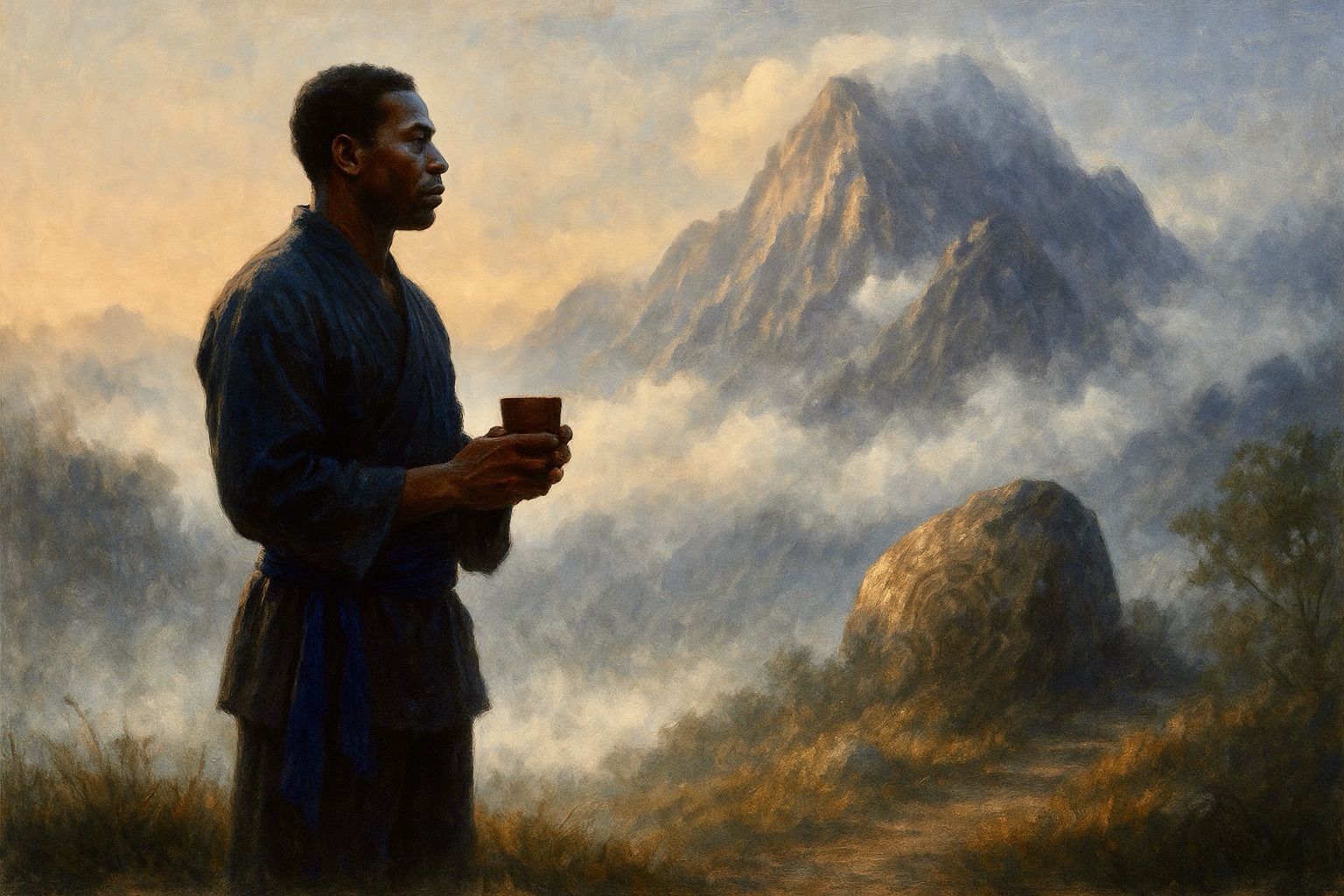

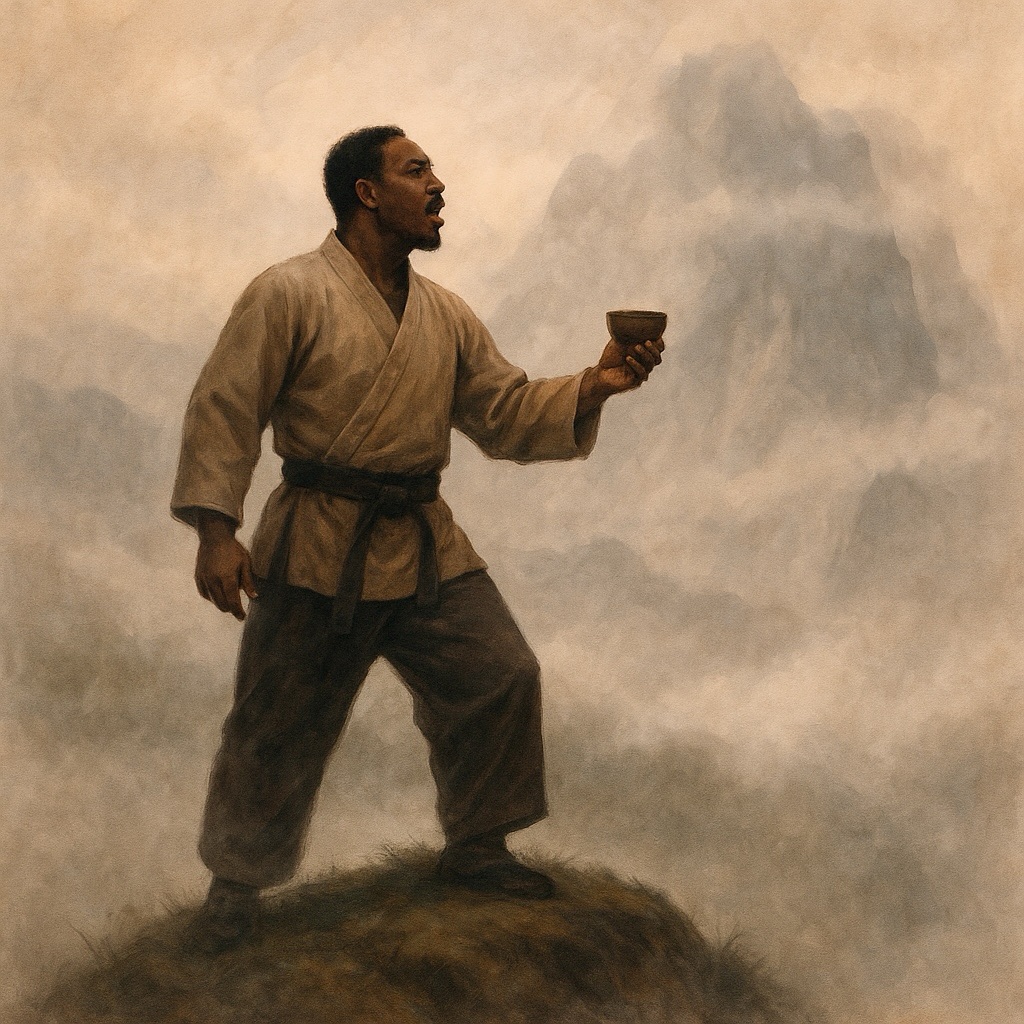

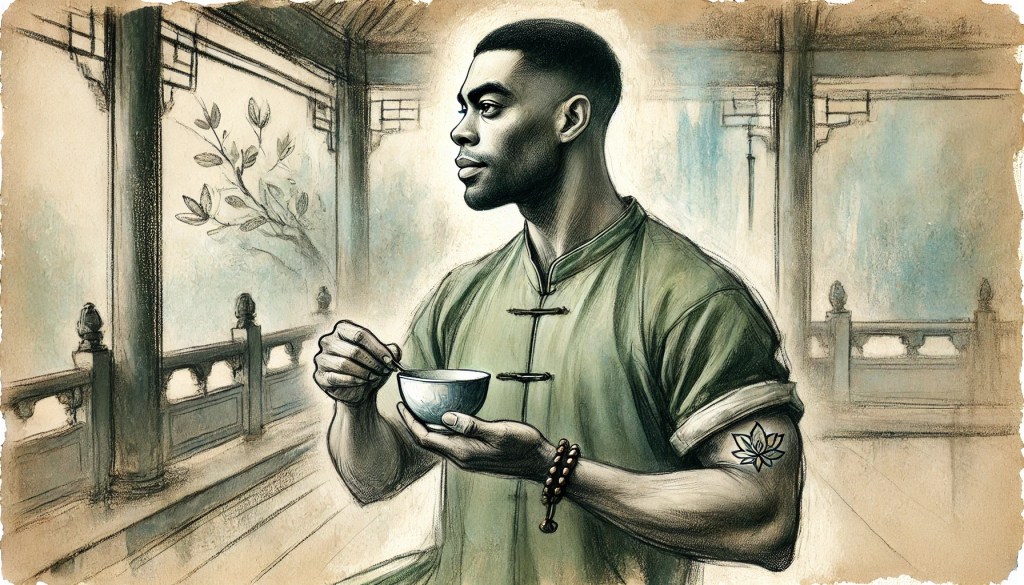

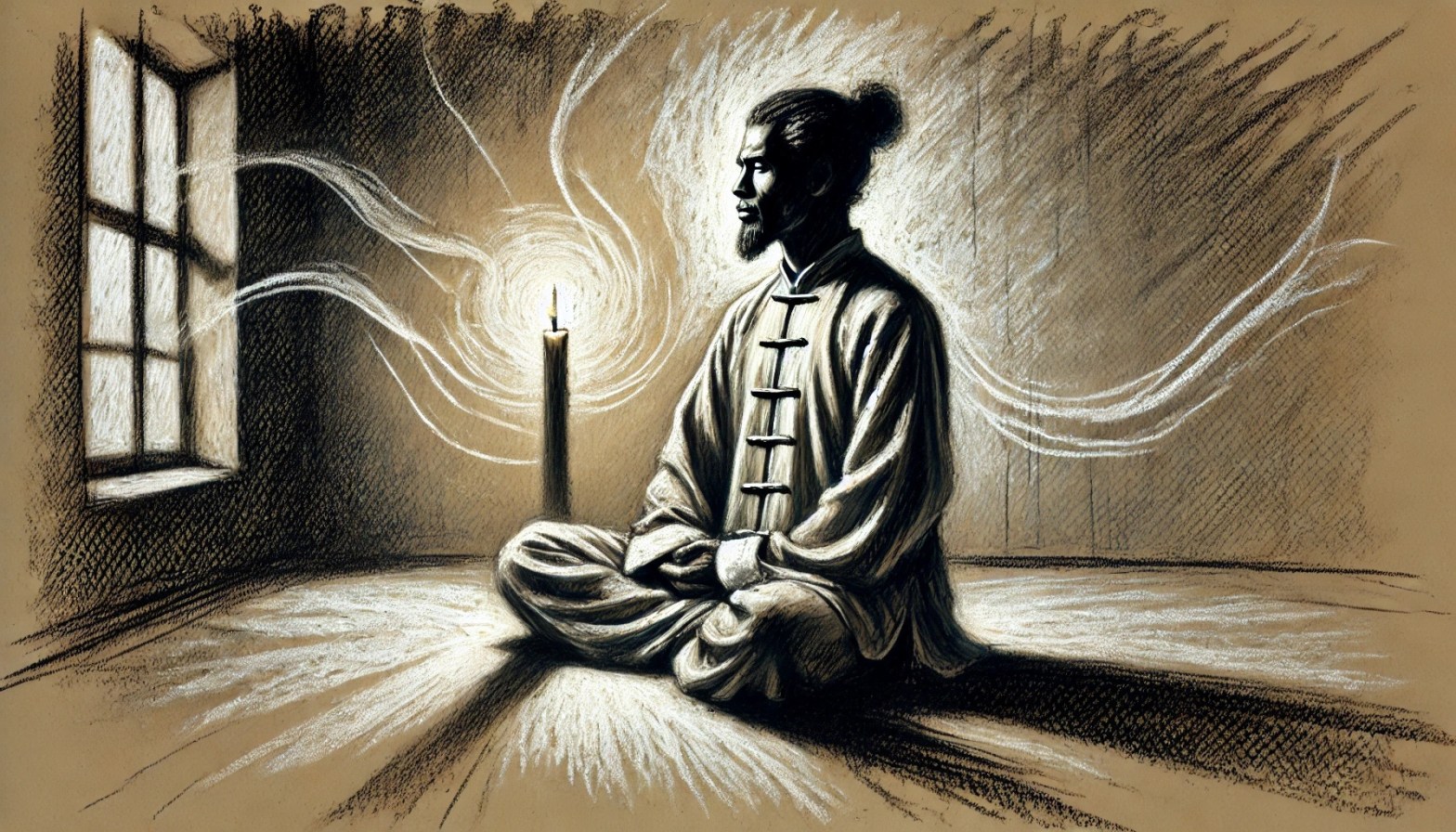
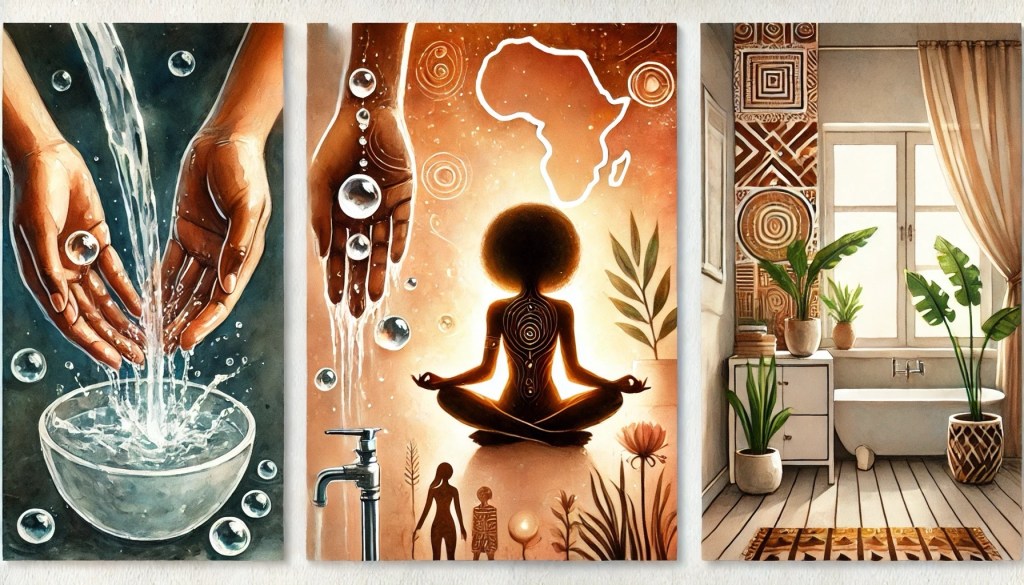
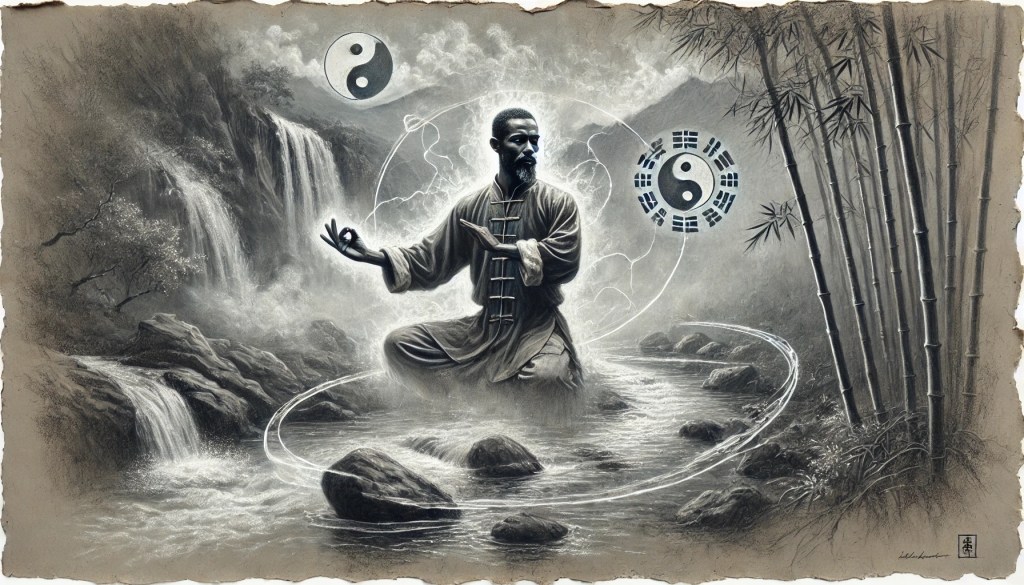


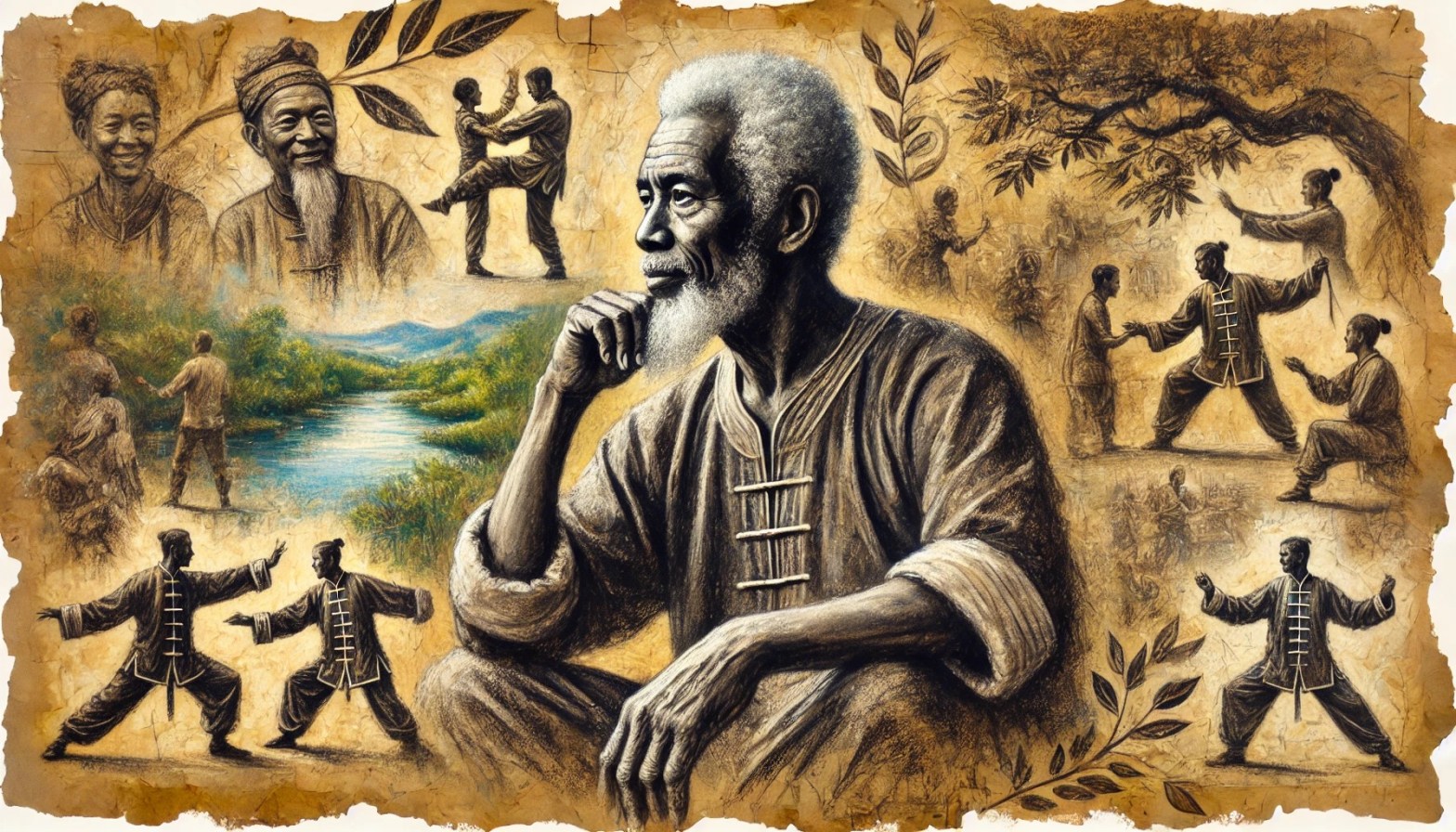
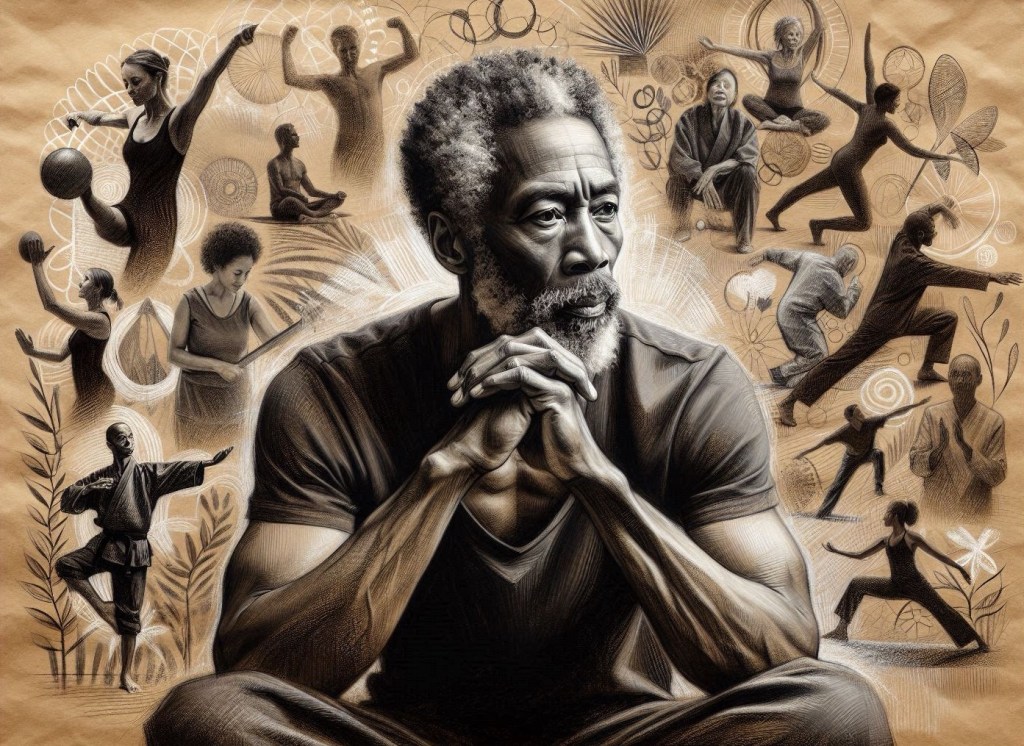
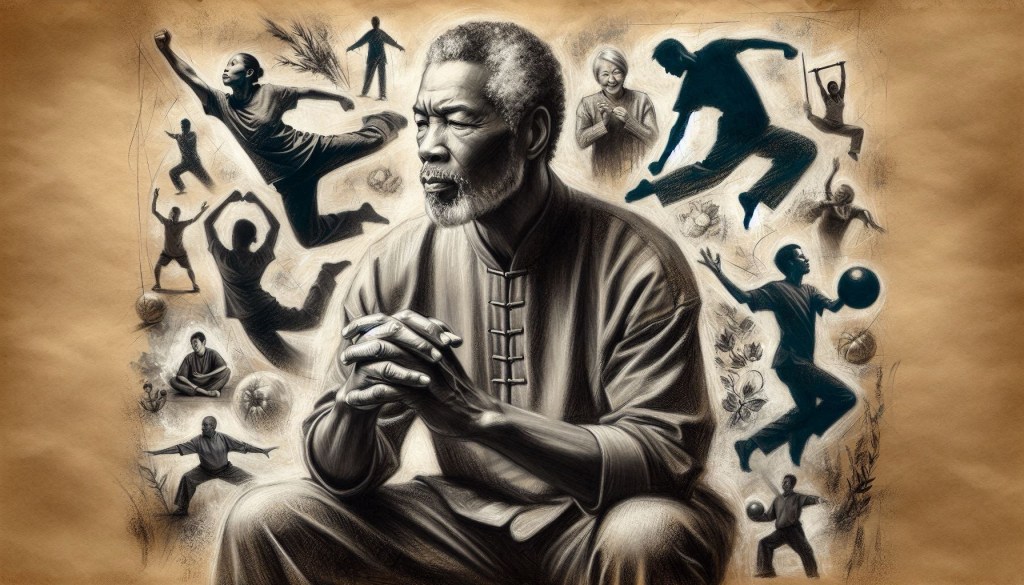
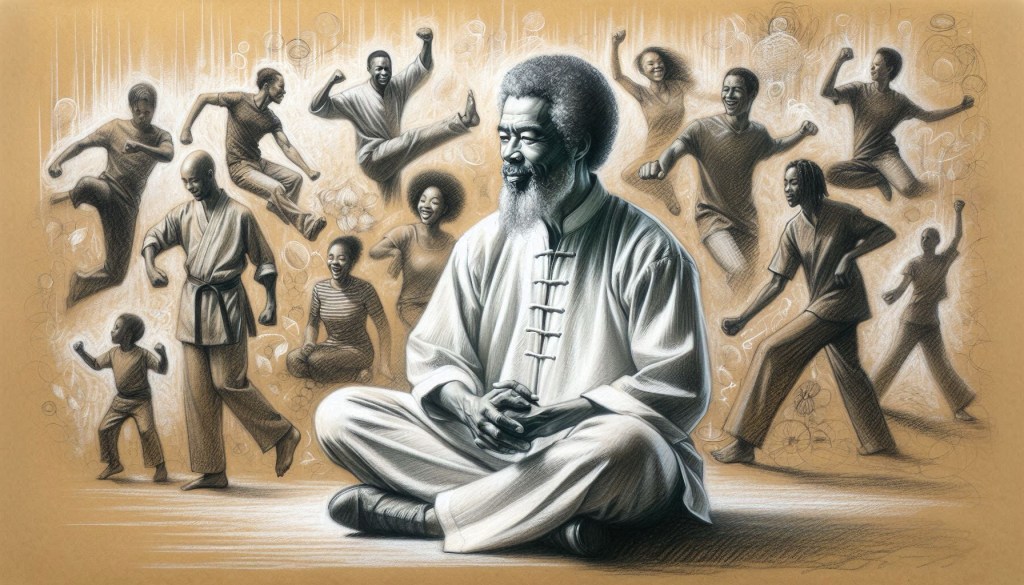

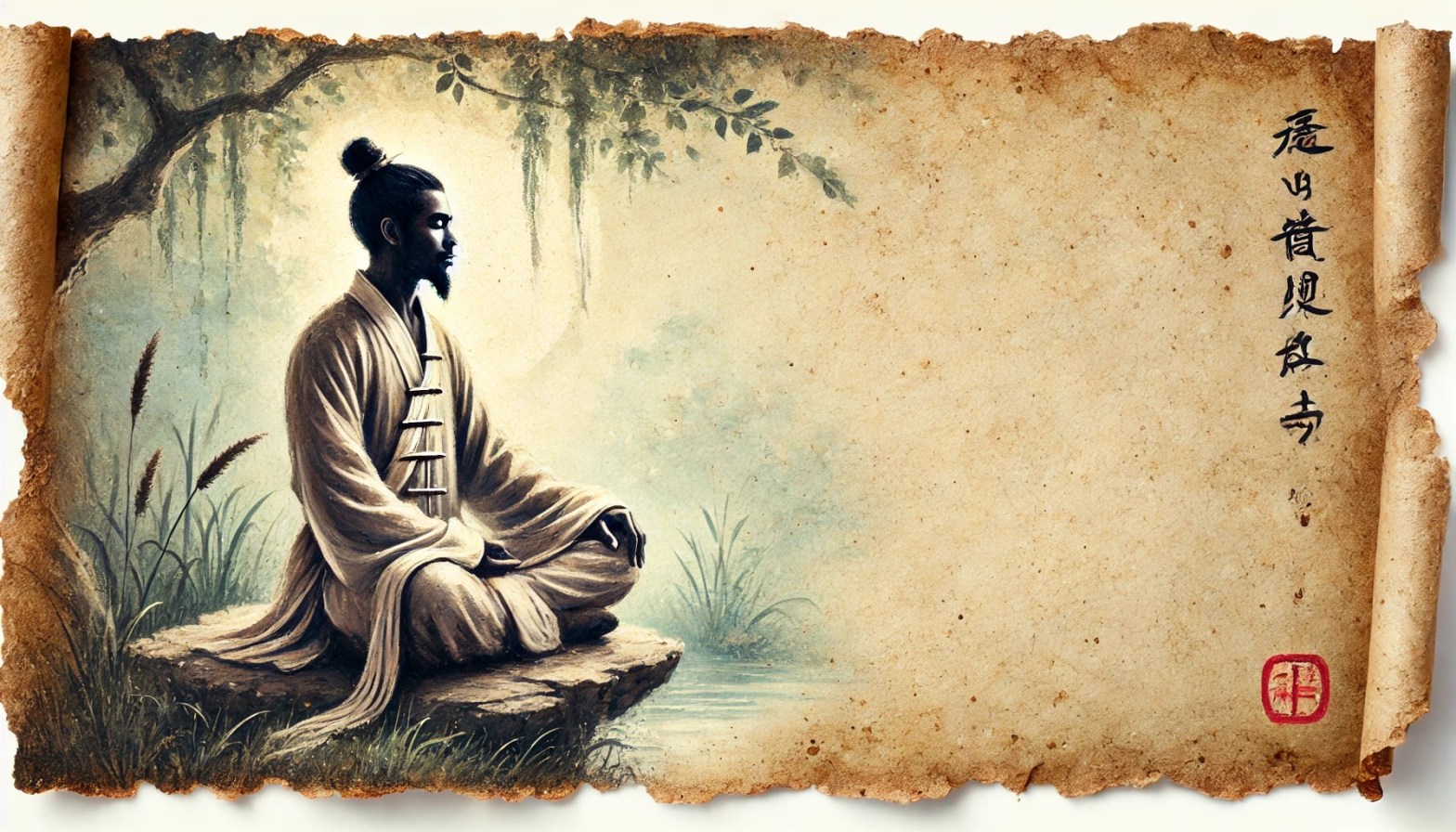
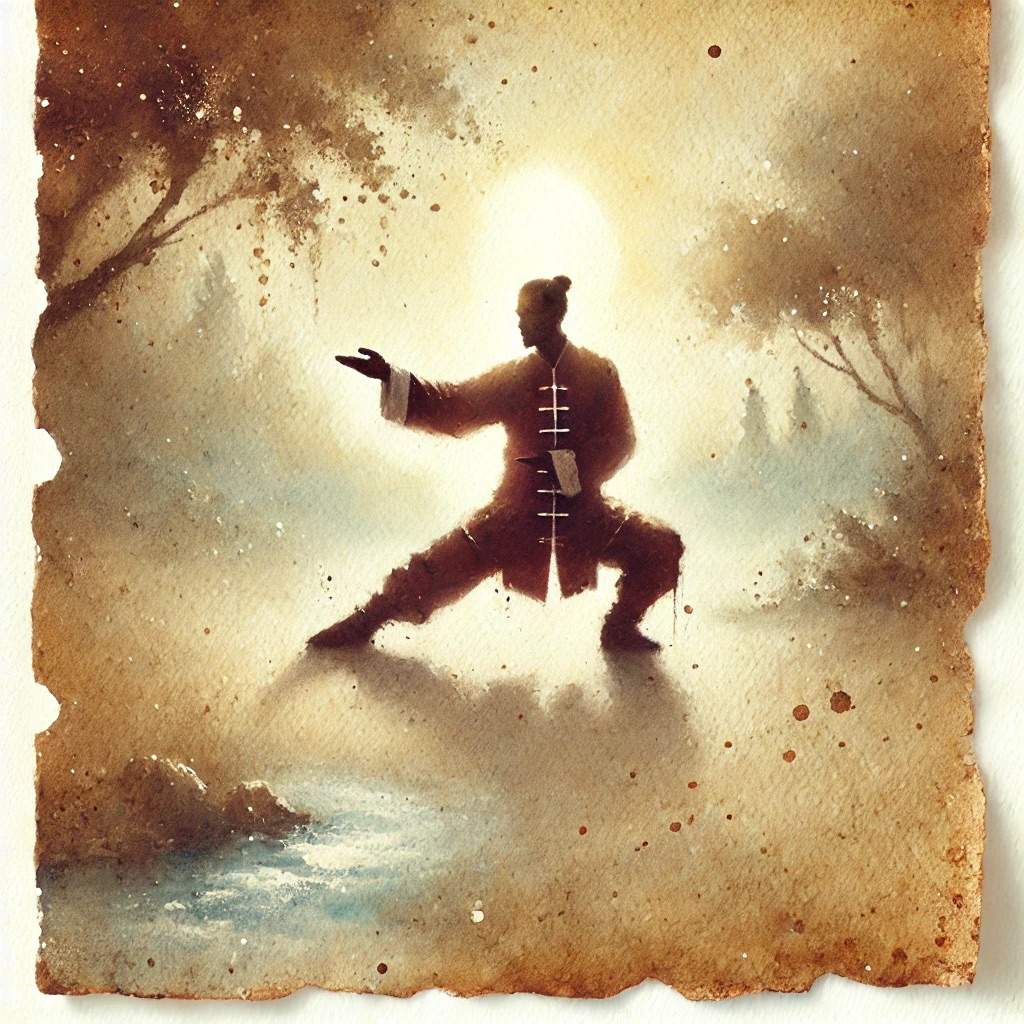





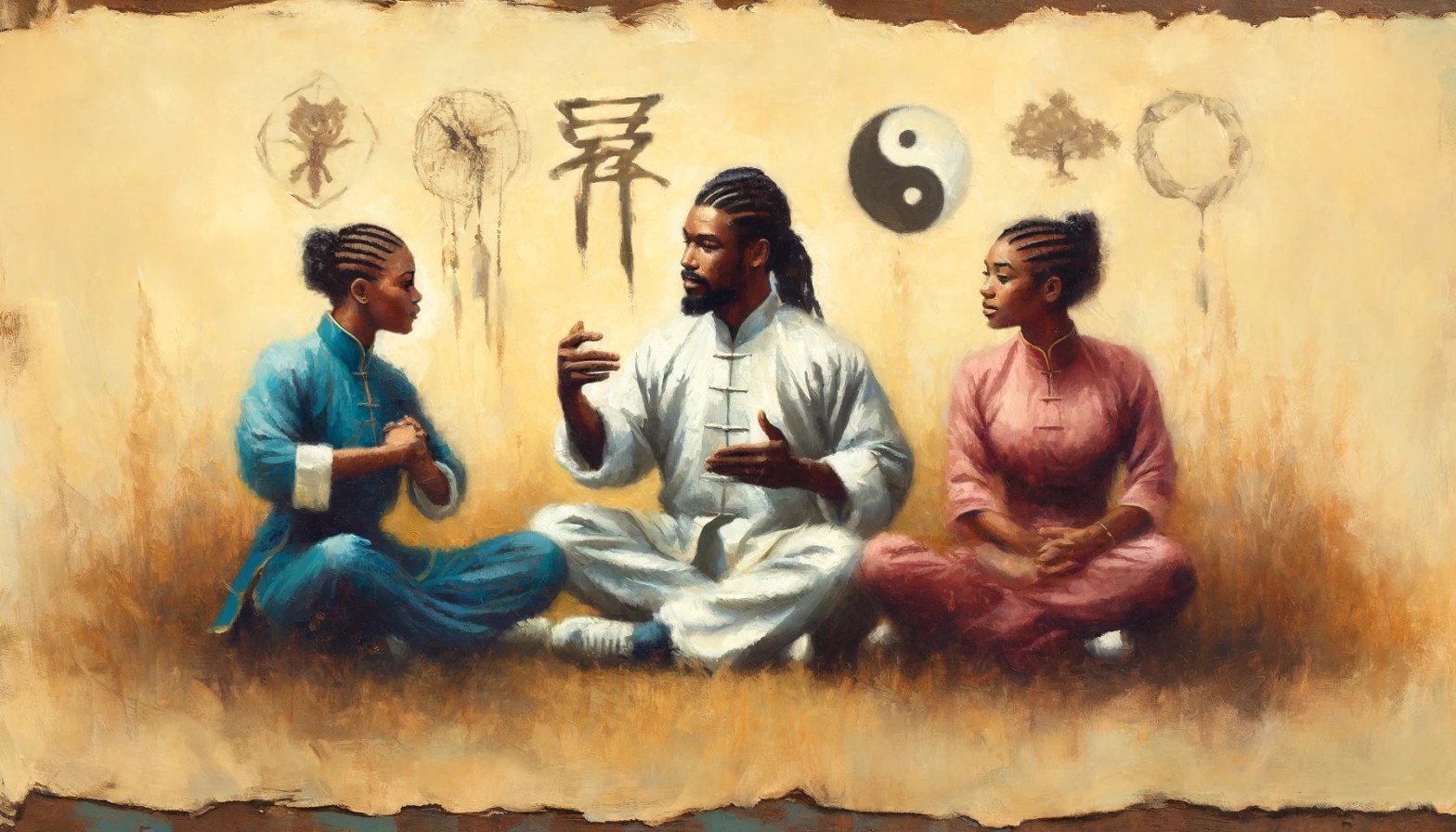
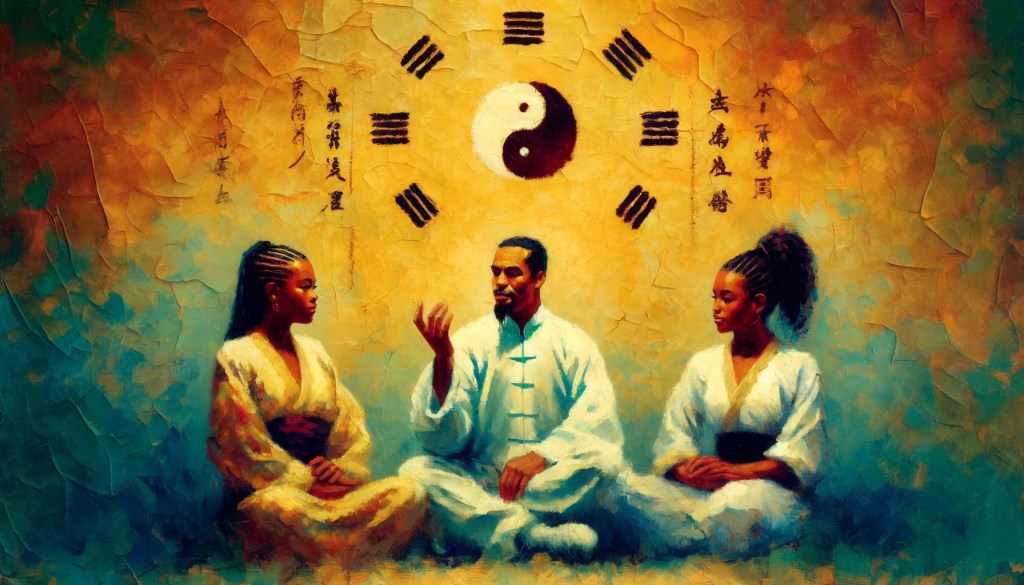



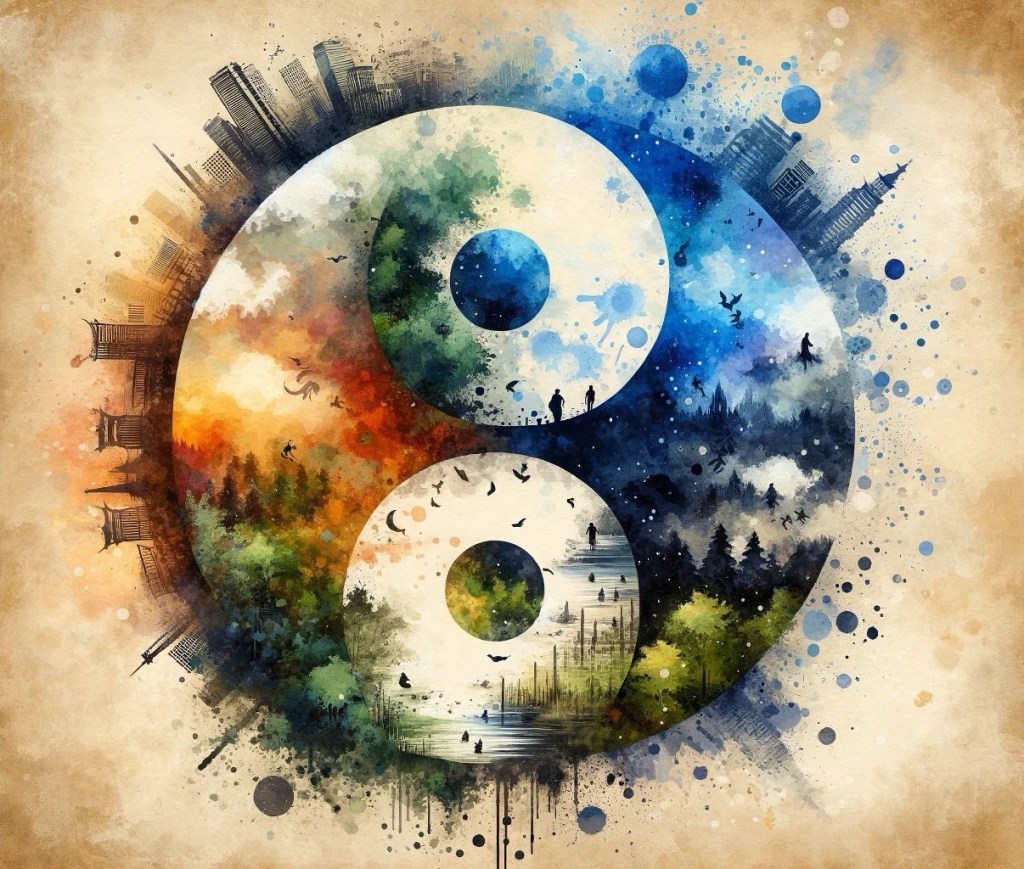





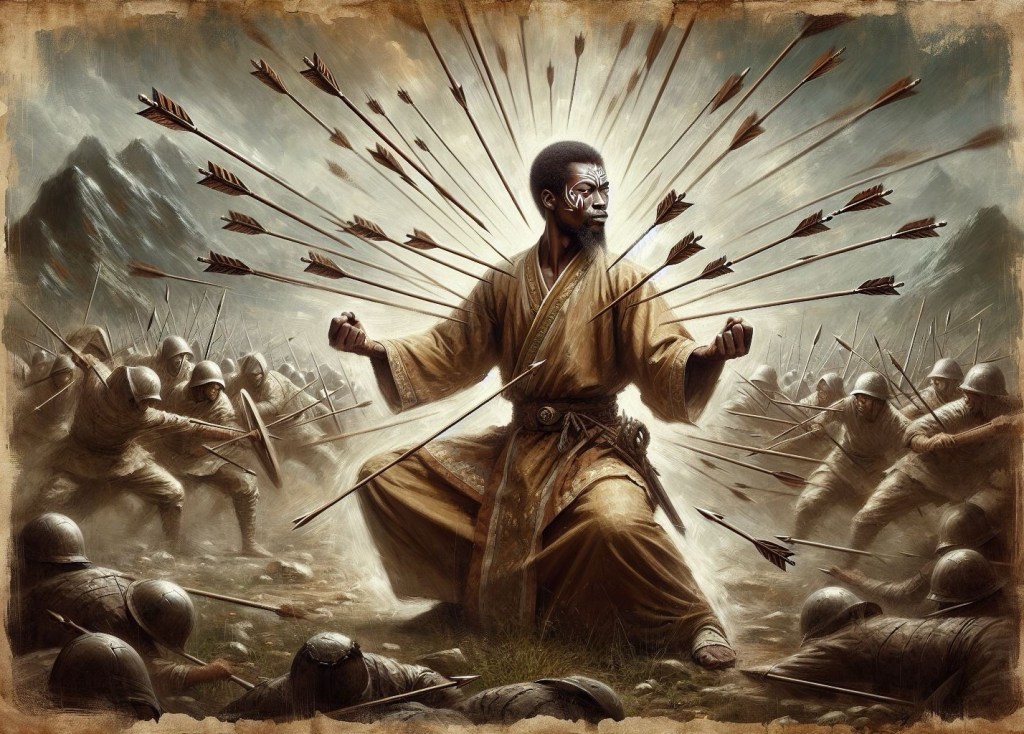

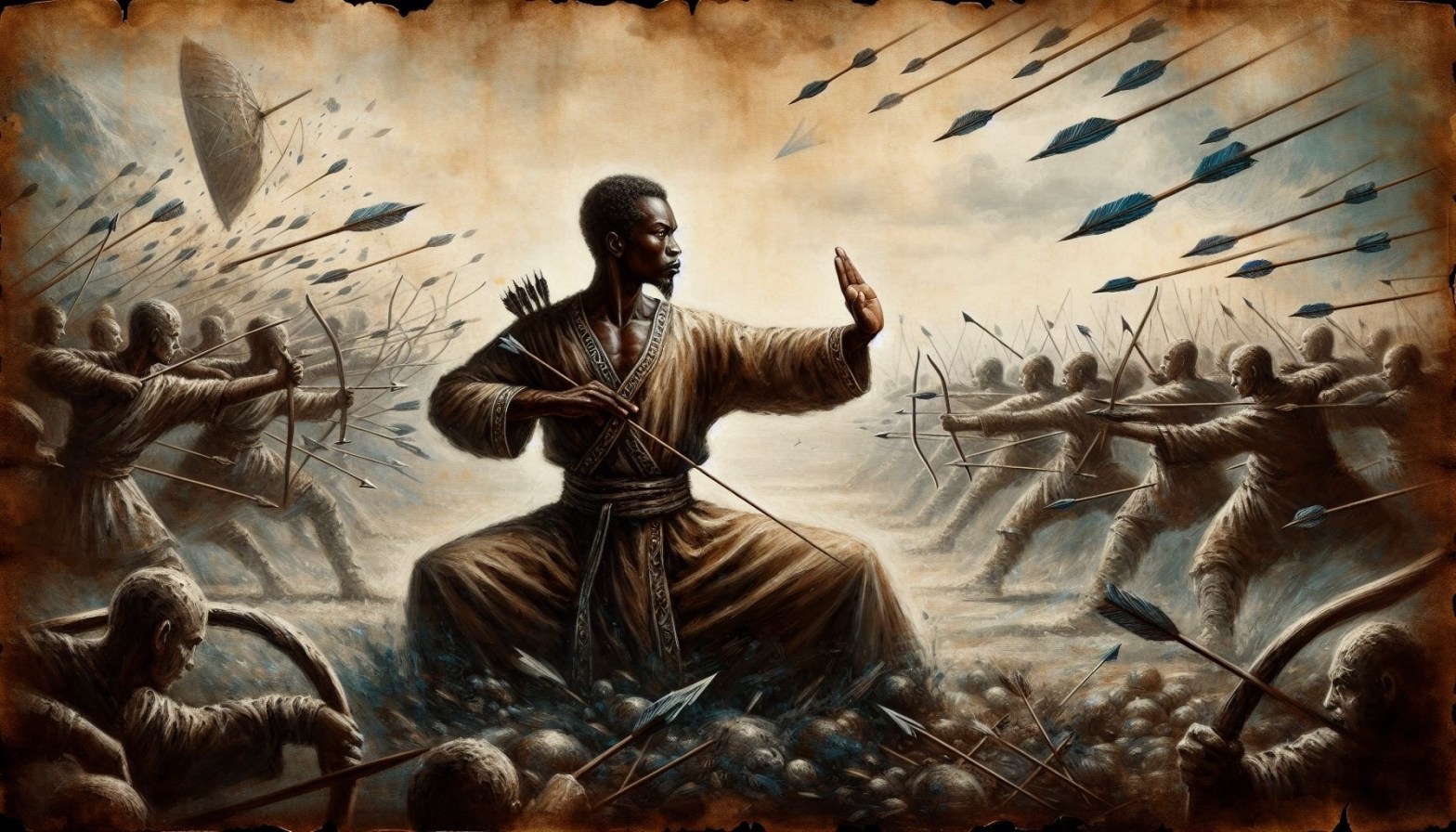
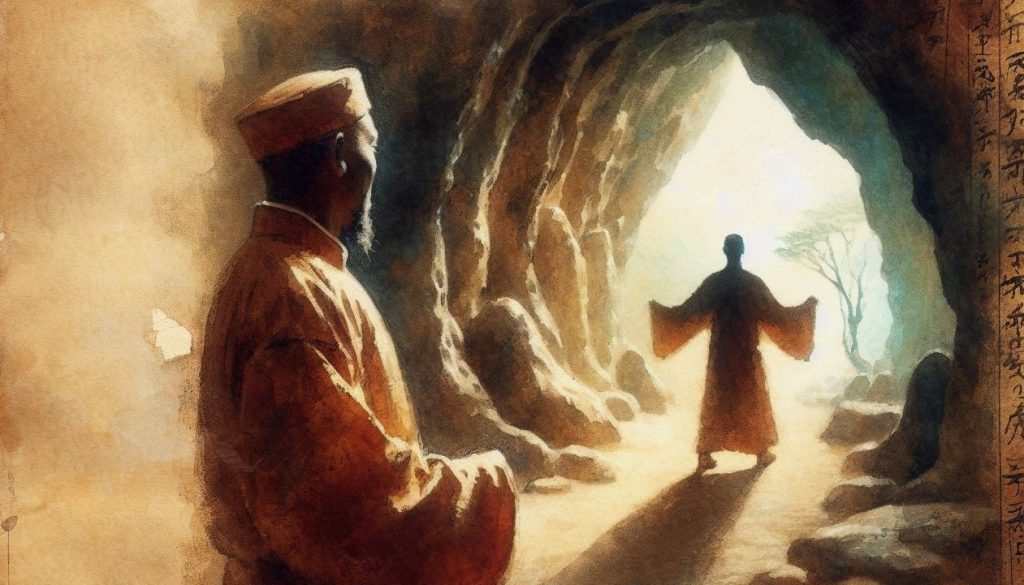
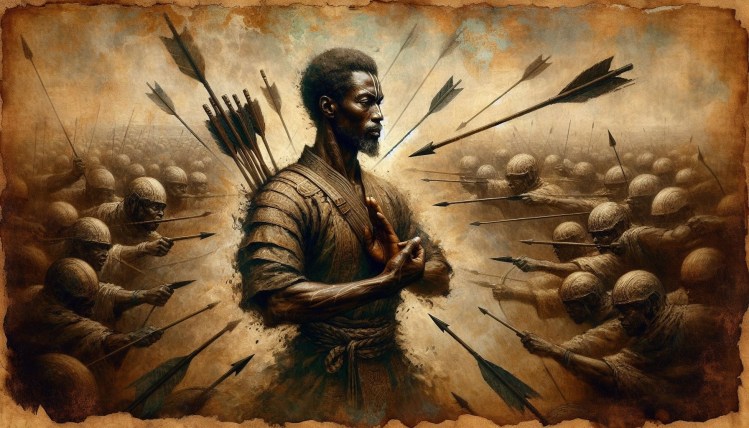



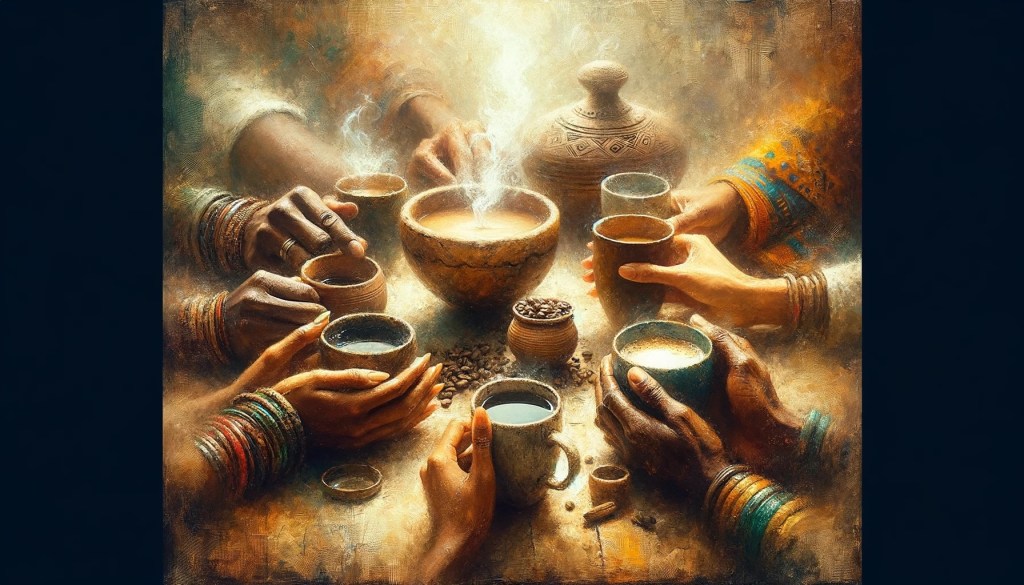



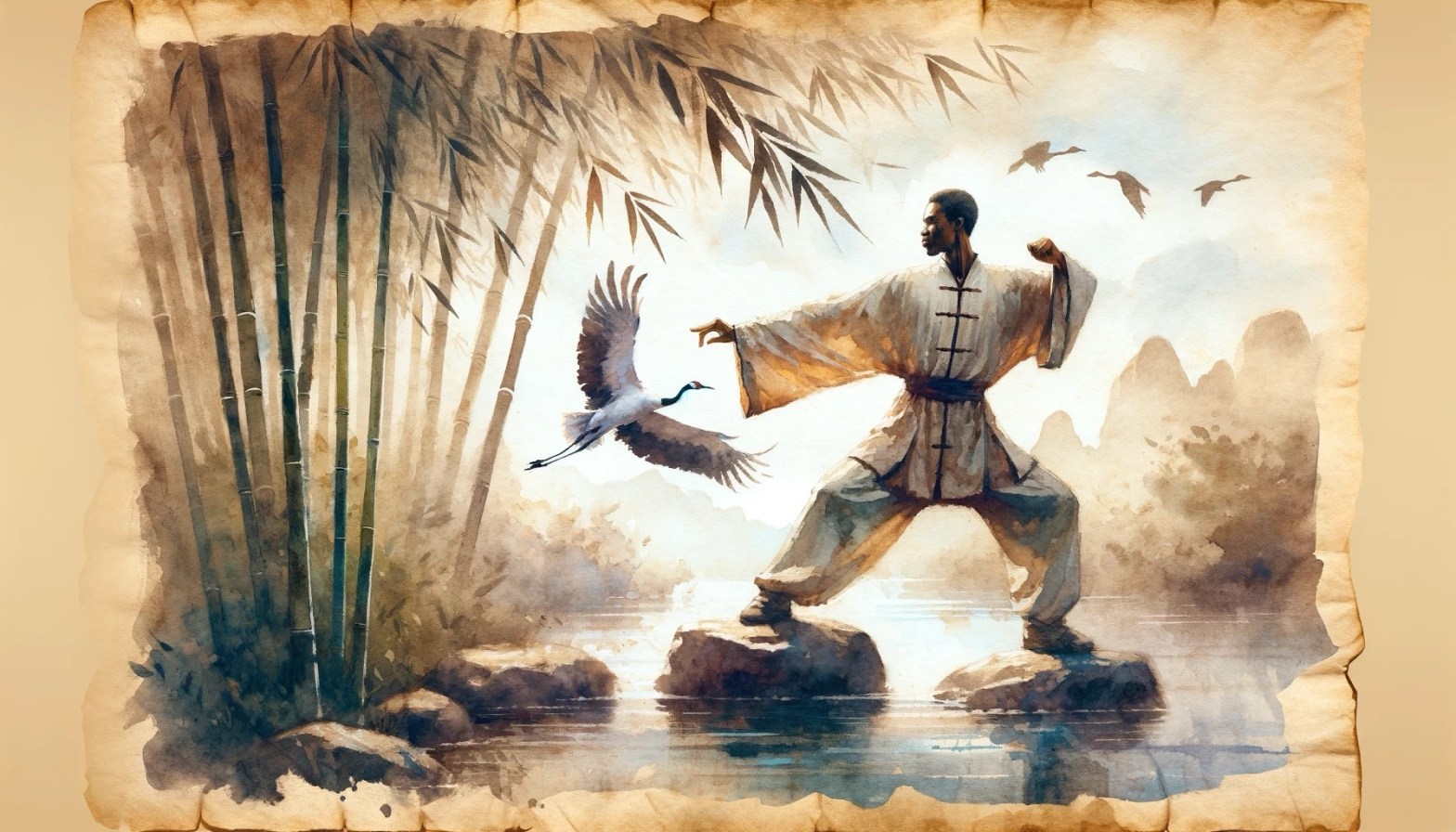
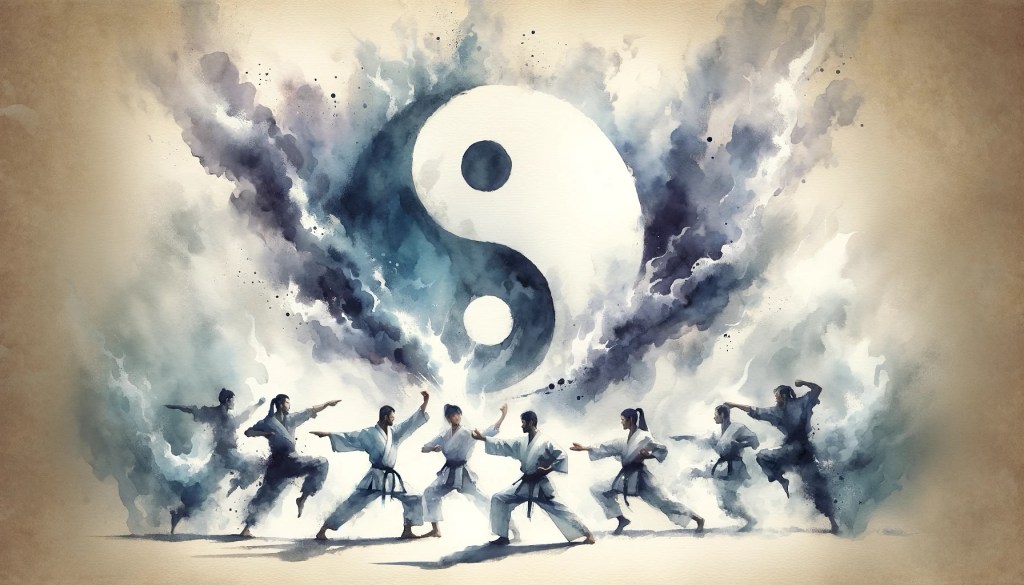

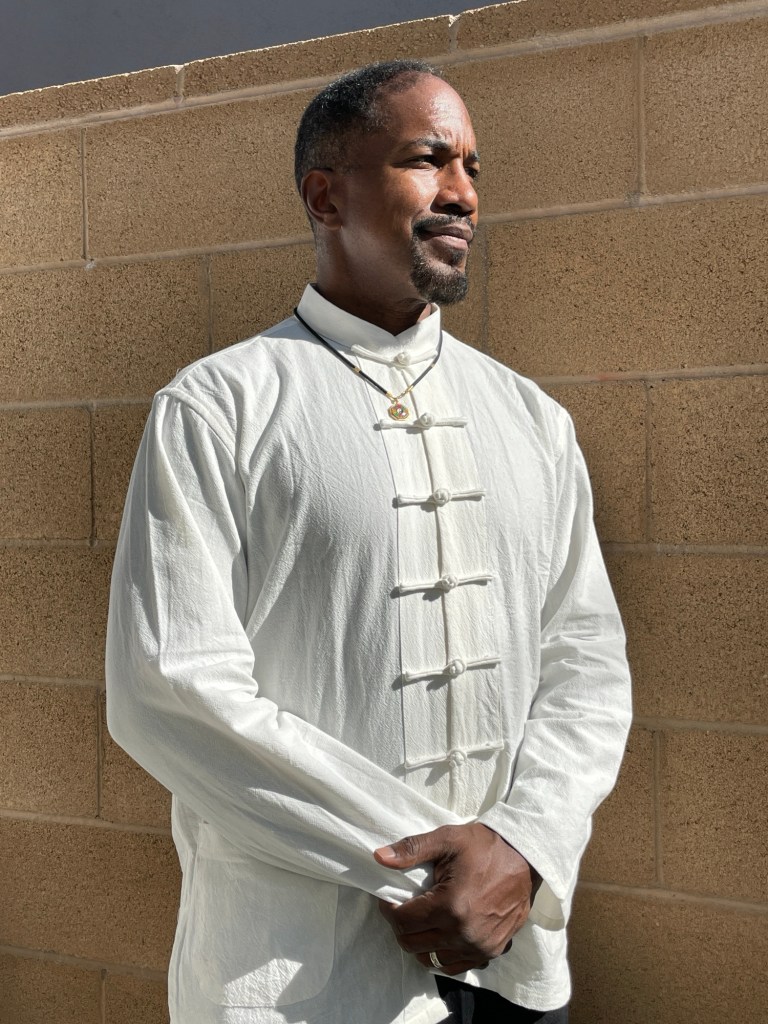


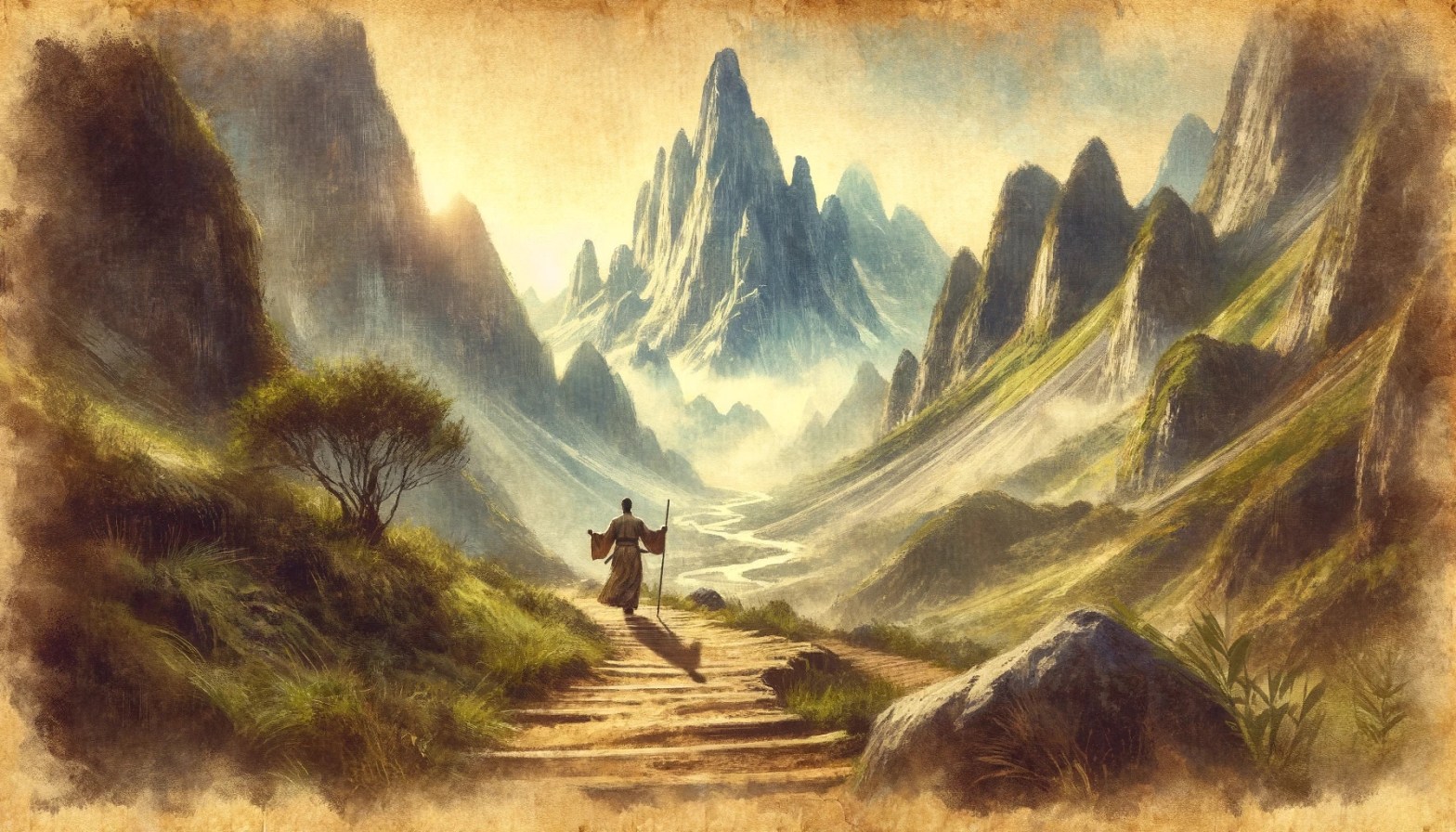

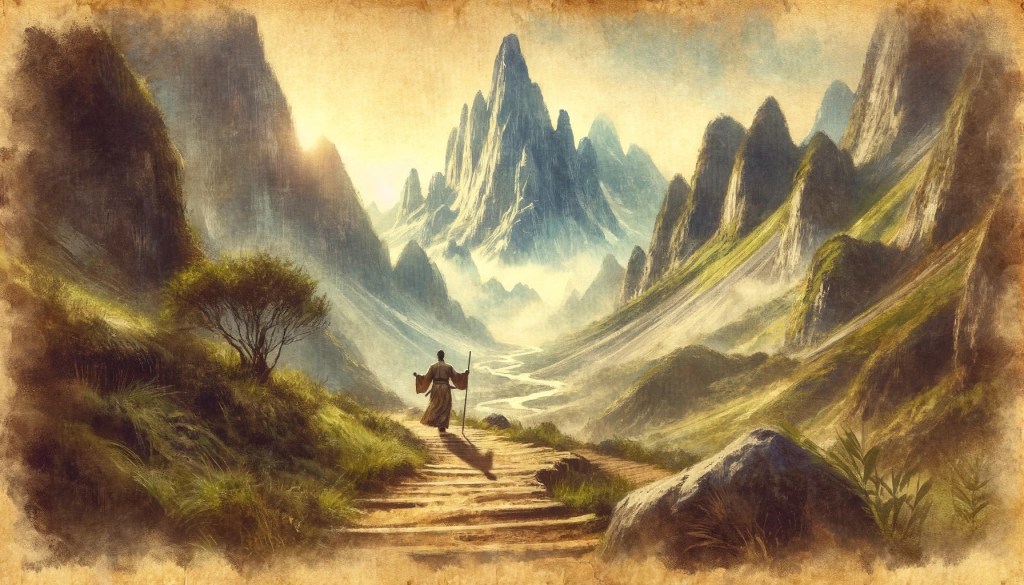







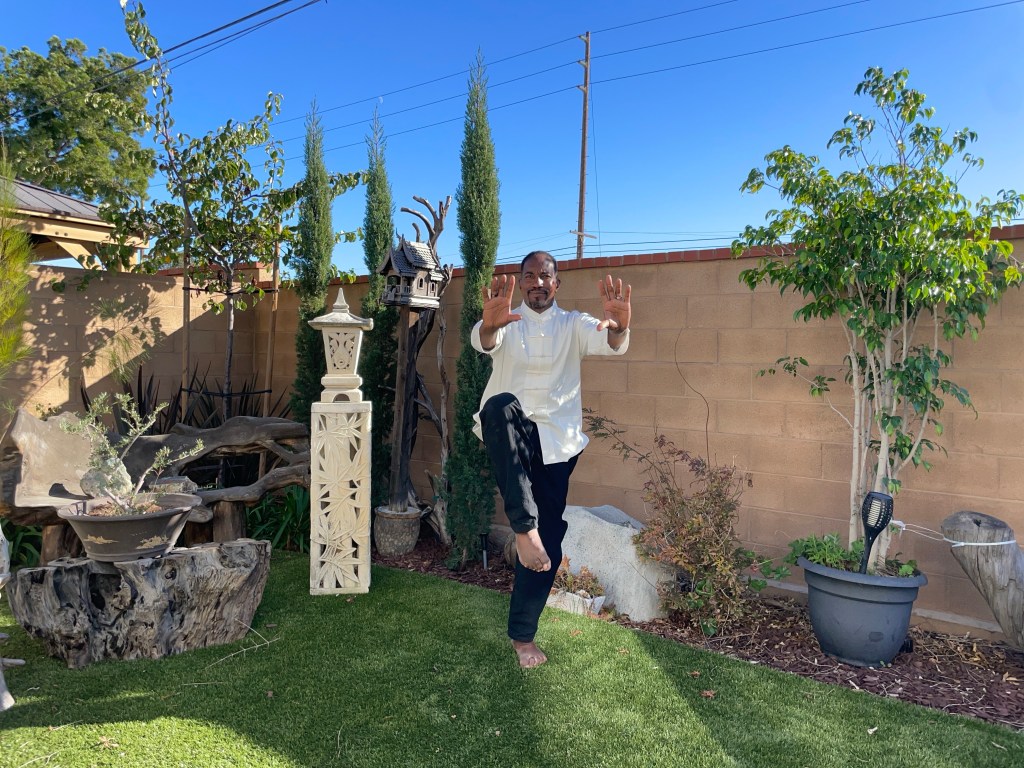












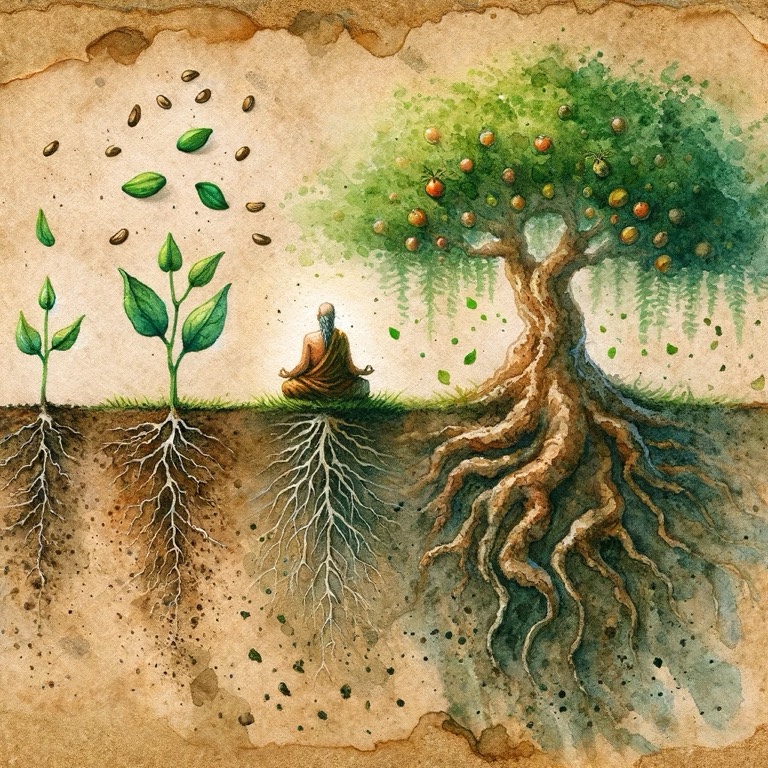
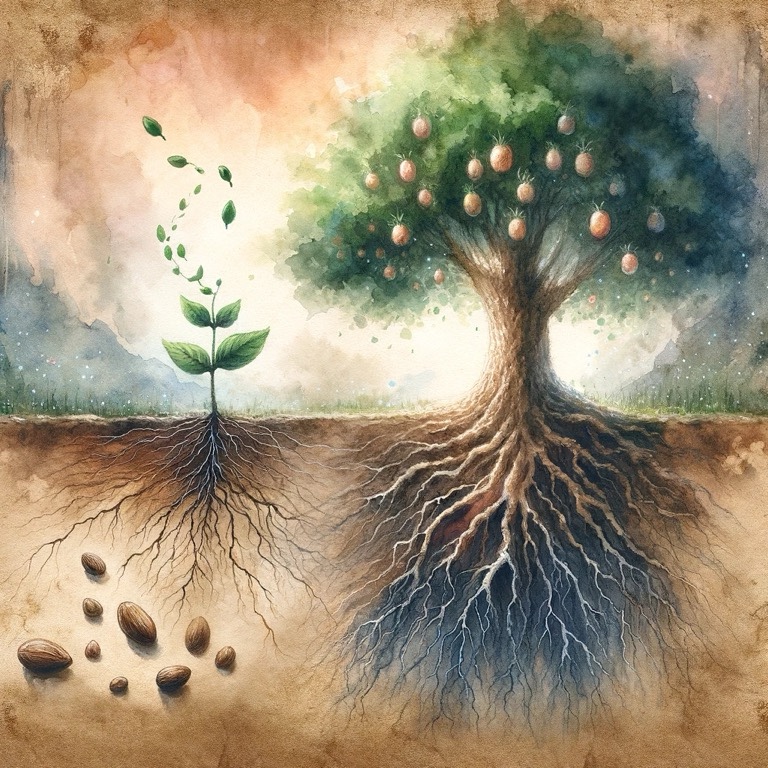

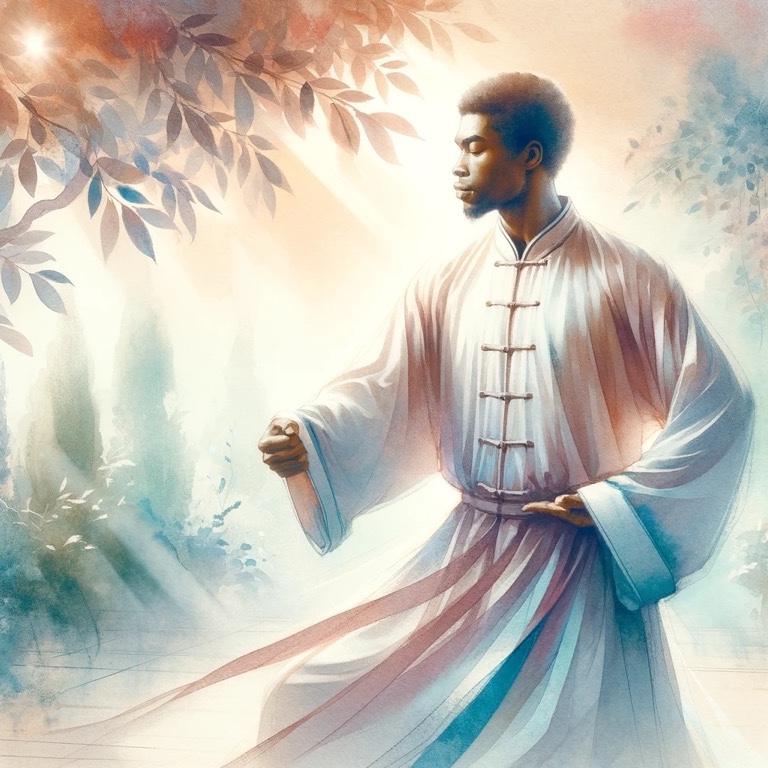
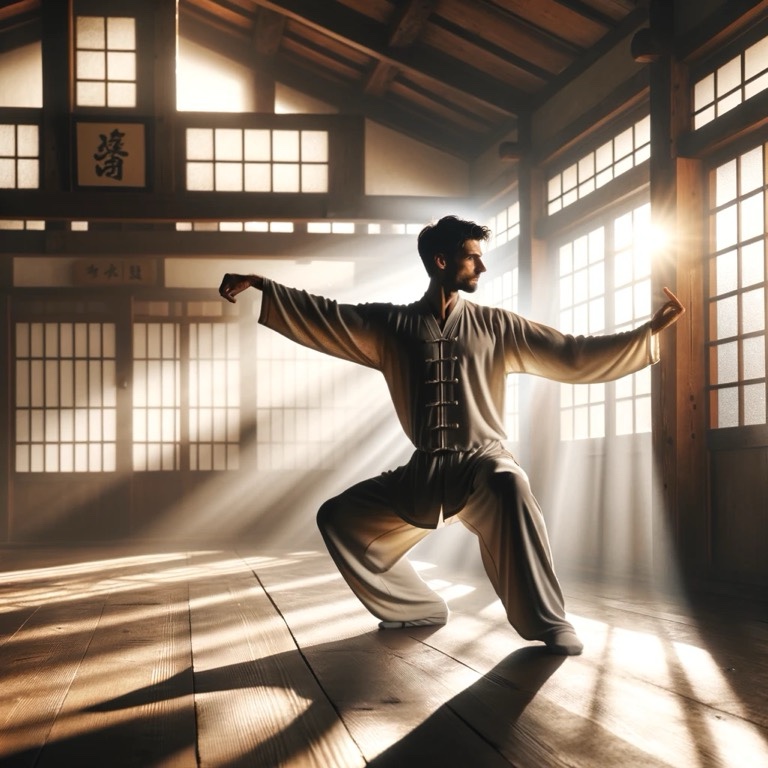








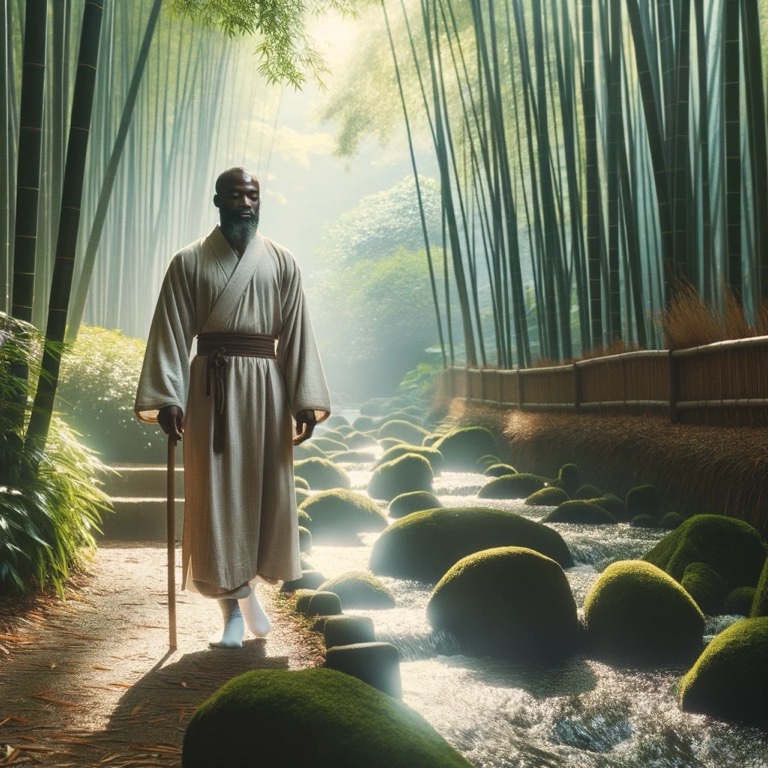
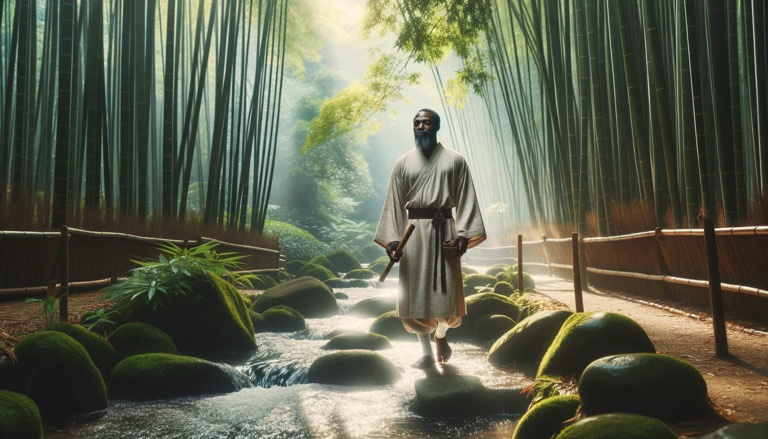







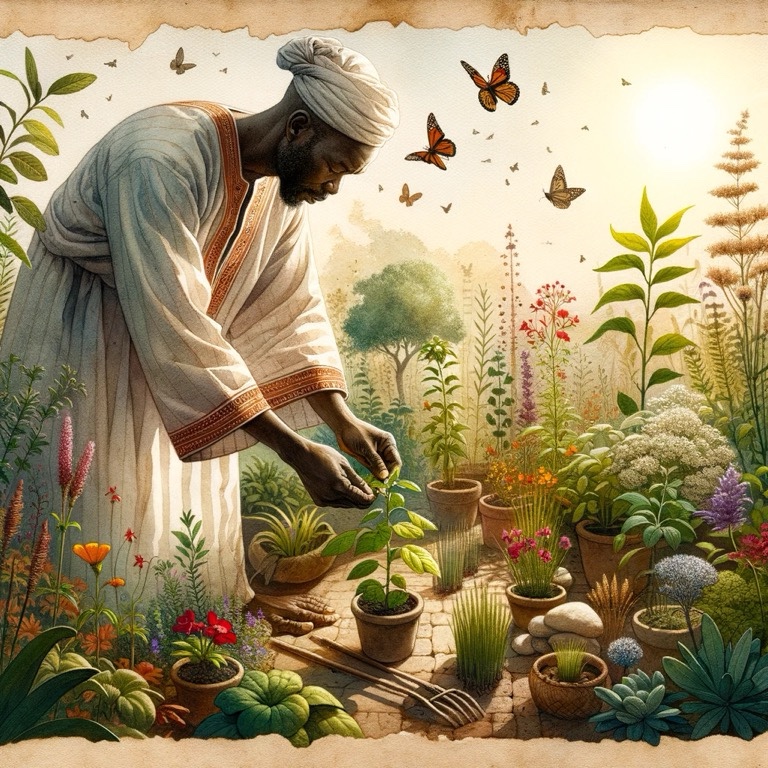


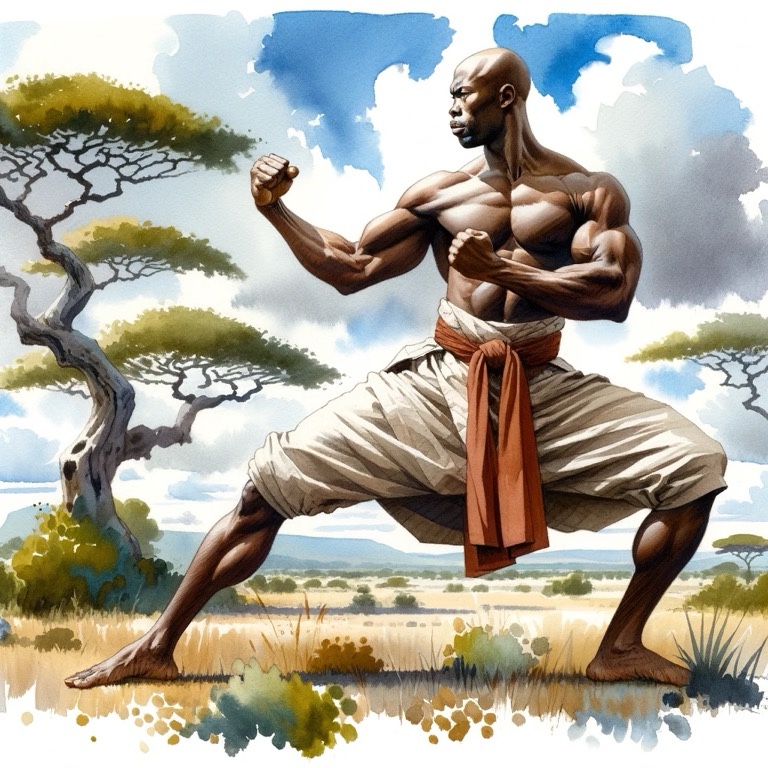






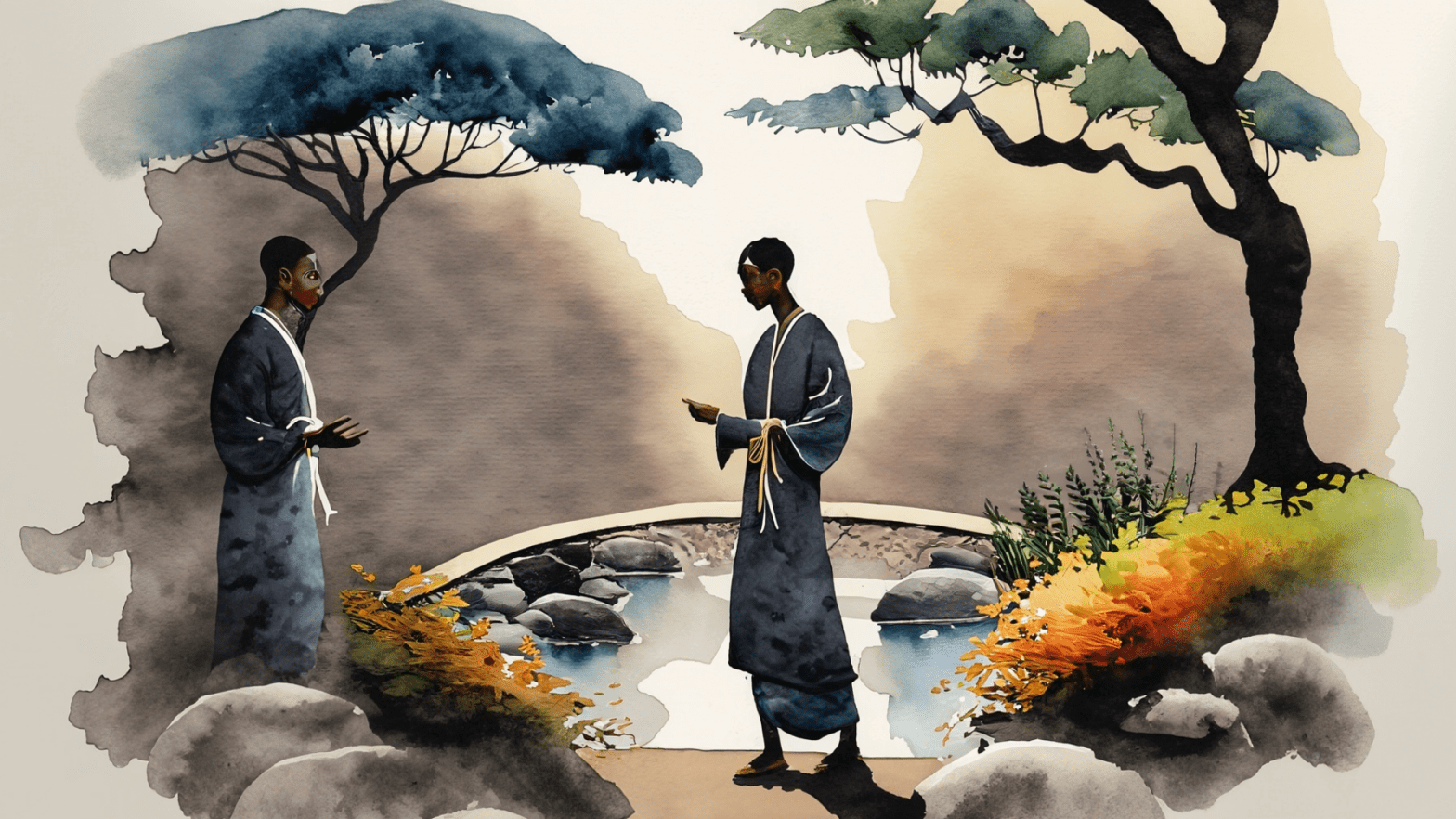


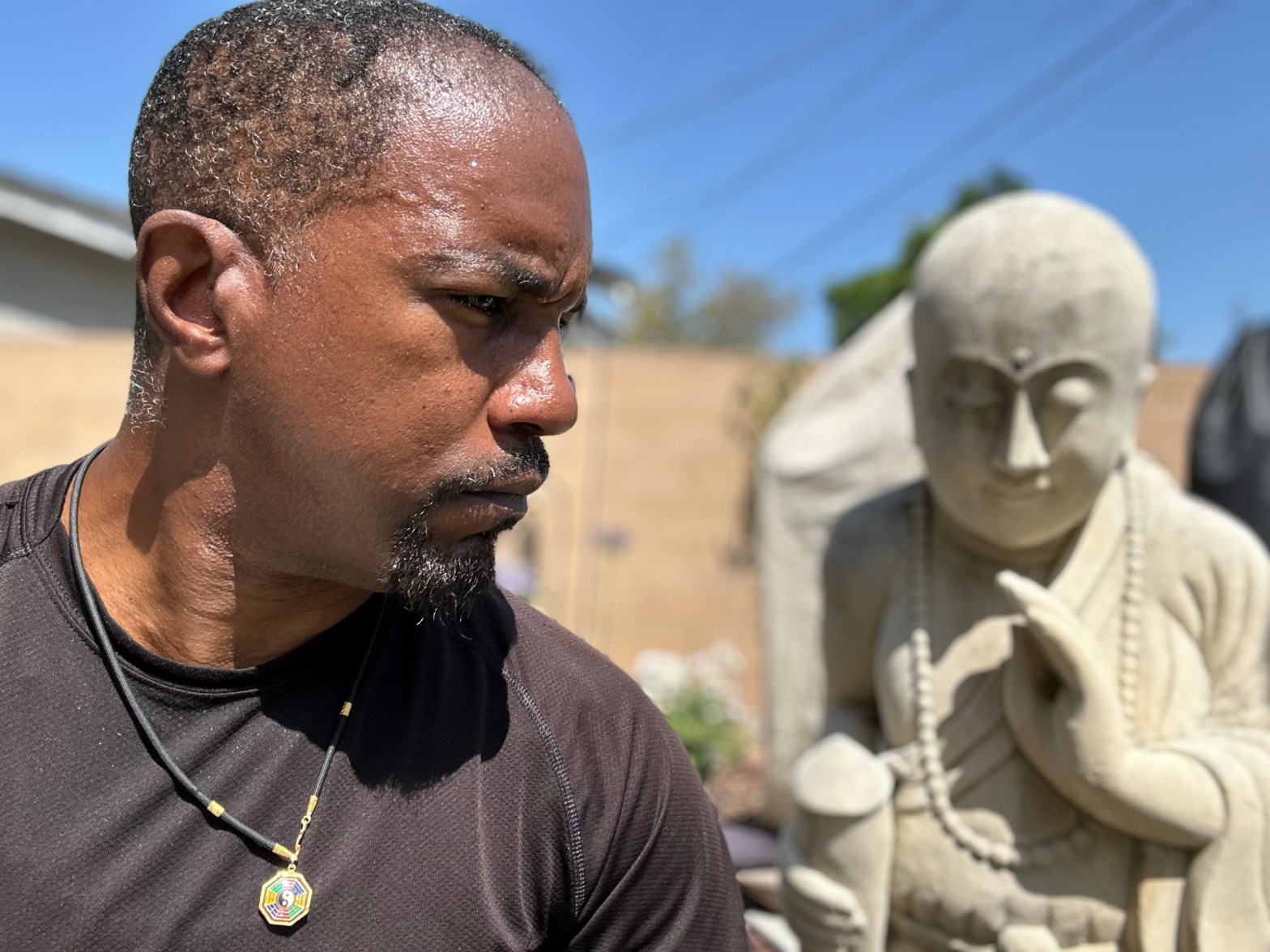





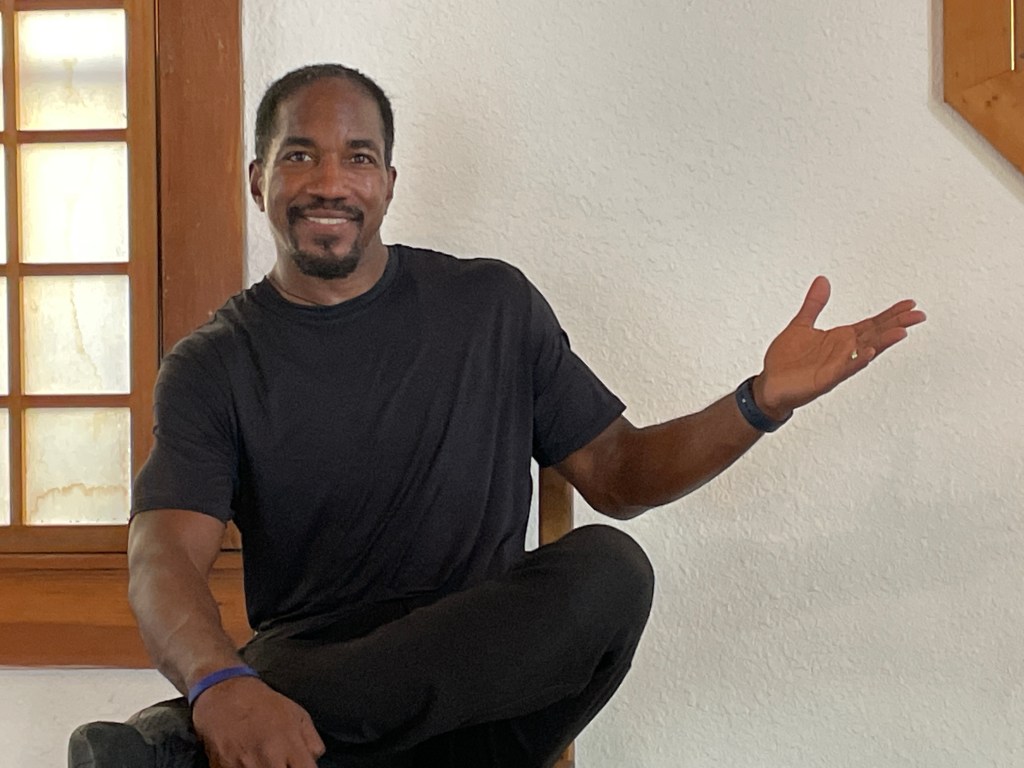

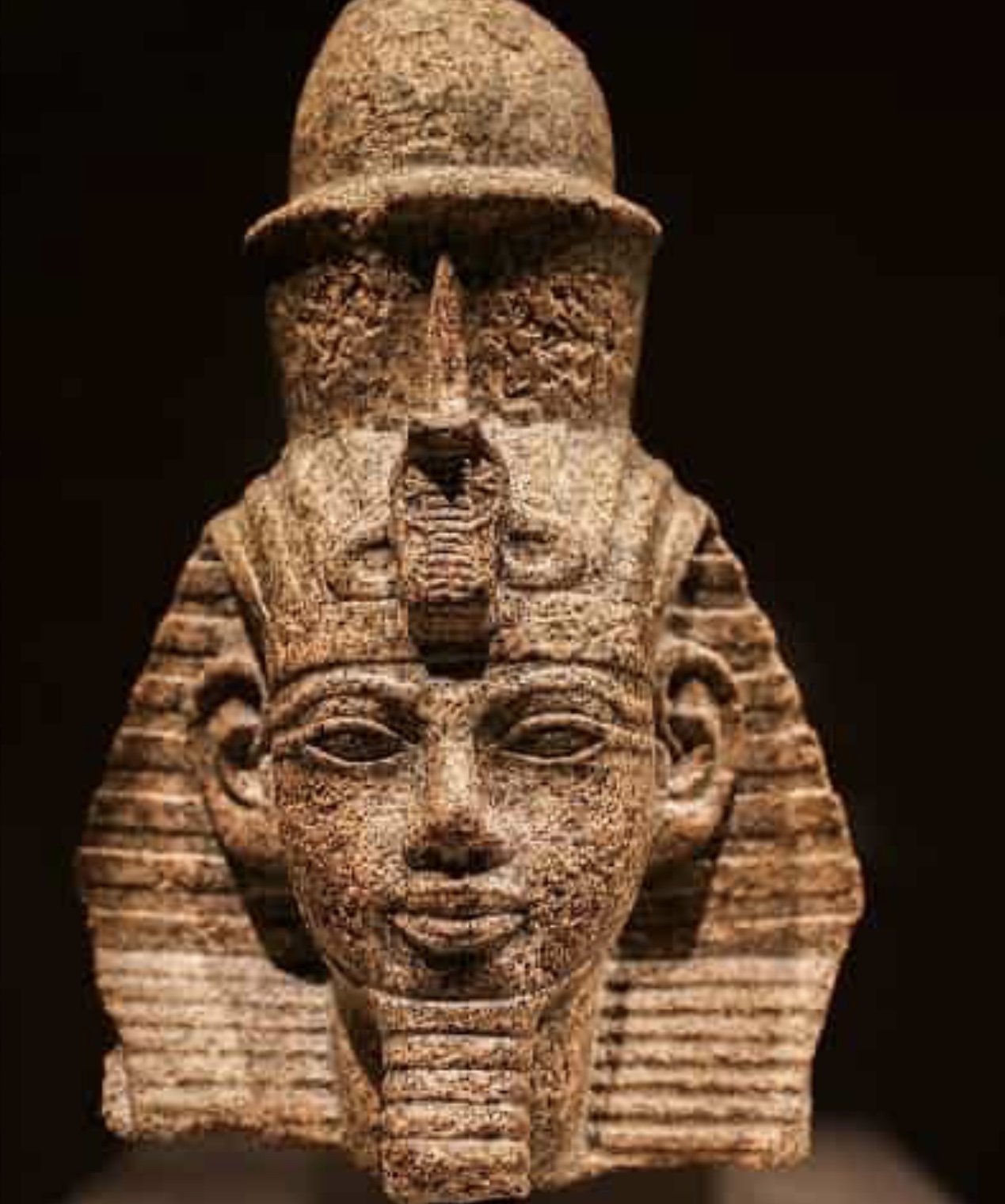





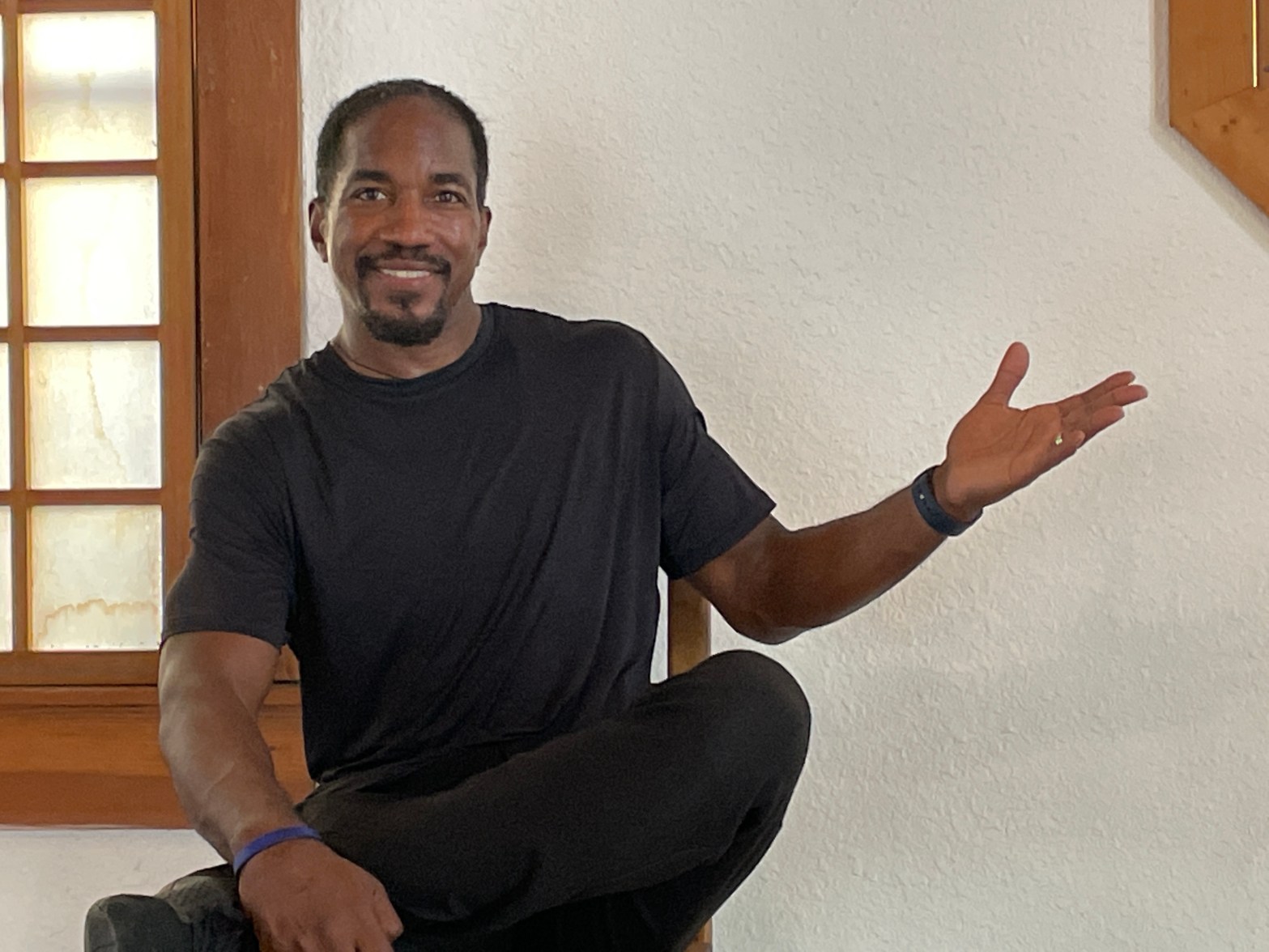
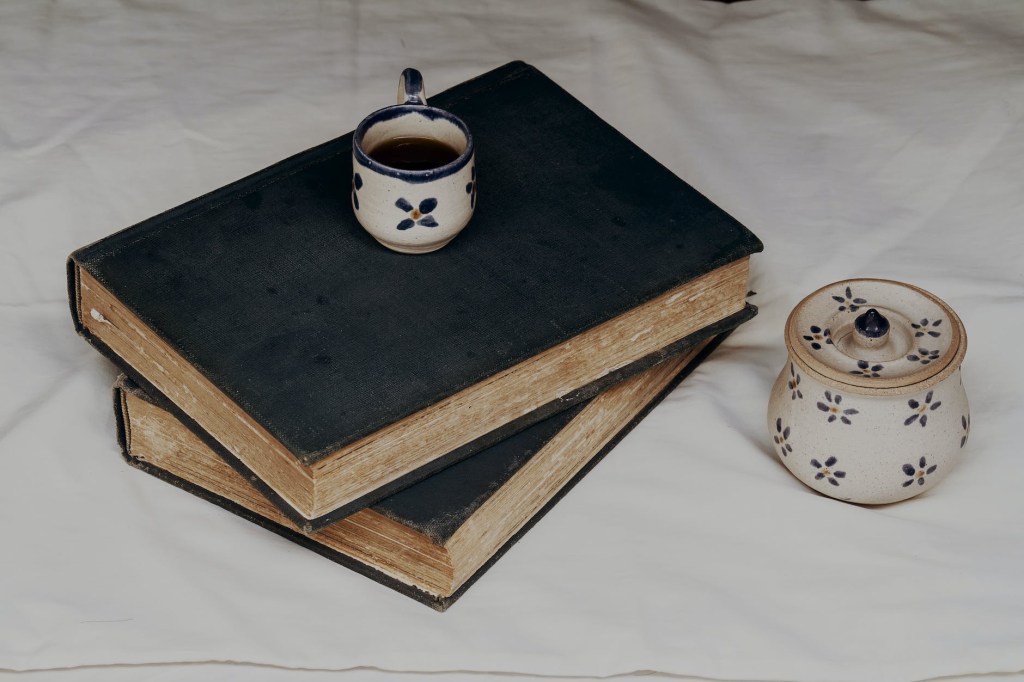




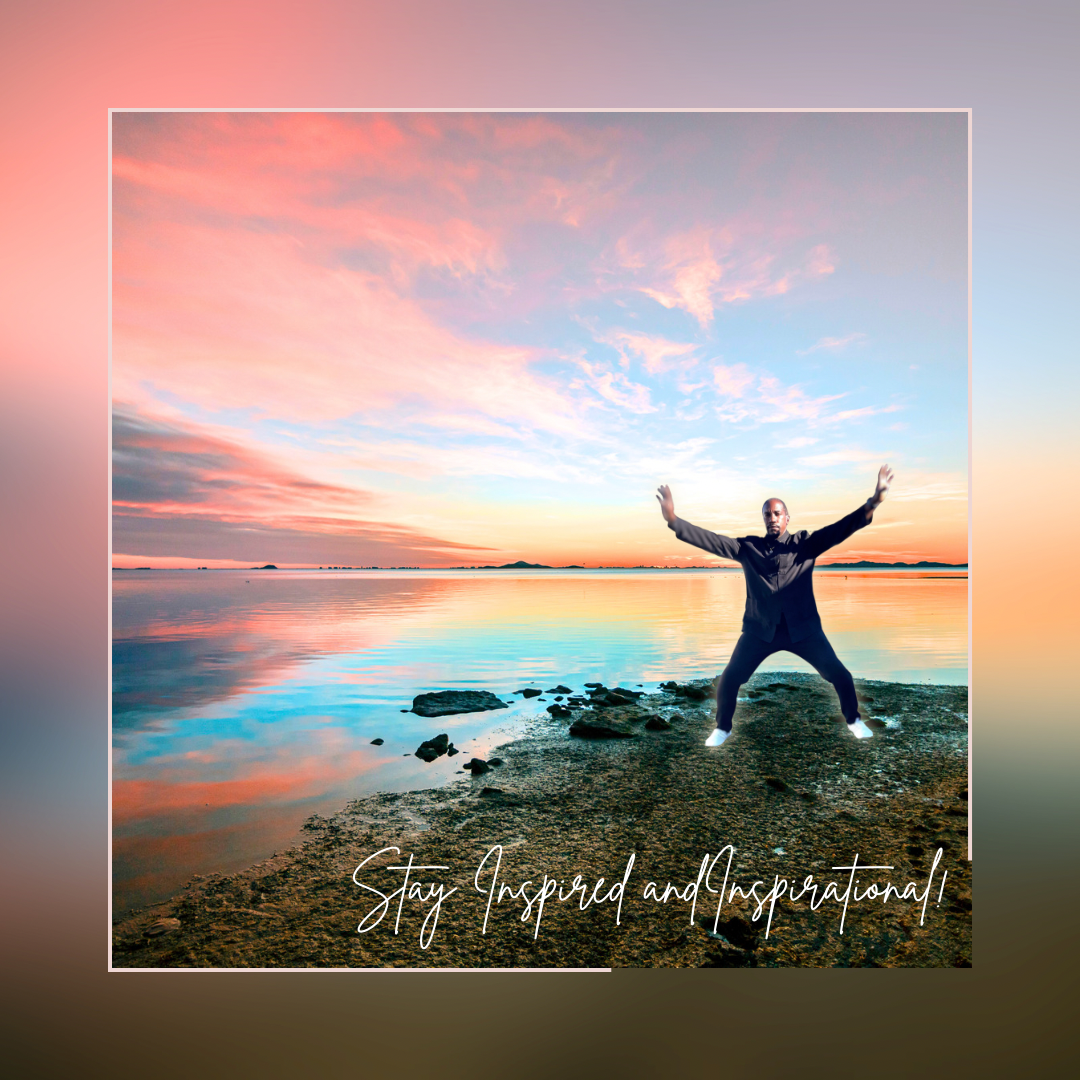



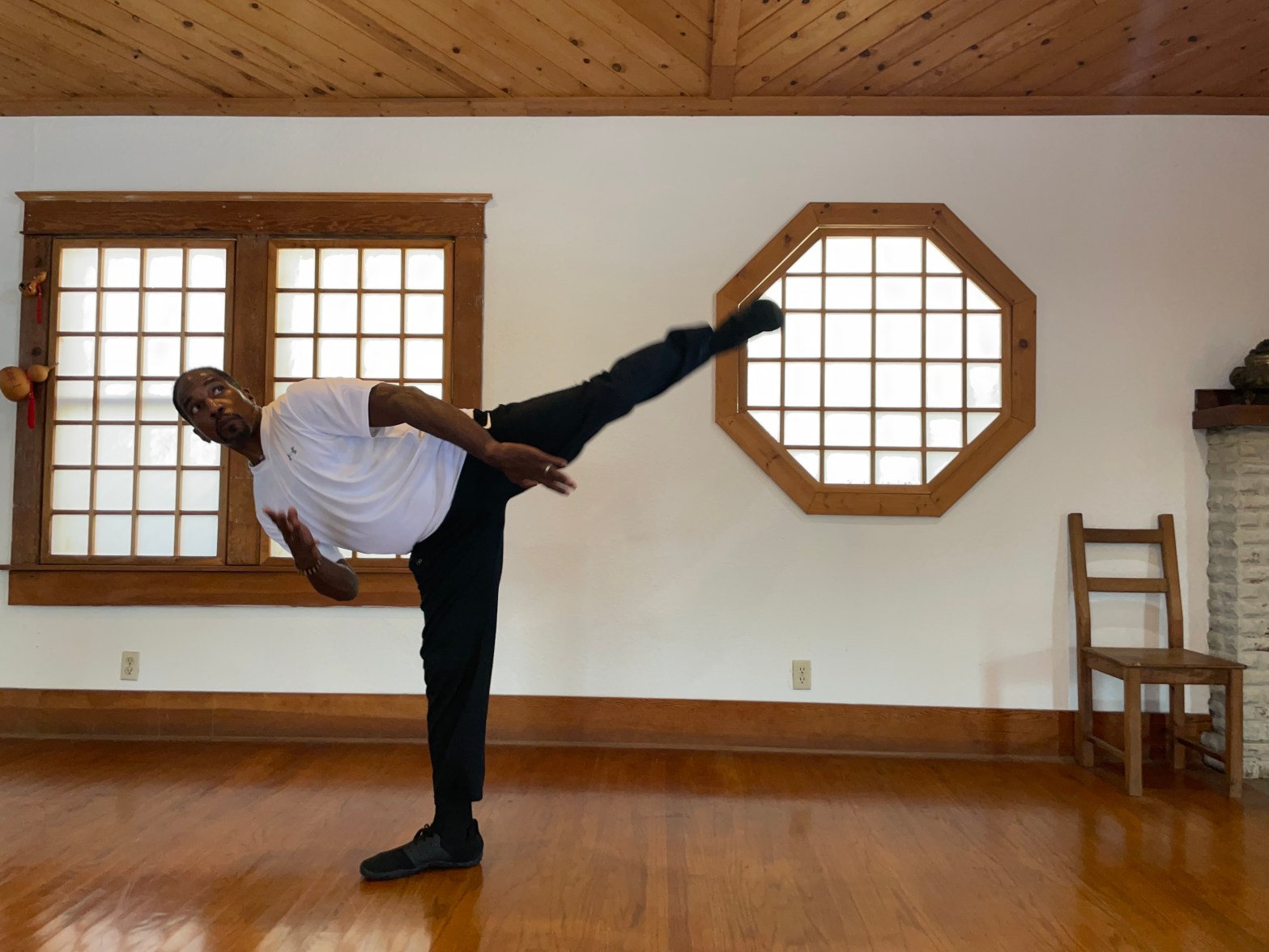



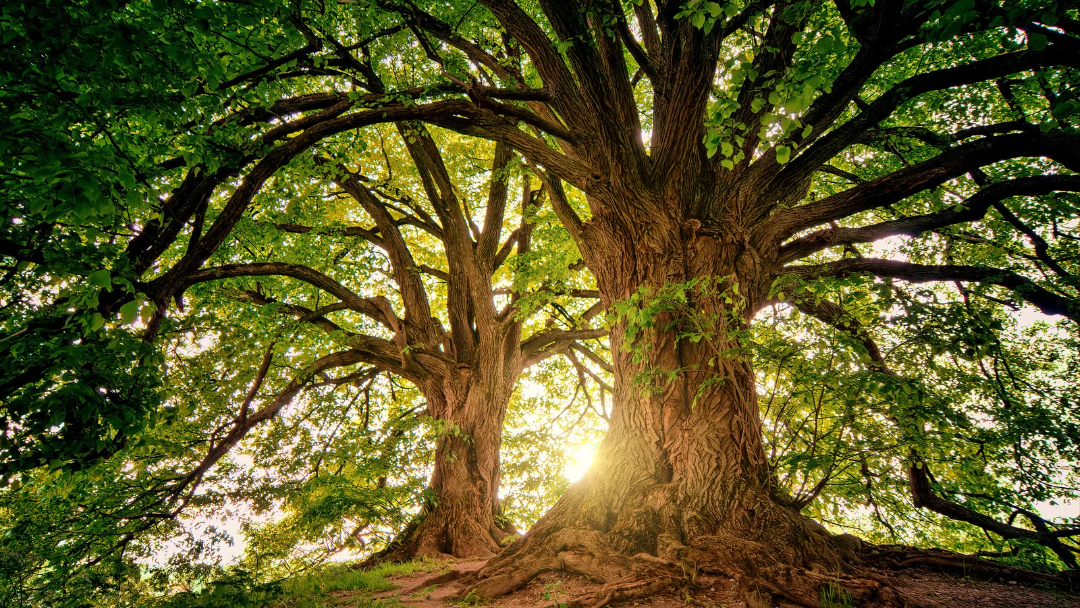

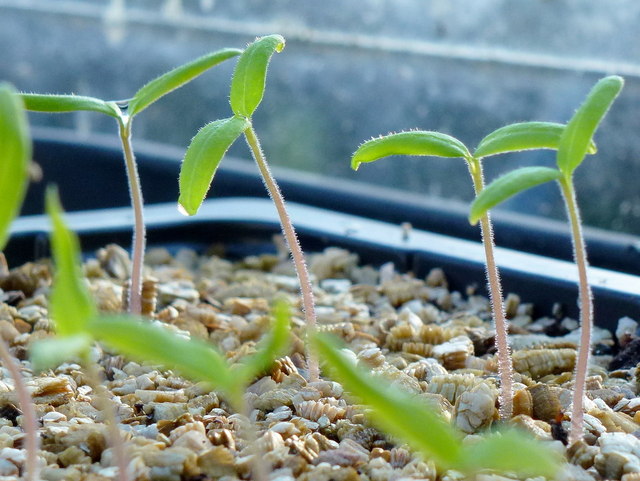
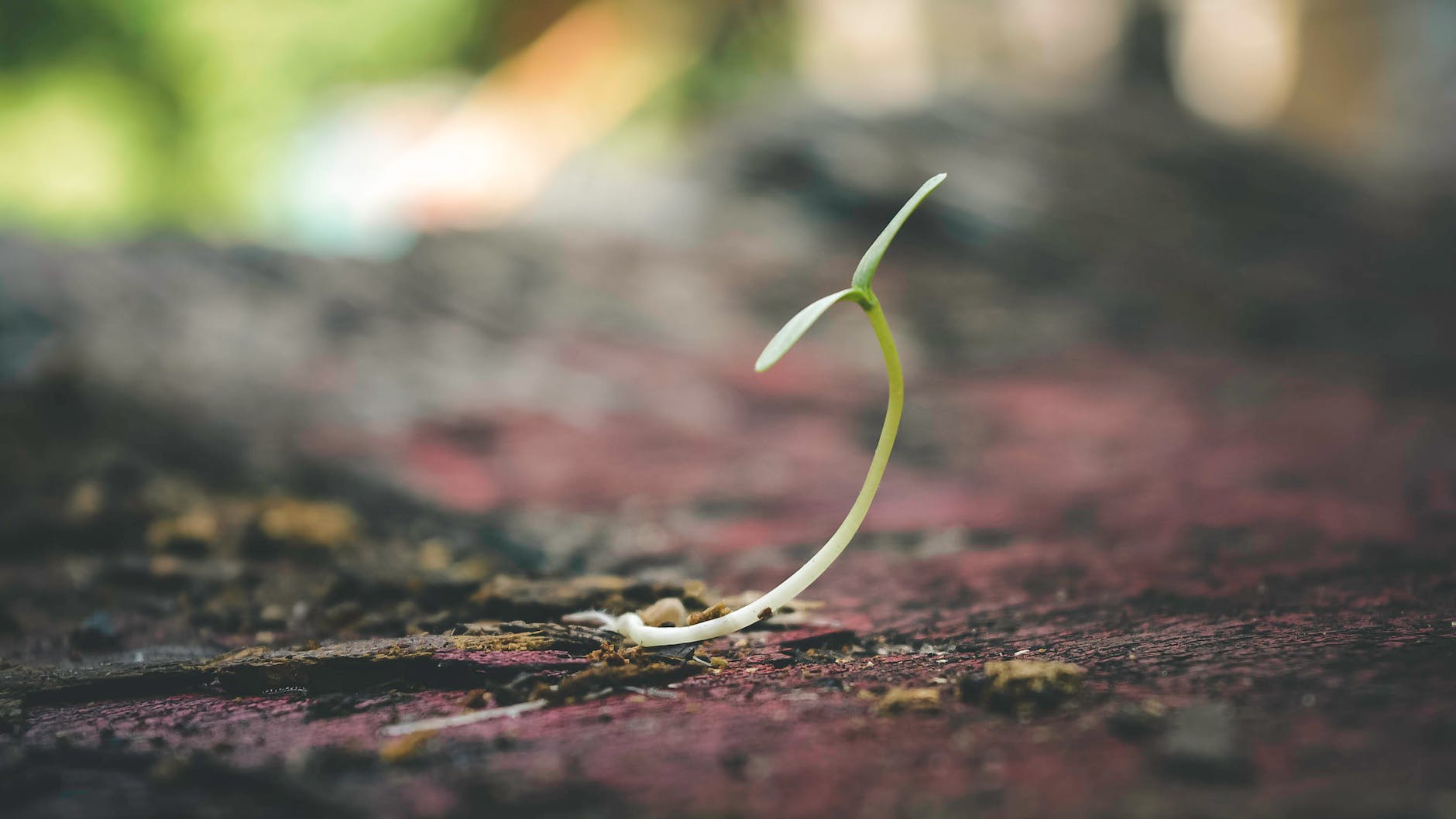
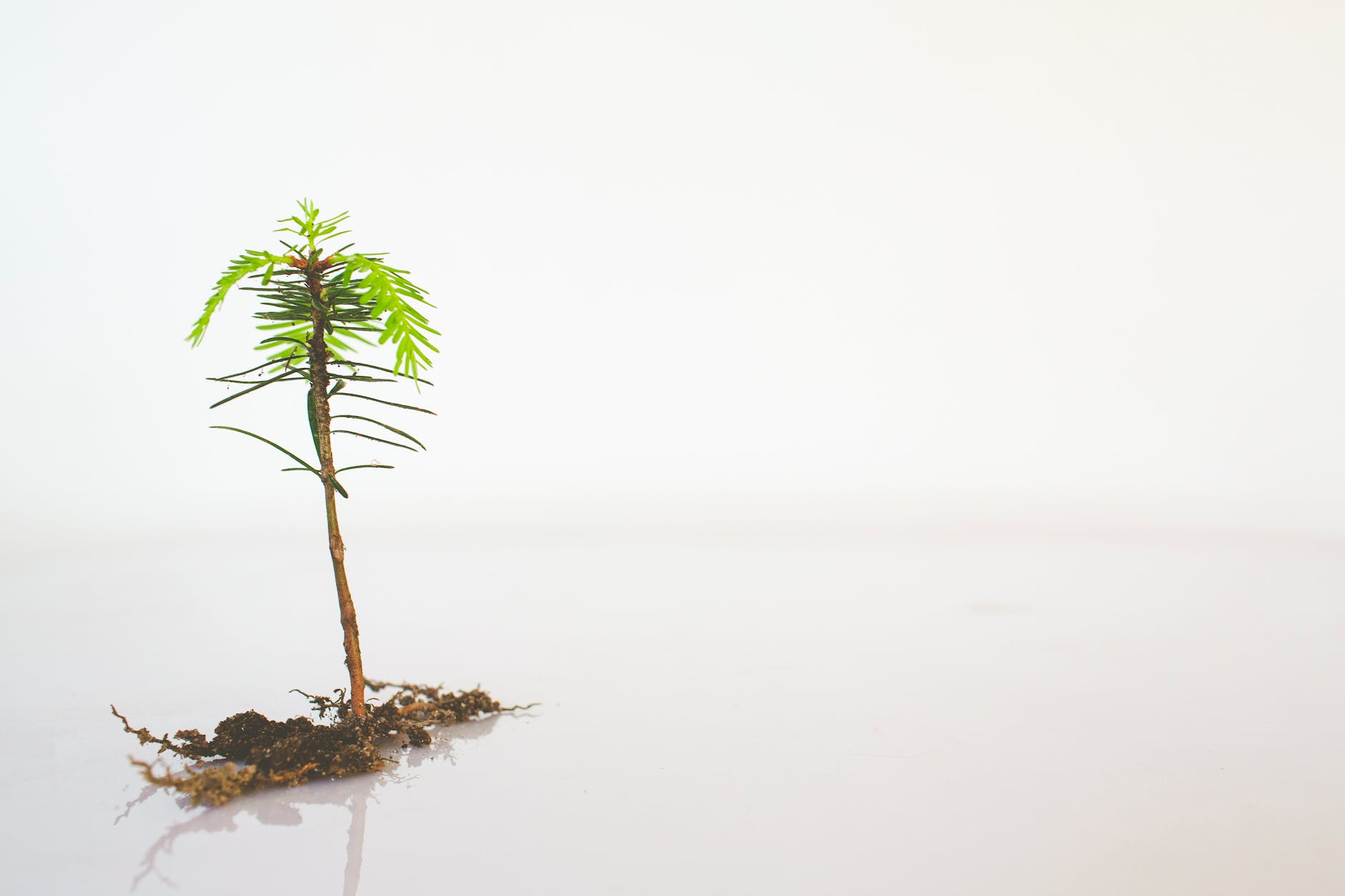


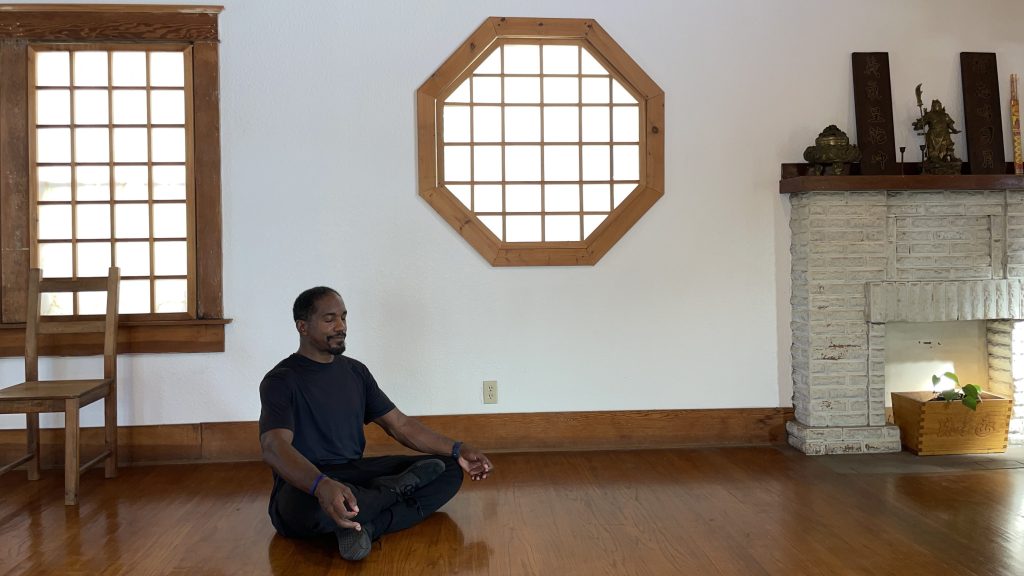











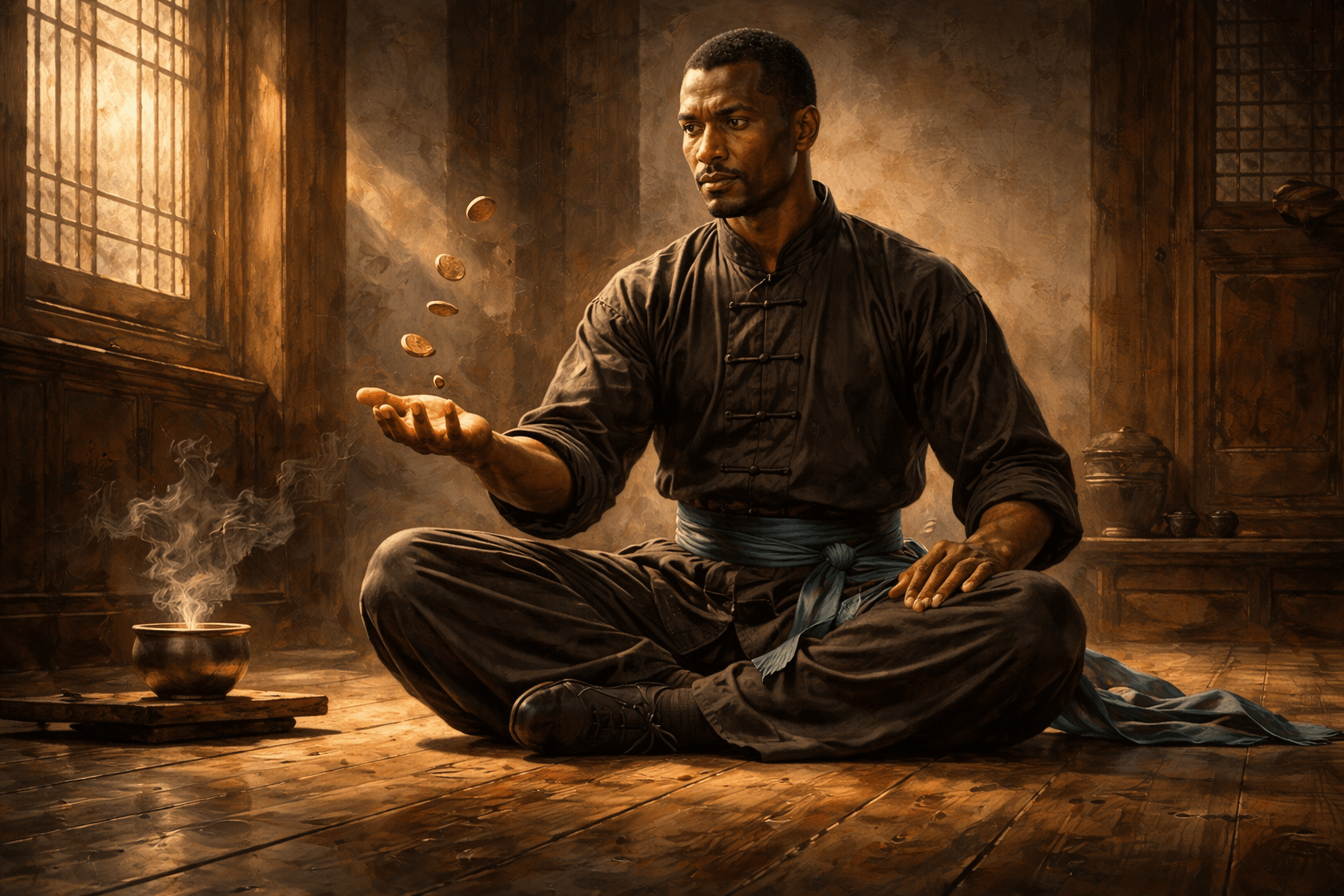

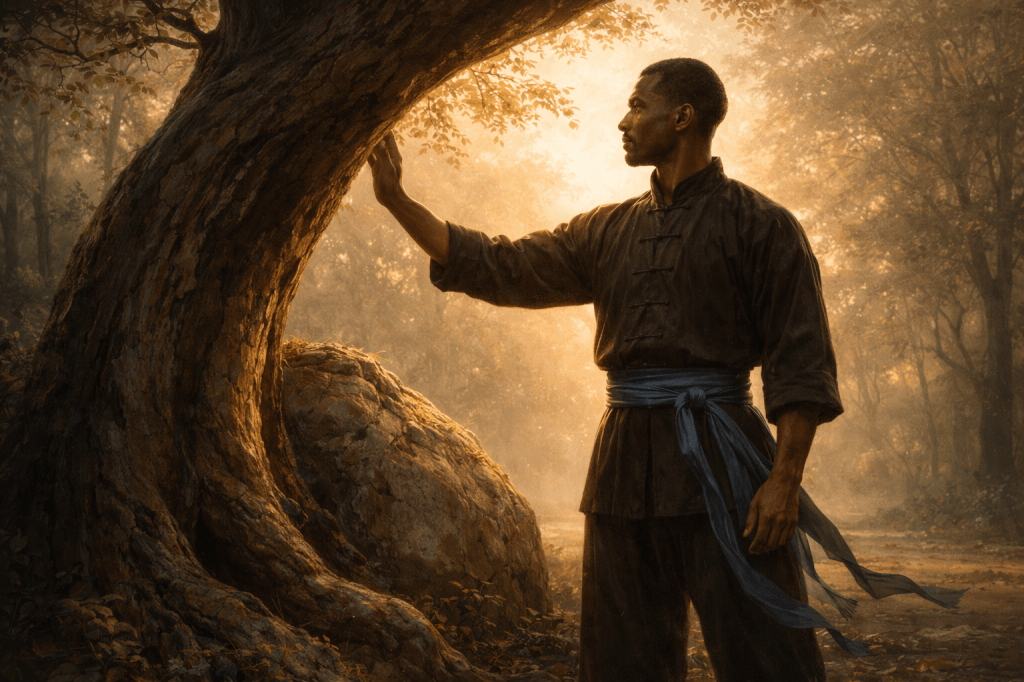


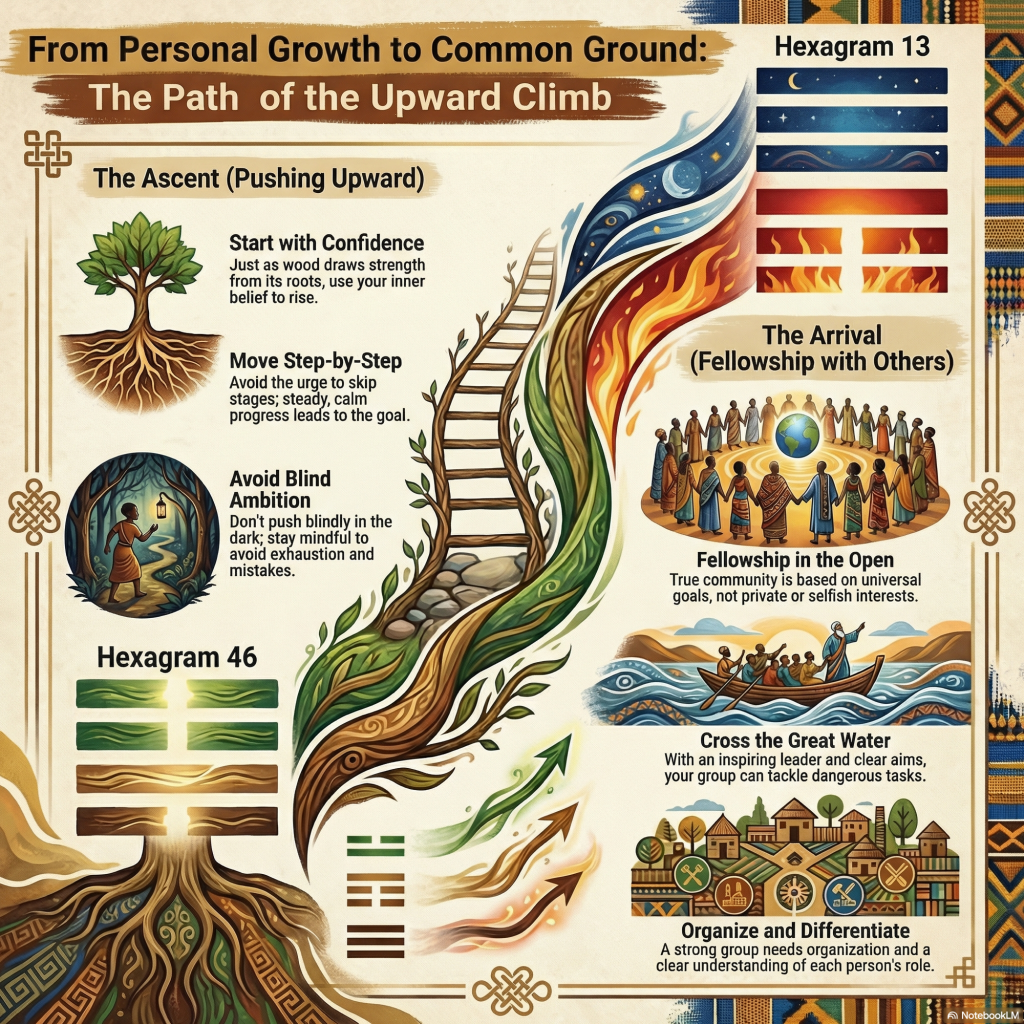


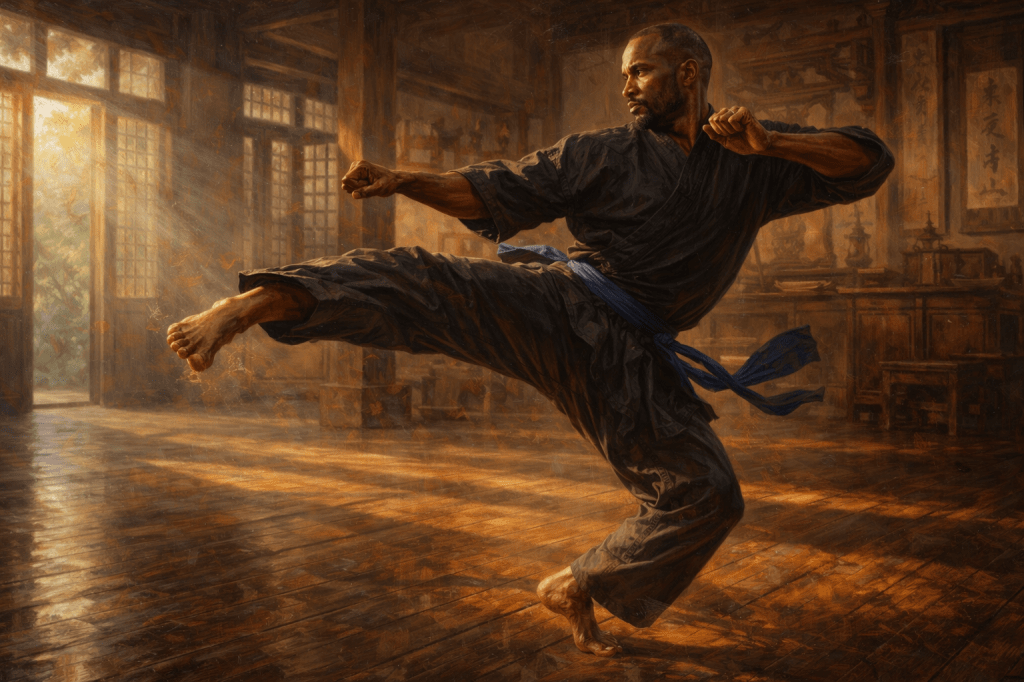

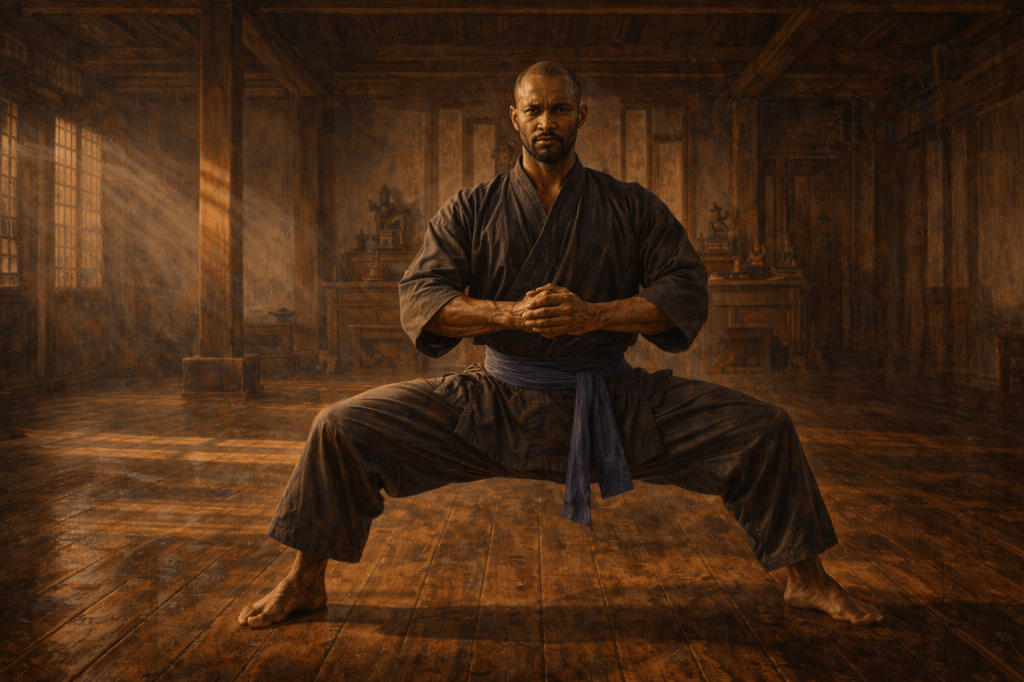




 Musings on Martial Arts, Taoist Philosophy & All Things Wellness Related.